
# How to compare aquarium water before and after a water change: record the ratio and measurement conditions first (portable water quality tester)
When comparing aquarium water before and after a water change, a portable water quality tester can capture the ratio, temperature, conductivity and sampling conditions as a traceable trend; however, the readings themselves cannot prove the water is "safe," nor can they verify dechlorination or pathogen control.
First, the answer to the title: what is compared is "the change under consistent conditions"
What you compare before and after a water change is not a single water quality tester reading, but the trend under the same measurement conditions. First fix the water change ratio, source water type, temperature, sampling location and waiting time; otherwise conductivity, TDS, turbidity and other data will be confounded by interference, making it impossible to tell whether a change comes from the water change itself or from differences in procedure. For example, with the same 1/3 change, one time using 20°C tap water and another time using 26°C aged water will produce completely different conductivity changes in the tank. The key to comparison is recording "ratio + measurement conditions" as a pair, not just a single value.
Why a portable water quality tester should record conductivity and temperature together
The USGS Water Science School explains that conductivity is the ability of water to conduct an electric current, comes mainly from dissolved ions, and varies with temperature [2]. Therefore, if the water temperature differs before and after a water change, the difference in conductivity/TDS may come mainly from temperature rather than a real change in water quality. In home aquarium scenarios, a portable conductivity sensor or water quality tester pen can provide quick readings, but sample temperature, depth, residence time and probe cleanliness all affect repeatability. The USGS National Field Manual also emphasizes that sampling and field measurements must record time, location and conditions to reduce human bias [1]. So keeping "temperature" and "conductivity" together in the record table is the basis for later judging whether the mixing ratio is appropriate.
In freshwater aquariums, a rise in conductivity/TDS is usually related to mineral addition, evaporative concentration or differences in source water; a decrease is mostly related to replacing water with low-ion water. But the specific cause must be judged together with the ratio and source water readings. Temperature changes may cause visible changes in conductivity readings, so comparisons are best made at similar temperatures, or at least with temperature recorded at the same time to avoid misjudgment.
Step-by-step scenario: fix the ratio, conditions and readings
- Record the water change ratio: do not write "an appropriate amount"; state the actual volume in liters, for example "changed 20 L, about 1/4 of the total water volume."
- Measure before the water change: sample near the outlet and about 5 cm below the water surface; use the water quality tester to read temperature, conductivity, TDS and turbidity, record once the readings are stable, and note the sampling time.
- Prepare the new water: measure tap water or aged water with the same device, and record the type and timing of dechlorination/water-conditioning products added; note: these readings do not verify that dechlorination is complete.
- Measure after the water change: wait for filtration circulation to mix the water evenly, then take readings again at the same location; also record whether the tank water temperature after the change is close to the original tank water.
- Compare trends: see whether conductivity/TDS rose, fell or stayed flat. If the source water and tank water differ markedly, it indicates that the source water mixing ratio or temperature buffering should be adjusted in the future, but a reading alone cannot determine "safety."
What a portable water quality tester can measure and what it cannot replace: when other tools are needed
| Category | Item | Notes |
|---|---|---|
| Can be quickly screened | Conductivity, TDS, temperature, turbidity, hardness, salinity, etc. | Suitable for trend comparison and recording before and after water changes |
| Cannot replace | pH, ammonia nitrogen, nitrite, nitrate, residual chlorine | Requires dedicated reagents or laboratory methods |
If abnormal ammonia nitrogen/nitrite, abnormal fish or suspected pathogen problems appear in the aquarium, promptly use dedicated test reagents, test kits or send samples to a qualified laboratory for analysis; a portable water quality tester cannot be used for such diagnosis.
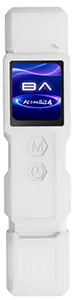
Product scope: the role of Water Detective 4 in aquarium maintenance
Water Detective 4 is a portable water quality tester pen for personal/home use; materials show that it integrates TOC, COD, UV254, TDS, conductivity, turbidity, hardness, salinity and temperature in one rapid testing platform. For aquarium water change comparisons, its value lies in using the same device to quickly record conductivity/TDS/temperature changes in source water and tank water before and after a change, helping home users build a traceable trend record.
It must be clear: hardness and salinity are estimated values, limited by the water sample matrix and calibration conditions; the device is not intended for laboratory testing required by regulations, nor can it determine whether ammonia nitrogen/nitrite exceeds limits, whether a dechlorinator is effective, or whether pathogens are controlled. It is better suited as a "record sheet + screening pen" rather than the final tool for judging aquarium safety.
Actionable checklist
- Fix the water change ratio and record the actual volume in liters each time
- Measure temperature, conductivity and TDS separately before the water change, in the source water and after the water change
- Use the same water quality tester, the same sampling location and the same sampling depth
- Record dechlorination/water-conditioning products, but do not treat readings as dechlorination verification
- Record continuously at least 3 times and observe trends rather than single-point values
- If the conductivity difference between source water and tank water is large, look first at the mixing ratio and temperature buffering
FAQ
Q: Can a portable water quality tester replace ammonia nitrogen/nitrite reagents? A: No. Water Detective 4 does not include ammonia nitrogen, nitrite, pH and other parameters and cannot assess the nitrogen cycle; it is used for trend comparisons of conductivity, TDS, temperature and similar parameters. Please use dedicated test reagents or send samples to a laboratory.
Q: Why do readings fluctuate? A: Temperature, sampling depth, air bubbles in the water and probe contamination all affect readings. Only by keeping the same location and the same settling time and cleaning the probe regularly will records be comparable.
Q: Conductivity rose noticeably after the water change—does that mean the water has a problem? A: Not necessarily. If the source water itself has higher conductivity than the tank water, or minerals/salts were added during the change, the reading will rise. The key is to compare with the source water and the pre-change value, and judge together with temperature, rather than looking at a single point.
References
[1] U.S. Geological Survey. National Field Manual for the Collection of Water-Quality Data. https://www.usgs.gov/mission-areas/water-resources/science/national-field-manual-collection-water-quality-data-nfm (accessed: 2026-10-29) [2] U.S. Geological Survey Water Science School. Conductivity (Electrical Conductance) and Water. https://www.usgs.gov/water-science-school/science/conductivity-electrical-conductance-and-water (accessed: 2026-10-29)
Discuss your application
Tell us your target parameters, water matrix, interface and annual volume. Our engineering team will recommend a practical configuration.
Request a Quote