
PFAS Concerns Are Growing—Can a Home Multiparameter Water Quality Tester Detect It?
In recent years, discussion of the risks of PFAS (per- and polyfluoroalkyl substances) in drinking water has increased. Many household users ask: can the portable water quality tester I already own tell whether PFAS exceeds limits? For a nine-parameter portable device such as Water Detective 4, the answer is clear: no. It has no PFAS sensor and is not a PFAS identification method; the organic summary indicators it measures, such as TOC, COD and UV254, cannot serve as "proxy values" for PFAS. These parameters can only be used for trend screening and side-by-side comparison, not for safety determinations or compliance conclusions.
Why can't an ordinary water quality tester measure PFAS?
PFAS is a vast class of synthetic organic compounds. Routine analysis requires LC-MS/MS or dedicated methods published by bodies such as the EPA, with strict requirements for sample preparation, instrument detection limits and quality control. Home/portable water quality testers generally lack chromatographic separation and mass spectrometric identification capability, so they cannot distinguish PFAS from other organic carbon sources. TOC (total organic carbon) reflects the sum of all organic carbon, COD (chemical oxygen demand) reflects the total oxidizable substances, and UV254 reflects absorption by some unsaturated organics/natural organic matter; none of them has a one-to-one relationship with PFAS. Even if a sample's TOC is very low, a given class of PFAS cannot be ruled out; conversely, high TOC does not mean PFAS exceeds limits. The US EPA also notes in "Home Drinking Water Testing" that household testing tools cannot cover all contaminants, and that testing for specific contaminants should be sent to a laboratory with the appropriate capabilities[2].
The capability boundaries of Water Detective 4
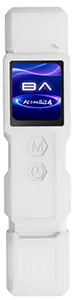
Water Detective 4 is a personal/home portable water quality tester pen integrating nine parameters: TOC, COD, UV254, TDS, EC, turbidity, hardness, salinity and temperature. It is intended for rapid screening and comparison of tap water, purified water, bottled water, travel water and aquarium water. Its conductivity sensor and TDS measurement help observe the removal trend of water purifiers/filter cartridges, for example whether TDS drops markedly across a reverse osmosis membrane; but this is "trend management", not statutory testing. Hardness and salinity are converted from conductivity and other readings and, limited by matrix effects and calibration, should not be treated as precise values.
When is it the right tool to use?
A portable water quality tester is a useful on-site tool if the goal is to answer the following questions:
- Is the TDS/conductivity of the same water source stable over time?
- Before and after replacing a filter cartridge, do TDS or turbidity change as expected?
- When traveling or outdoors, how do different bottled/purified waters compare roughly in conductivity and mouthfeel salinity?
- In routine aquarium water observation, are temperature, conductivity, hardness and turbidity showing abnormal fluctuations?
When recording these data, note the time, location, sample type and water temperature. Multiple consecutive measurements and observed trends are more meaningful than a single reading.
When must a dedicated PFAS laboratory be used?
When the question is whether drinking water is contaminated with PFAS, whether it is below a given regulatory value, or whether it is suitable for long-term drinking, a portable water quality tester cannot provide the answer. Contact a laboratory with PFAS analysis capability, explicitly request the applicable standard method, and ask whether the test report includes the quantification limits, recoveries and quality control information for each PFAS compound. The US EPA notes in "Reducing PFAS in Your Drinking Water with a Home Filter" that if you are concerned about PFAS, using a home water filter certified to reduce PFAS is one option, but not all filter cartridges are effective[1].
Differences between portable testing and dedicated PFAS analysis
| Dimension | Portable multiparameter water quality tester | Dedicated PFAS laboratory testing |
|---|---|---|
| Goal | Rapid on-site screening and trend recording | Qualitative/quantitative determination of specific PFAS compounds |
| Measurable parameters | TOC, COD, UV254, TDS, EC, turbidity, hardness, salinity, temperature, etc. | Common PFAS list (depending on the standard method) |
| Conclusion on PFAS | Cannot detect, cannot rule out, cannot substitute | Prerequisite for risk communication and environmental health assessment |
| Timeliness and location | Instant readings, suitable for on-site use | Laboratory turnaround after sample submission, usually slower |
| Nature of results | Screening/trend, not for regulatory compliance | Carries legal evidentiary weight under an accredited laboratory and controlled quality control |
FAQ
Can a water quality tester pen measure PFAS? No. A water quality tester pen generally lacks mass spectrometric identification capability, and PFAS requires dedicated laboratory methods.
Does low TOC mean low PFAS? No. TOC is a total organic matter indicator; PFAS may still be of health concern at very low concentrations, and TOC cannot distinguish between the two.
Can a home water purifier remove PFAS? It depends on whether the specific filter cartridge has been independently certified to reduce PFAS; a drop in TDS alone does not prove effectiveness against PFAS.
Actionable checklist
- Answer this question clearly: is it "water quality trend screening" or "PFAS risk determination".
- If only trends are needed, use Water Detective 4 to sample following fixed steps, record time and water temperature, and measure 3–5 times consecutively.
- If PFAS is suspected, stop drawing conclusions with portable devices and contact a laboratory with PFAS capability.
- When choosing a water purifier, check whether it has PFAS-specific certification, and do not use an ordinary TDS pen as the sole basis.
- Keep all readings and laboratory reports for later comparison.
References
[1] US EPA. Reducing PFAS in Your Drinking Water with a Home Filter. https://www.epa.gov/cleanups/reducing-pfas-your-drinking-water-home-filter (accessed: 2026-10-29) [2] US EPA. Home Drinking Water Testing. https://www.epa.gov/ground-water-and-drinking-water/home-drinking-water-testing (accessed: 2026-10-29)
Discuss your application
Tell us your target parameters, water matrix, interface and annual volume. Our engineering team will recommend a practical configuration.
Request a Quote