
# Does Clear-Looking Water Mean It's Safe? First, Understand the Limits of Your Testing Tools
A glass of water that looks bright against the light only tells you it contains no obvious suspended solids or large particles. The real concerns often hide beneath "clarity": inorganic salts dissolved in the water, trace organic compounds, and microorganisms invisible to the naked eye. None of these make water cloudy, yet they can affect taste, health, or equipment lifespan. A portable water quality tester pen (such as Water Detective 4) helps users quickly compare different water samples and record trends, but it is not a mobile laboratory. This article breaks water quality issues into three categories and offers an action path that avoids mistaking screening for certification.
Three "Invisible" Water Quality Problems
- Clarity issues: Only visible sediment, rust, or algae can be ruled out. Turbidity testing can quantify this, but it cannot address colorless, transparent contaminants.
- Dissolved substance issues: Total dissolved solids (TDS), electrical conductivity (EC), hardness, and salinity are estimated via a conductivity sensor, making them suitable for observing long-term changes in the same water source or comparing different purification options. However, they cannot distinguish calcium and magnesium from sodium salts, nor can they determine safety risk on their own.
- Microorganism issues: Bacteria, viruses, and parasites do not change conductivity and cannot be identified by conventional portable photoelectric devices. They must be confirmed by a laboratory through culture, molecular biology, or immunological methods.
| Issue Type | Can the Naked Eye Judge It? | What Can Portable Testing Tools Do? | What Verification Is Needed? |
|---|---|---|---|
| Clarity | Partially | Turbidity trend recording | Send for testing when sensory abnormalities appear |
| Dissolved substances | No | TDS/EC/hardness/salinity comparison | Specific ions require a laboratory |
| Microorganisms | No | Cannot be detected | Specialized microbiological testing |
Hardness and salinity are not directly measured absolute values. Portable devices typically measure conductivity first, then convert it to hardness or salinity using built-in empirical formulas. When large amounts of other conductive ions are present, temperature changes, or the probe surface is contaminated, the converted results will drift. In other words, these values are suitable for trend comparison "with the same instrument, the same type of water, and the same temperature," and should not be confused with laboratory titration or ion chromatography results.
Check Supply Information First, Then Compare Water Samples
Do not treat any portable reading as proof of safety. The correct order is to first understand public information about the water source itself, then use the instrument for comparison and trend observation.
- Step 1: Obtain supply information. Municipal tap water users should request an annual water quality report (or consumer confidence report) from their water utility; users with private wells need to understand potential pollution sources nearby[1].
- Step 2: Establish your own baseline. Use the same instrument, the same water temperature, and the same container, and record TDS, EC, turbidity, and other readings at home at fixed times. Don't look at a single number—only continuous records are meaningful.
- Step 3: Compare different water samples. For example, compare tap water with bottled water, purifier inlet and outlet water, or water at different filter stages. The multi-parameter recording of Water Detective 4 suits this kind of rapid screening scenario, making sudden changes easy to spot.
- Step 4: Escalate only when abnormalities appear. If readings suddenly deviate significantly from the baseline, or if odors, color, or an oily film appear, stop drinking the water and seek confirmation from a professional laboratory.
For example, after installing a new reverse osmosis purifier or replacing a filter, you can use Water Detective 4 under the same water temperature and container conditions to measure tap water, purifier outlet water, and bottled water separately, recording TDS, EC, and turbidity for a week. If the purifier outlet TDS remains stable over time and is clearly lower than tap water, the desalination function is working normally; if it suddenly approaches tap water, the membrane or seals may need inspection. What you get here is only a maintenance clue, not proof that the water quality meets standards.
When Other Tools Are Mandatory
The US EPA reminds that for specific contaminants (such as lead, arsenic, volatile organic compounds, etc.), even after on-site screening, confirmation should be obtained using certified laboratory methods[1]. The US CDC also recommends clarifying the target contaminants to be removed before choosing a household water purifier, and selecting products with third-party certification[2].
In the following situations, readings from a portable water quality tester cannot be used as a basis for judgment:
- Suspected microbial contamination: for example, diarrhea outbreaks, well water backflow from surface water, or after water service is restored following an outage.
- Compliance testing is required: for example, food processing, acceptance of commercial water purification equipment, or legal disputes.
- Specific chemical contaminants need to be tested: heavy metals, pesticide residues, disinfection by-products, volatile organic compounds, etc.
- Water quality fluctuates drastically and inexplicably: continuous online water quality monitoring devices or multi-parameter sensor arrays may be needed, not just a single handheld test.
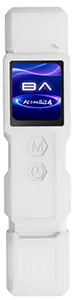
The value of portable devices is rapid on-site screening, not replacing the laboratory. If the situation involves health risks or compliance requirements, the water sample should be sent to a qualified testing institution.
Boundary Reminders for Retailers and Customer Service
- Do not describe portable test results as "compliant" or "safe."
- Do not imply that the meter can detect bacteria or all chemical contaminants.
- Teach customers to establish a baseline and make side-by-side comparisons, rather than looking only at a single number.
- When a customer suspects a specific contaminant or faces a health risk, proactively recommend sending the sample for testing.
Frequently Asked Questions (FAQ)
Q: The water looks clear—does that mean I don't need to test it? A: No. Dissolved salts and microorganisms usually do not make water cloudy. Clarity only means fewer suspended solids; it does not mean there are no other risks.
Q: Can a portable water quality tester detect bacteria? A: Portable multi-parameter tester pens such as Water Detective 4 do not have microbial detection capability. Bacteria and viruses require laboratory culture or molecular methods for confirmation.
Q: A very low TDS reading—does that prove the water is very safe? A: TDS mainly reflects the total amount of conductive dissolved substances; it does not mean there are no non-conductive contaminants, nor does it reflect microorganisms. It is better suited to trend comparison than as a safety criterion.
Q: Are hardness and salinity readings accurate? A: These are estimated from conductivity and are affected by other ions in the water and calibration conditions. They are only recommended for relative comparison under the same conditions, not as precise laboratory values.
Q: What should I do if a portable reading suddenly becomes abnormal? A: Stay calm, stop drinking the water, switch to trusted bottled water or boiled water (if only microbial risk is involved), and contact your water utility or a professional laboratory for testing. Do not replace equipment or make decisions based on a single reading.
Actionable checklist
- First find the water quality report for your local supply and confirm the source type and main risks.
- Consistently use the same portable instrument; before each measurement, rinse the probe with purified water and shake it dry.
- Record the date, time, water temperature, and three or more parallel readings, and take the stable value.
- Compare different water samples at home (tap water, filtered water, bottled water) side by side, rather than looking at absolute numbers.
- If odors, cloudiness, yellowing, an oily film, or gastrointestinal discomfort appear, stop drinking and send the sample to a laboratory.
- When a compliance certificate, legal use, or screening for specific contaminants is needed, choose a certified laboratory.
References
[1] US EPA. Home Drinking Water Testing. https://www.epa.gov/ground-water-and-drinking-water/home-drinking-water-testing (accessed: 2026-10-29)
[2] CDC. About Choosing Home Water Filters. https://www.cdc.gov/drinking-water/prevention/about-choosing-home-water-filters.html (accessed: 2026-10-29)
Discuss your application
Tell us your target parameters, water matrix, interface and annual volume. Our engineering team will recommend a practical configuration.
Request a Quote