
Many freshwater aquarium keepers treat conductivity (EC) as an overall "score" for water quality. But EC only indicates the total amount of mobile ions in the water; it cannot identify ammonia, nitrite, dissolved oxygen or pH. Using a portable water quality tester pen to track trends is fine, but treating EC as proof of safety may cause you to miss the metrics that are truly lethal.
What does conductivity actually measure?
Conductivity is the ability of water to conduct electric current, mainly from dissolved inorganic ions such as calcium, magnesium, sodium, potassium, bicarbonate, chloride and sulfate [1]. In freshwater tanks, EC usually rises as total dissolved solids (TDS) increase. However, ammonia (NH₃/NH₄⁺) and nitrite (NO₂⁻) can harm fish at low concentrations, yet may not cause a visually discernible jump in EC. For example, 0.5 mg/L of ammonia is already a concern for some fish, but its contribution to conductivity may be drowned out by background ions. Ammonia and nitrite are common potential contaminants [2], and dedicated tests are required to assess toxicity risk.
| Item | EC can reflect | EC cannot reflect |
|---|---|---|
| Total ion content/salinity trend | Yes, overall ion background | Cannot distinguish specific ions |
| Ammonia/nitrite | Contribution at low concentrations is very small; cannot indicate toxicity | Cannot replace dedicated testing |
| pH | No direct measurement | Requires pH meter/reagents |
| Dissolved oxygen | Not relevant | Requires dissolved oxygen meter/reagents |
| Hardness | Can serve as a rough trend | Interfered with by other ions; accurate measurement requires GH/KH |
How do you use a portable water quality tester correctly for trend screening?
A portable water quality tester is suitable for daily trend recording, not for a single "pass/fail" judgment. Follow these steps:
- Confirm that the tester pen is suitable for aquarium water samples, and read the sample compatibility range in the instructions.
- Fix the sampling point and sampling time, for example taking water from the same location before daily feeding.
- Before measuring, rinse the probe with the water sample to be tested to avoid residual interference.
- Record EC, TDS and water temperature together, and ensure temperature conditions are consistent.
- Record continuously for 5–7 days and observe the slope of change rather than only a single absolute value.
- For each measurement, run parallel tests with ammonia, nitrite and pH test kits.
If you use Water Detective 4, it can quickly record multiple metrics such as EC, TDS and temperature in the same sample, making it suitable for daily comparison in home aquariums. However, this product is intended for tap water, purified water, bottled water, travel water and aquarium water; confirm sample compatibility before use, and avoid high-turbidity, strongly acidic or alkaline, or unknown industrial wastewater.
When must other tools be used?
In the following scenarios, a normal EC value cannot rule out problems:
- Newly set up tank, where the nitrifying system has not yet been established;
- Fish gasping at the surface, breathing rapidly or behaving abnormally;
- After a water change, or after adding salt or medication;
- A change in water source, for example switching from tap water to RO water or well water;
- Suspected ammonia or nitrite poisoning.
In these cases, use drip test kits for ammonia, nitrite, pH and dissolved oxygen testing; if fish show obvious symptoms, contact an aquarium veterinarian or professional as soon as possible, and consider sending samples to a qualified laboratory for analysis.
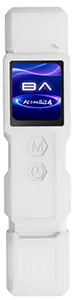
Positioning and limits of Water Detective 4
Water Detective 4 is a personal/household portable water quality tester pen for rapid testing of tap water, purified water, bottled water, travel water and aquarium water. It is intended for personal screening and comparison and does not replace laboratory testing required by regulations. It integrates nine metrics, including TOC, COD, UV254, TDS, EC, turbidity, hardness, salinity and temperature, and is an on-site rapid screening tool.
In freshwater aquarium scenarios, it can help you record ion background and change trends, but it cannot measure ammonia, nitrite, dissolved oxygen or pH; hardness and salinity estimates are limited by matrix and calibration. Portable trend monitoring is not proof of drinking safety or of specific contaminants. Different fish species have different requirements for hardness, salinity and temperature; refer to species-specific professional references for specific husbandry parameters, and do not rely solely on the results of a portable tester pen.
Brief FAQ
Q: Does rising conductivity mean ammonia nitrogen exceeds the limit? A: No. EC reflects the total ion background; ammonia nitrogen is highly toxic at low concentrations and may not significantly change EC. A dedicated ammonia nitrogen test kit must be used.
Q: Can a water quality tester measure hardness in aquarium water? A: It can serve as a trend reference, but use a GH/KH test kit for precise water adjustment, because other ions interfere with hardness and salinity estimates.
Q: How often should I test? A: For routine monitoring, record trends 1–2 times per week; when setting up a tank or when fish are abnormal, test daily together with test kits.
Actionable checklist
- [ ] Confirm that the tester pen is suitable for aquarium water samples, and read the instructions.
- [ ] Fix the sampling point and time, and rinse the probe before measuring.
- [ ] Record EC, TDS and temperature, and test ammonia, nitrite and pH at the same time.
- [ ] Do not treat a single reading as a conclusion; look at continuous changes.
- [ ] When fish are abnormal, stop relying on EC and immediately run dedicated tests or consult a professional.
- [ ] If the water source changes, test and record the old and new water samples separately.
References
[1] U.S. Geological Survey. Conductivity (Electrical Conductance) and Water. Water Science School. https://www.usgs.gov/water-science-school/science/conductivity-electrical-conductance-and-water (accessed 2026-10-29) [2] U.S. Environmental Protection Agency. Potential Well Water Contaminants and Their Impacts. https://www.epa.gov/privatewells/potential-well-water-contaminants-and-their-impacts (accessed 2026-10-29)
Discuss your application
Tell us your target parameters, water matrix, interface and annual volume. Our engineering team will recommend a practical configuration.
Request a Quote