
Quick answer first
No. High TDS (total dissolved solids) only means the total dissolved ions in the water are relatively high; it does not directly mean the water is toxic to plants. Whether watering causes problems depends on the type of ions, soil drainage, and the plant's own salt tolerance. A portable water quality tester can provide a useful trend signal, but it cannot, on its own, give a universal safe threshold for "can I water with this."
What TDS tells you and what it doesn't
TDS is usually converted from electrical conductivity (EC). Calcium, magnesium, sodium, chloride, sulfate, bicarbonate, and other substances dissolved in water all make it conductive, so TDS/EC reflects the "total ionic background" rather than the concentration of any one salt [1].
Take water with TDS around 800 mg/L: if it is mainly calcium-magnesium bicarbonate, most moderately salt-tolerant plants can accept it in well-drained soil; if it is mainly sodium chloride or boron, even a similar reading may cause leaf-edge scorch and root damage. A portable water quality tester pen cannot distinguish these ions, nor can it measure boron, sodium adsorption ratio (SAR), or nutrients such as nitrogen, phosphorus, and potassium.
Soil is the second buffer layer here: if the pot or garden soil drains well and is regularly leached, salts are less likely to accumulate; if water sits for long periods and evaporation is strong, even low-TDS water will gradually leave salts in the root zone. Plant sensitivity is the third variable: succulents, orchids, and some ornamental ferns are salt-sensitive, while tomatoes, rosemary, and coastal plants are more salt-tolerant.
Three-step on-site screening with a portable water quality tester
Using a portable pen as an "on-site screening + trend recording" tool is more useful than looking at a single reading.
- Test the clean water first: Take the tap water, well water, or rainwater you use for watering and record TDS/EC and temperature. Temperature affects conductivity readings, so compare at similar temperatures where possible.
- Then test the pot drainage or soil extract: After watering, collect the water flowing from the bottom of the pot, or soak the soil in purified water at a fixed ratio and take the supernatant. Do not insert the pen directly into dry soil.
- Compare the changes: If the TDS of the drainage/extract is clearly higher than the clean water, salts may already be accumulating in the soil, and more leaching or better drainage is needed; if the two are close, salt accumulation under the current watering method is not obvious.
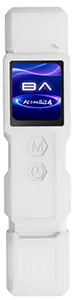
Take Water Detective 4 as an example: it integrates TDS, EC, hardness, salinity, and temperature into one portable water quality tester pen, suitable for gardeners and teachers to make quick on-site records and comparisons. But it measures totals and some apparent parameters, not boron, SAR, or nutrients, so it cannot replace a full laboratory irrigation-water analysis.
When high TDS is still usable
If the water source is hard water composed mainly of calcium-magnesium bicarbonate, and the pot or garden soil drains well with some water flowing out the bottom at each watering, most moderately salt-tolerant plants can use this water long term. In this case, high TDS reflects temporary hardness more than toxic salts.
If the soil drains poorly, the pot has no drainage holes, or repotting is not done for a long time, salt accumulation is likely even if TDS is not high. In this case, improve the soil structure or repot first rather than simply changing the water source.
When to send samples to a laboratory
In the following situations, it is recommended to send a water sample to a qualified laboratory for analysis of sodium, chloride, boron, SAR, and specific heavy metals/nutrients:
- Plants show typical salt-damage symptoms (scorched edges on older leaves, slow growth, browning roots);
- Watering TDS is stable but drainage TDS keeps rising, and increased leaching still brings no improvement;
- The water source is well water, reclaimed water, or pond water of unknown quality;
- For long-term irrigation planning, school experiment reports, or situations where a safe threshold must be given.
The US EPA's information on potential well water contaminants notes that sodium, boron, nitrate, and other components that may be present in well water require specific testing to confirm, and that conductivity or TDS cannot identify specific contaminants [2].
An actionable judgment framework
The table below is only an on-site screening approach, not a table of safe thresholds.
| Situation | TDS/EC behavior | Soil drainage | Plant sensitivity | Recommendation |
|---|---|---|---|---|
| High clean-water TDS, mainly calcium-magnesium | Clean-water TDS on the high side | Good, water drains out | Medium-low sensitivity | Can continue to use; leach regularly; confirm composition at a laboratory if necessary |
| High clean-water TDS, poor soil drainage | Clean-water TDS on the high side | Poor, prone to waterlogging | Any | Improve drainage or replace soil first, then assess the water source |
| Normal clean-water TDS, high drainage TDS | Clean water normal, drainage clearly higher | Poor or no leaching for a long time | Medium-high sensitivity | Increase leaching frequency, avoid prolonged drought, monitor plant response |
Brief FAQ
Q: At what TDS can I no longer water plants? There is no universal threshold. Suitability depends on ion type, soil drainage, and plant salt tolerance. No portable water quality tester can directly give an irrigation safety threshold.
Q: Can a portable water quality tester measure sodium or boron? No. Conductivity/TDS only reflects total ionic strength and cannot distinguish specific ions. Sodium, boron, and SAR require laboratory analysis.
Q: What is the relationship between EC and TDS? EC is conductivity, a parameter the instrument measures directly; TDS is usually estimated from EC through a conversion factor, is affected by temperature and calibration, and is not an independent precise measurement [1].
Q: Can Water Detective 4 be used to test watering water? It can be used for on-site trend screening and before/after watering comparison records, but it cannot replace a full laboratory irrigation-water analysis, nor can it prove the water is safe.
Actionable checklist
- Each time you change water sources or seasons, measure and record the clean-water TDS/EC.
- Measure pot drainage or soil extract once a month to observe accumulation trends.
- Check the pot's drainage holes and the soil's drainage speed to avoid prolonged waterlogging.
- Look up the approximate salt tolerance of the plants you grow, consulting local gardening resources if necessary.
- If salt-damage symptoms appear or long-term irrigation management is needed, send a water sample to a laboratory for sodium, chloride, boron, and SAR testing.
References
[1] USGS Water Science School. Conductivity (Electrical Conductance) and Water. https://www.usgs.gov/water-science-school/science/conductivity-electrical-conductance-and-water (accessed: 2026-10-29)
[2] US EPA. Potential Well Water Contaminants and Their Impacts. https://www.epa.gov/privatewells/potential-well-water-contaminants-and-their-impacts (accessed: 2026-10-29)
Discuss your application
Tell us your target parameters, water matrix, interface and annual volume. Our engineering team will recommend a practical configuration.
Request a Quote