
Direct answer: the key parameters for pool water safety—free chlorine, pH, temperature, turbidity, circulation and make-up water records, etc.—require not only traceable values but also a complete closed loop covering who measured at what time, what the results were, and how anomalies were handled. Multi-parameter portable pens in the category of water quality testers, such as the Water Detective 4, can quickly provide trend readings such as TDS, EC and turbidity, but they are on-site screening tools and cannot replace the compliance testing and log records for items such as disinfectant and pH required by regulations. Reducing the log sheet to only portable readings would omit the responsible person and corrective actions, and would also make it easy to mistake unverified values for compliance evidence.
1. Why "having a reading" does not mean "recordable as a compliance item"
Pool water safety depends on disinfectant efficacy, pH buffering, filtration circulation and make-up water dilution. Multi-parameter portable instruments typically measure conductivity/TDS, turbidity, temperature, etc., and in principle may be affected by temperature, organic matter, color and calibration status; some instruments do not measure free chlorine or pH, or even if they can, they require regular calibration and interference-resistance verification. In home pool water treatment and testing, the CDC emphasizes that different parameters require different methods and frequencies, and that dosing amounts need to be adjusted according to usage conditions; HSE guidance on legionella testing also reminds that monitoring items, responsible persons and corrective records are part of a water system management plan [1][2]. In hotel operations, these principles translate into: the log sheet must contain the four elements of "item—time—responsible person—corrective record," not just numbers.
The essence of a pool log is an operational risk record, not a running tally of instrument readings. A typical example: a portable TDS reading rises from 800 ppm to 1200 ppm, but free chlorine still shows as compliant. In this case, you should not only record the change in TDS but also check whether the make-up water valve is closed, whether bather load is abnormal, and whether the filter is clogged, and record the time of discovery, the responsible person and the measures taken. Otherwise, the log loses its meaning for traceability and prevention.
2. Recommended tiered log template
Dividing the log into four levels—"regulatory mandatory items," "operating parameters," "incident handling" and "supplementary screening"—can prevent portable readings from being mixed into compliance columns. The following is a structured example:
| Record category | Typical items | Recording frequency | Can portable multi-parameter readings replace them? |
|---|---|---|---|
| Regulatory mandatory | Free chlorine, pH, temperature, turbidity, water color and odor | Before each opening and at scheduled times during operation | Cannot replace; requires dedicated methods/calibrated equipment |
| Operating parameters | Circulation flow/pressure, filter backwashing, make-up and drain volume | Each shift or each operation | Cannot replace; requires instruments and manual records |
| Incident handling | Abnormal values, complaints, vomiting/faecal contamination, dosing amount | Record when it occurs | Cannot replace; requires description and responsible person |
| Supplementary screening | TDS/EC, salinity, hardness, UV254, etc. | Daily or weekly trends | May be recorded, but must be marked "portable screening, non-compliance" |
The "regulatory mandatory items" and "operating parameters" in the table must be completed by trained personnel using compliant equipment or methods, and must not be omitted because portable pen readings are convenient. The supplementary screening column can be placed separately on the back of the log or on an additional page to avoid confusion with compliance data.
3. The appropriate place and boundaries of the Water Detective 4
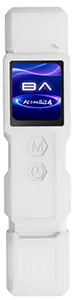
According to the product page information, the Water Detective 4 is a personal/household portable water quality testing pen that integrates nine indicators—TOC, COD, UV254, TDS, EC, turbidity, hardness, salinity and temperature—on one platform, and is suitable for domestic water, on-site screening, water purification services and aquaculture testing [3]. In a hotel pool log, it can play the following roles:
- Compare TDS/EC trends at fixed points and fixed times, for example whether dilution occurs after make-up water or whether values rise after high occupancy;
- Quickly identify turbidity or UV254 anomalies to trigger further verification;
- Attach as a "supplementary record" alongside the formal log, without writing it into the mandatory compliance column.
But it must be clear: this device is not a laboratory testing device specified by regulations; hardness and salinity are estimates and are affected by water sample matrix, temperature and calibration status; it cannot serve as proof of drinking safety or of specific contaminants (such as legionella or Cryptosporidium). Any compliance claims beyond the product description should be avoided [3].
4. When it must be escalated to laboratory or dedicated methods
In the following situations, portable readings must not continue to be used for judgment; instead, use a calibrated DPD colorimeter/pH meter, a professional turbidimeter, or send samples to a laboratory:
- Free chlorine or pH readings are abnormal, or on-site test strip results contradict portable values;
- A vomiting/faecal contamination incident occurs and, according to local regulations, closure, treatment and testing are required;
- When pathogens such as legionella are suspected, sampling and laboratory culture should be carried out by qualified personnel in accordance with HSE recommendations, and must not be replaced by readings from any portable instrument [2];
- When parameters affecting water balance, such as hardness and alkalinity, are needed for dosing decisions, use reagent kits or laboratories that comply with the methodology.
For hotel operations, it is recommended that, quarterly or according to local licensing requirements, the formal log and portable screening records be reviewed together to confirm whether there are cases that should have been escalated but were not.
FAQ
Q: Can a hotel pool use a portable multi-parameter pen as its only testing tool? A: No. It is only suitable as trend screening and supplementary records, cannot replace regulatory mandatory items such as free chlorine and pH, and certainly cannot replace the responsible person and corrective records in the log.
Q: Can the TDS/EC readings of the Water Detective 4 be written directly into the compliance column of the log? A: Not recommended. They may be written in the "supplementary screening" column, but must be marked "portable, non-compliance" and kept separate from compliance data to avoid misleading.
Q: How often should the log be recorded? A: At minimum, record mandatory items before each opening and at scheduled times during operation; supplementary screening can be performed as daily or weekly trends. The specific frequency should follow local health licensing requirements.
Actionable checklist
- Establish a tiered log template: keep regulatory mandatory items, operating parameters, incident handling and supplementary screening in four separate columns.
- Assign a responsible person and reviewer for each item, and specify the recording time.
- Calibrate/verify the portable multi-parameter pen regularly, and keep calibration records separately.
- When anomalies or complaints occur, immediately stop using portable readings as a basis for decisions and escalate to re-testing or laboratory submission.
- Review the log monthly, focusing on whether the "anomaly—corrective action—re-test" loop is complete.
References
[1] CDC. Home Pool and Hot Tub Water Treatment and Testing. https://www.cdc.gov/healthy-swimming/about/home-pool-and-hot-tub-water-treatment-and-testing.html. Accessed: October 2026. [2] UK HSE. Testing and monitoring your water system for legionella. https://www.hse.gov.uk/legionnaires/testing-monitoring-water-system.htm. Accessed: October 2026. [3] Orome Store. Water Detective 4 product page. https://www.orome-store.com/products/water-detective-4/. Accessed: October 2026.
Discuss your application
Tell us your target parameters, water matrix, interface and annual volume. Our engineering team will recommend a practical configuration.
Request a Quote