
Why measurement point location matters more than the sensor itself
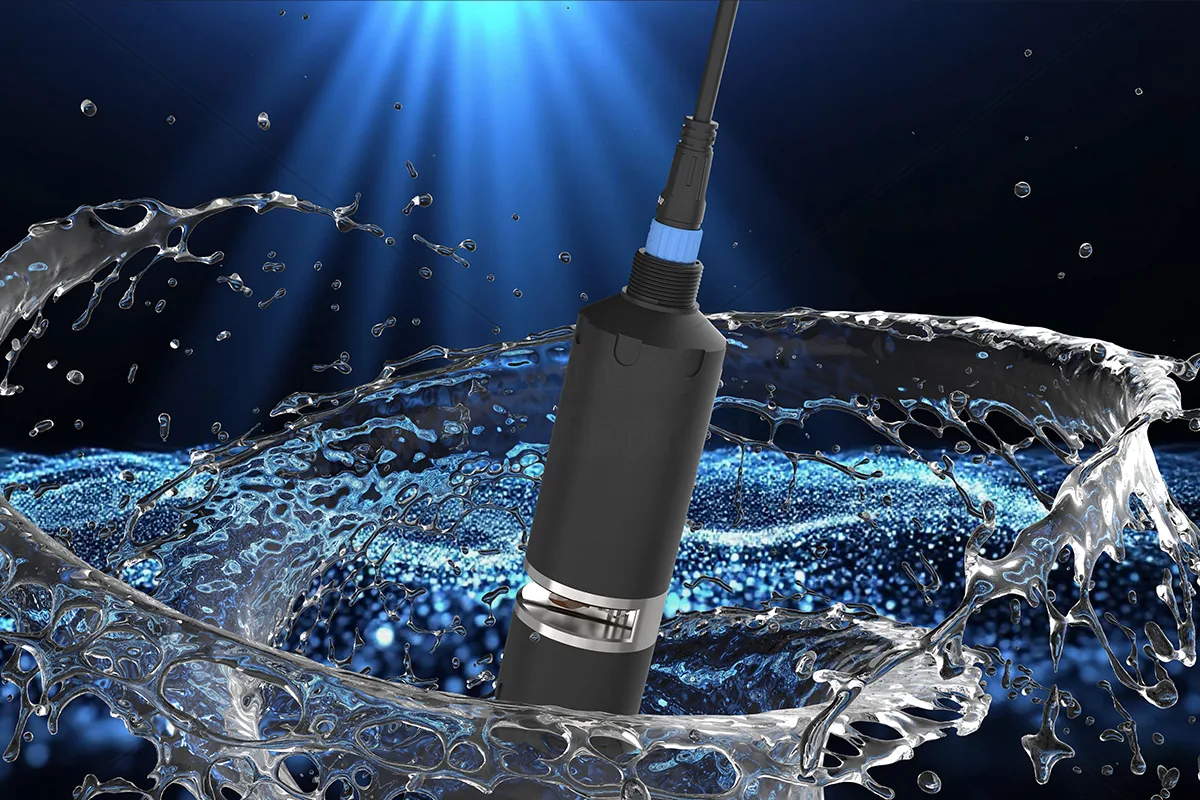
The core value of online water quality monitoring is not to replace laboratory testing, but to support process optimization, influent/effluent comparison and anomaly warning with continuous, high-density data. As an industrial multispectral water quality sensor, the NSDD6 uses non-contact spectral measurement, is reagent-free, and features automatic physical cleaning, making it suitable for surface water, industrial and domestic wastewater, and treatment plant effluent monitoring. However, no matter how stable the optical window is or how timely the cleaning, a poorly chosen measurement point will lead to data fluctuation or systematic bias. For indirectly measured optical parameters such as those from a COD sensor, the representativeness of the measurement point is often more worth addressing first than instrument repeatability.
First distinguish four purposes: influent, biological stage, secondary clarifier effluent, final discharge
Different process stages use data for different purposes, so measurement point selection priorities also differ. The table below gives general guidance:
| Process Stage | Primary Purpose | Representativeness Interference |
|---|---|---|
| Influent | Abnormal load warning | Poor mixing, fibers, grease |
| Biological Stage | Process control / trend | Bubbles, sludge flocs, short-circuiting |
| Secondary Clarifier Effluent | Clarification performance / load reduction | Algae, scum, cascade aeration |
| Before Final Discharge | Discharge trend and warning | Disinfectant, hydraulic dead zones |
It should be emphasized that this table is intended for on-site screening and trend monitoring, and does not represent any certification or discharge compliance analysis. Online data must be combined with periodic laboratory comparison and cannot be used directly as an enforcement basis.
Influent measurement point: capture abnormal loads, not absolute accuracy
Influent water quality fluctuates greatly, especially where domestic sewage and industrial wastewater are mixed. Site selection should prioritize locations with sufficient mixing, no dead zones, and convenient grab sampling comparison. A common practice is to install after the coarse screen, after the grit chamber, or after the equalization tank. Avoid locations such as pump suction intakes, downstream of pipe elbows, and drop points, because these locations may experience air-water mixing, local deposition, or short-circuiting.
If an online COD sensor is used to capture shock loads, lag time must be incorporated into the control logic. The actual retention time from the influent measurement point to the biological tank may range from tens of minutes to several hours, so an influent rise cannot immediately be judged as affecting the biological stage; it must be estimated together with flow rate and tank volume. The grab sampling location should be at the same point and synchronized with the online measurement point, otherwise laboratory data cannot be used for on-site calibration. The equalization tank effluent channel is often more suitable than the interior of the equalization tank because mixing is more thorough and grab sampling is easier. The sampling port should preferably be horizontal or slightly downward-sloped to avoid sediment accumulation; do not open a hole at the top of the pipe to avoid gas accumulation.
Biological stage measurement point: mixing conditions determine representativeness and lag
The biological stage is often where online data is most wanted, and also where points are most easily chosen incorrectly. The end of the aerobic tank is usually closer to effluent quality than the beginning, but dense aerator areas must be avoided. Bubbles attaching to the optical window or passing directly through the light path can cause scattering interference, making readings such as TOC, COD and turbidity fluctuate at high frequency.
The NSDD6's non-contact spectral measurement has no reagent consumption, and automatic physical cleaning can suppress biofilm and particle deposition, but it cannot eliminate bubbles themselves. Therefore, the installation location should be selected in a section with relatively stable flow velocity and flow guidance or defoaming measures, such as downstream of a baffle, a certain distance before the effluent weir, or a separately arranged stabilizing tank. Do not treat a single point as representative of the entire tank; for large biological tanks, it is recommended to use multiple points or mobile comparison to determine the best fixed point, and periodically recheck changes in hydraulic conditions.
Regarding lag, biological stage control needs to consider both hydraulic retention time and sludge retention time. If only trend warning is performed, lag is acceptable; if used for precise feedforward control, it must be modeled together with signals such as flow rate, return sludge ratio and dissolved oxygen, rather than relying only on a single optical parameter. Different processes such as oxidation ditches, SBR and MBR differ greatly in hydraulic behavior; SBR alternates aeration and settling within a cycle, so intermittent measurement and cycle synchronization need to be considered.
Secondary clarifier effluent measurement point: low turbidity after clarification, but prone to sampling line contamination
Secondary clarifier effluent is relatively homogeneous, but if the measurement point is close to weir cascades, scum baffles or return activated sludge inlets, bubbles, scum or activated sludge flocs are easily introduced. Short-circuiting and sludge flotation can also cause occasional deviations. It is more suitable to choose a location in the effluent channel or collection trough with stable flow velocity and no cascades. Installing a baffle in the collection trough after the weir can stabilize flow conditions and reduce bubbles and dissolved oxygen changes caused by cascades.
Maintenance accessibility is especially important at this location. Although non-contact measurement has no reagent consumption, the optical window still needs periodic inspection. The NSDD6 supports automatic physical cleaning, which can reduce maintenance frequency, but it cannot eliminate maintenance. During installation, operating platforms, lifting space and cleaning access should be reserved, avoiding placing the sensor where it cannot be safely reached just to pursue an ideal hydraulic location. Sampling lines should be as short as possible and flushed periodically to avoid wall adsorption and biofilm causing lag bias.
Measurement point before final discharge: compliance trends and warning, not certification data
Water quality before final discharge is usually well mixed, but disinfectant, residual chlorine or hydraulic dead zones near the discharge outlet may affect spectral measurement. When using online data for discharge monitoring, the boundary of its use must be clearly defined: online spectral sensors are used for continuous trends, anomaly warning and discharge comparison, and cannot replace laboratory COD/TOC analysis performed by standard methods. Any acceptance, reporting or enforcement data must be based on laboratory results.
The grab sampling location should be as close as possible to the online sensor, but must not alter the flow conditions at the discharge outlet. If there is a long sampling line between the sampling point and the sensor, wall adsorption, biofilm and retention time bias must be considered. It is best to use short tubing, flush periodically, and perform online/offline comparison simultaneously. When a systematic deviation appears between online data and laboratory data, do not directly adjust the sensor gain; first check the sampling location, grab sampling time and hydraulic conditions.
Measurement point decision checklist (can be used directly for on-site verification)
- Clarify the monitoring purpose: is it warning, process control, or trend comparison?
- Draw a process flow diagram, mark all candidate points, and note mixing, bubbles and dead zones.
- Check mixing conditions: choose a location with sufficient turbulence but no air entrainment.
- Bubble control: stay away from aeration zones, cascades, and post-pump cavitation; if necessary, install defoaming/stabilizing devices.
- Lag time: estimate the hydraulic retention time from the measurement point to the key control point and write it into the data tag.
- Maintenance accessibility: ensure operators can safely perform cleaning, calibration and replacement of accessories.
- Grab sampling comparison: collect laboratory samples synchronously at the same measurement point, establish on-site data correlation, and do not treat them as directly equivalent.
- Data verification: run continuously for at least one typical process cycle, and observe normal fluctuations, abnormal spikes and drift trends.
Limitations and Boundaries
The NSDD6 uses a spectral method, and its COD/TOC output is a spectral-based predicted value. When influent matrix, color, suspended solids and industrial components change, the prediction relationship may drift and on-site verification needs to be redone. This article does not provide any specific measurement range, accuracy or linearity indicators, because these values should be based on the actual configuration, on-site calibration and verification results.
On the other hand, automatic physical cleaning reduces maintenance frequency, but optical window contamination, loose installation accessories, and communication interference may still affect data quality. Long-distance isolated RS485 communication only describes interface characteristics, and does not mean that lightning protection, grounding and wiring standards are unnecessary on site.
FAQ
Can an online COD sensor be used directly for environmental acceptance?
No. Online spectral sensors are used for trend monitoring and process optimization, while compliant discharge requires sampling and analysis by standard methods.
Why should biological tank measurement points avoid aeration discs?
Bubbles attaching to or passing through the light path cause scattering interference, leading to reading fluctuations and reducing the credibility of trend assessment.
Does automatic cleaning on the NSDD6 mean maintenance-free operation?
No. Automatic physical cleaning can reduce contamination, but the optical window and installation accessories need periodic inspection, and the on-site calibration cycle depends on the water quality matrix.
How can online COD be aligned with laboratory COD?
Collect water samples synchronously at the same measurement point for laboratory analysis, and establish an on-site calibration or correction relationship; different process stages should be modeled separately.
Discuss your application
Tell us your target parameters, water matrix, interface and annual volume. Our engineering team will recommend a practical configuration.
Request a Quote