
Introduction: Why Commercial Water Purification Systems Need Online Water Quality Trend Monitoring
Commercial water purification systems (such as drinking fountains, water purifiers, central water purification systems, and industrial process water treatment units) often experience gradual water quality degradation due to source water fluctuations, filter saturation, membrane fouling, or equipment failure during daily operation. Traditional periodic sampling and laboratory analysis are accurate but have long cycles and high costs, making it difficult to capture sudden pollution events or gradual failure. Therefore, engineers are increasingly employing online COD sensors or TOC/UV254 sensors for continuous trend monitoring, especially deploying reagent-free, low-maintenance multiparameter sensors at the inlet piping and outlet end.
The NSDD-Lite3 is a compact, reagent-free online water quality sensor that simultaneously outputs TOC, COD, UV254, and temperature. It uses non-contact spectroscopic measurement, coupled with temperature correction and isolated digital communication, making it suitable for integration into commercial water purification systems and industrial process water systems. As a multiparameter water quality sensor, it provides continuous monitoring capability for multiple organic pollution indicators within a single probe. This article discusses how to use the NSDD-Lite3 for water quality trend monitoring from the perspectives of engineering selection, installation, data interpretation, and laboratory confirmation, while clearly defining its boundaries.
Selection Decision: Requirements for Online COD Sensors in Commercial Water Purification Systems
When selecting COD sensors or similar organic pollution indicator sensors for commercial water purification equipment, the following factors should be carefully considered:
- Reagent-free, no consumables: Commercial equipment typically requires maintenance-free operation; chemical reagent methods introduce secondary pollution and maintenance costs.
- Process connection and materials: The sensor must be installable in pipes, tanks, or equipment interiors, and materials should meet food-grade/sanitary requirements.
- Pressure and temperature adaptability: Pressurized piping may reach high pressures, so the sensor must withstand long-term exposure.
- Communication interface: It must interface with PLCs, industrial PCs, or cloud data platforms.
- Multiparameter capability: Simultaneously acquiring temperature, UV254, etc., aids in diagnosing causes of signal changes.
The following table outlines the corresponding capabilities of the NSDD-Lite3 to help system integrators quickly evaluate:
| Selection Criterion | NSDD-Lite3 Capability | Relevance to Commercial Water Purification |
|---|---|---|
| Reagent-free operation | Non-contact optical, no chemical consumables | Maintenance-free, no secondary pollution |
| Installation adaptability | G1/2 process connection, 316L stainless steel | Integration into pipes/tanks/equipment |
| Pressure tolerance | Long-term pressure resistance up to 1.5 MPa | Adapts to pressurized piping |
| Data output | UART or RS485 isolated communication | Connects to PLC/upper computer |
| Multiparameter | TOC, COD, UV254, temperature | Simultaneously observe organics and temperature background |
It should be noted that the "long-term pressure resistance up to 1.5 MPa" in the table is sourced from public product data; actual installation should still allow for margin considering pipe vibration, water hammer, etc.
Reasonable Division of Labor for Water Quality Trend Monitoring: On-site Screening vs. Laboratory Confirmation
Online sensors and laboratory analysis are not substitutes but complementary. In commercial water purification systems, a reasonable division of labor is as follows:
- Online sensors: Continuously collect organic-related signals in inlet/outlet water (e.g., COD, TOC, UV254) to generate trend curves for early warning, maintenance scheduling, and process optimization. Their advantage is real-time, continuous, and reagent-free operation, but results are relative trends or surrogate parameters and do not equate to compliance values under standard methods.
- Laboratory analysis: Periodically sample and test using standard methods (e.g., dichromate method for COD, combustion oxidation for TOC) to obtain accurate legal or contractual values, used for calibrating sensors, verifying drift, and issuing compliance reports.
Temperature background is a variable that must be recorded and understood. Water temperature changes can affect spectral absorption and sensor response. The NSDD-Lite3 includes built-in temperature correction, but temperature data should still be logged synchronously and displayed in trend charts. When COD/UV254 signals change abruptly, first check for abrupt temperature changes to distinguish real water quality changes from measurement interference.
For data display, it is recommended to use relative changes rather than absolute thresholds for alarms. For example, set alarm thresholds based on a percentage deviation from a stable baseline recorded during initial operation or after maintenance. This avoids false alarms caused by differences in background levels across different water sources.
Application of NSDD-Lite3 in Inlet/Outlet and Maintenance Status
The following are recommended implementation steps for deploying the NSDD-Lite3 in commercial water purification systems:
- Determine Monitoring Points
- Inlet point: Install before pretreatment or after the booster pump to monitor source water organic load and determine if the equipment design capacity is exceeded.
- Outlet point: Install after the final purification unit to monitor purification effectiveness and potential leakage.
- Maintenance point (optional): Install before/after filter cartridges/membrane modules to compare differential pressure and UV254 changes, aiding in determining replacement intervals.
- Installation and Pipe Connection
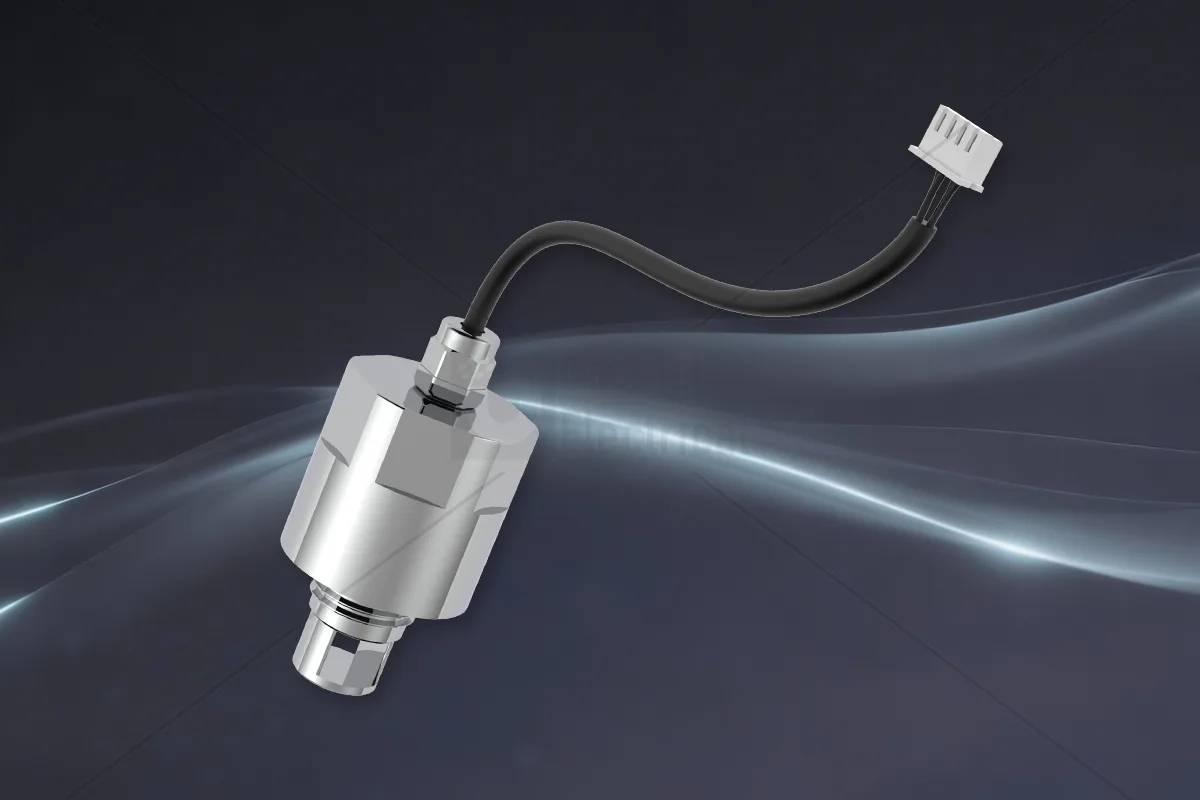
- Use G1/2 process connections, ensuring the sensor measurement window fully contacts the water flow, avoiding dead zones, bubbles, and sediment accumulation.
- If installed in a bypass, ensure the bypass flow is representative of the main pipe water quality; main pipe pressure must not exceed 1.5 MPa.
- Electrical and Data Acquisition
- Select UART or RS485 interface to connect to a local controller or gateway.
- Set reasonable sampling and reporting intervals, e.g., record trend data every 1-5 minutes (interval should be determined based on actual communication load and response requirements).
- Store temperature data together with COD/TOC/UV254 data for later analysis.
- Establish Baseline and Alarms
- After confirming normal operation and water quality compliance, continuously record for at least 24-48 hours as baseline.
- Calculate moving averages and standard deviations for each parameter, setting trend alarm thresholds (e.g., percentage deviation from baseline).
- When an alarm triggers, first check temperature, flow, pressure, and other conditions before deciding whether to sample and send to the laboratory.
- Maintenance Status Determination
- When outlet UV254/COD relative values show a continuous upward trend, it may indicate saturation of activated carbon/cartridges or deterioration of membrane integrity.
- However, a single sensor cannot directly determine replacement; comprehensive judgment involving differential pressure, flow rate, runtime, etc., is required.
Limitations and Boundary Conditions
Any online spectroscopic sensor has its applicable range. For the NSDD-Lite3, the following limitations should be clarified in commercial water purification trend monitoring:
- Surrogate parameter limitation: COD and TOC are estimated values based on UV254/spectral response; their correlation with laboratory standard methods depends on the organic composition of the water. Responses may differ across water sources (surface water, groundwater, reclaimed water) and cannot be directly equated to laboratory results.
- Turbidity and bubble interference: Non-contact optical measurements may be affected by particles, bubbles, or scaling, requiring periodic cleaning of the measurement window or use of an automatic cleaning device (if supported).
- Temperature compensation range: Although the product includes temperature correction, extreme temperature variations or rapid temperature fluctuations may still affect measurement stability; install in a pipe section with relatively stable temperature.
- Non-applicable scenarios: This sensor is not suitable for detecting microorganisms, disinfection by-products, specific inorganic pollutants, or trace toxic substances; nor should it be used in scenarios requiring legal reporting.
- No compliance certification statement: This article does not claim that the product has passed any drinking water hygiene certification or metrological verification; actual use should be assessed according to target market regulations.
Verification Methods and Calibration Recommendations
To ensure the reliability of trend monitoring, it is recommended to establish a periodic verification mechanism:
- Laboratory comparison: Monthly or quarterly, collect water samples near the sensor installation point, record sensor readings simultaneously, and send samples to the laboratory for COD/TOC determination by standard methods.
- Establish local correlation curve: Accumulate at least 5-10 sets of laboratory data and sensor readings across different concentration gradients, fit a regression equation to correct displayed values or assess correlation.
- Drift check: Periodically perform zero checks with deionized water or water with known low organic background, and span checks with known concentration standard solutions (standard solutions must be selected according to sensor measurable parameters, following manufacturer guidance).
- Data audit: Save all trend data and laboratory comparison records for traceability and optimization of alarm thresholds.
These verification steps do not replace metrological calibration but serve to confirm the relative stability and usability of the sensor under field conditions.
FAQ
1. Can the NSDD-Lite3 directly output compliant COD values? No. The COD and TOC outputs from the NSDD-Lite3 are online trend values based on non-contact spectroscopic measurement, intended for on-site screening and operational decision-making. Compliance or contractual COD values must be determined by a qualified laboratory using standard methods.
2. Why are both UV254 and COD needed? UV254 reflects the ultraviolet absorption of unsaturated organic and aromatic compounds in water, often correlating with COD/TOC. The NSDD-Lite3 simultaneously outputs UV254 and COD/TOC to allow engineers to observe raw spectral responses and reference surrogate concentrations, facilitating identification of signal sources and correlations.
3. What are the key installation considerations? Ensure the measurement window is free of bubbles, sediment, and scaling; pipe pressure does not exceed 1.5 MPa; temperature changes are gradual; use isolated communication to avoid ground loop interference; periodically inspect and clean the window.
Discuss your application
Tell us your target parameters, water matrix, interface and annual volume. Our engineering team will recommend a practical configuration.
Request a Quote