
# Which devices are suitable for the compact NSDD-Lite3 COD sensor?
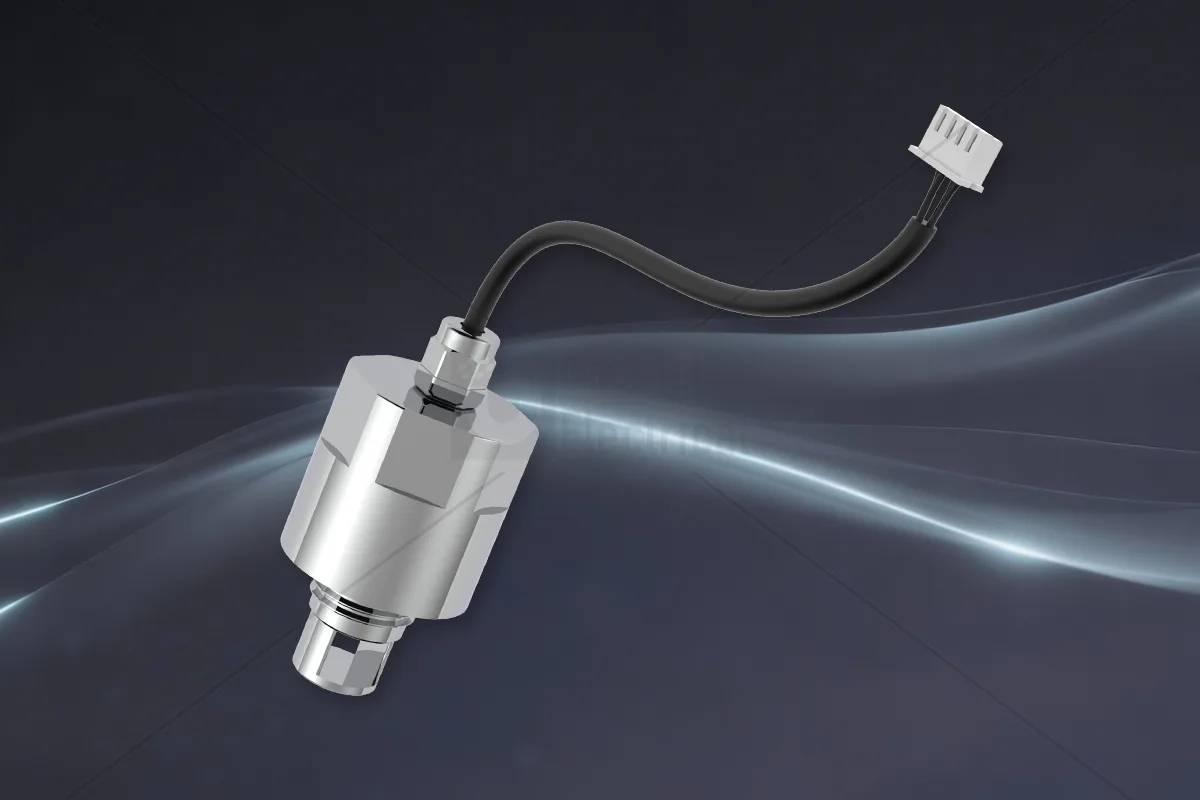
The NSDD-Lite3 is a compact COD sensor designed for device integration, based on UV-Vis multi-spectral technology, providing simultaneous TOC, COD, UV254, and temperature trend monitoring. It uses non-contact optical measurement and consumes no chemical reagents, making it suitable for embedding in commercial water purifiers, pure water systems, industrial process water equipment, and more. This article targets device manufacturers, system integrators, and technical buyers, focusing on which devices are suitable, how to assess compatibility, and what level of data you can expect after integration.
1. Which devices are suitable for integrating the NSDD-Lite3 COD sensor?
The NSDD-Lite3's G1/2 process connection, 316L stainless steel housing, and 1.5 MPa pressure rating make it primarily suited for integration in small-diameter pipelines within equipment or bypass lines. Compared to traditional TOC sensors or UV254 sensors, the NSDD-Lite3 integrates multiple parameters into a single compact housing, reducing the number of discrete components within the device. Common suitable device types are shown in the table below:
| Device type | Typical integration position | Sensor role | Installation/connection notes |
|---|---|---|---|
| Commercial drinking fountains / water purifiers | Inlet or production water line | TOC/UV254 trend, auxiliary filter cartridge life | G1/2 tee, line pressure <1.5 MPa |
| Laboratory pure/super-pure water systems | Production water loop or tank return | Online TOC indication, abnormal water quality alarm | Avoid air bubble accumulation, clean optical window periodically |
| Industrial cleaning / surface treatment equipment | Return line or storage tank | COD trend monitoring, load assessment | 316L suitable for most aqueous media; verify compatibility |
| Cooling circulating water / process water bypass | Bypass sampling line | Multi-parameter trends, optimize replenishment and blowdown | Built-in temperature compensation, RS485 connects to PLC/DCS |
Important note: The table above only describes device integration scenarios, not compliance monitoring points. The NSDD-Lite3 outputs trend values based on optical models and cannot be used directly for environmental acceptance or legal reporting.
2. Key integration features: compact design and G1/2 connection
The NSDD-Lite3 features a 316L stainless steel hygienic structure, with the non-contact optical window inside the sensor, no protruding probes or fragile parts. The G1/2 threaded connection allows direct screwing into standard pipe sockets reserved by device manufacturers, eliminating the need for custom flanges or clamps. For space-constrained commercial equipment, its compact design reduces overall size and minimizes the number of pipe elbows.
For communication, the sensor supports either UART or RS485 output. UART is suitable for close-range TTL direct connection to the main control board; RS485 is suitable for multi-sensor buses or longer cable runs. Digital output is isolated to reduce interference from variable frequency drives, pumps, and other equipment within the device. Integration engineers should choose the appropriate communication method based on the main control unit interface and field electromagnetic environment, and reserve matching resistors on the PCB or wiring terminals.
3. Reagent-free optical measurement principle and trend monitoring boundaries
The NSDD-Lite3 is based on UV-Vis multi-spectral absorption, measuring the absorbance of the water sample at specific wavelengths (including UV254), and uses built-in algorithms to derive surrogate parameters such as TOC and COD, while providing temperature correction. Since no chemical reagents are used, operating costs are low, and maintenance primarily involves cleaning the optical window. The sensor uses non-contact optical design, avoiding the contamination and drift issues of traditional electrode-based sensors.
However, it must be clear that this is a surrogate measurement/trend monitoring method. Differences in organic matter composition among water samples can affect the linear relationship between absorbance and laboratory COD/TOC. Therefore, the NSDD-Lite3 readings cannot be directly equated to COD results from laboratory methods such as GB/T 11914 or HJ 828, nor can they replace online analyzers that comply with standard methods for compliance monitoring. Device manufacturers should position it as a process monitoring, early warning, and optimization tool, not as a legal testing device.
4. Selection and integration decision steps
- Confirm line pressure and temperature: The integrated point pressure should be below 1.5 MPa in the long term, and the medium temperature must be within the sensor specifications (refer to final product manual).
- Confirm media compatibility: The sensor wetted parts are 316L stainless steel; ensure the medium is non-corrosive to stainless steel and does not contain suspended solids or scaling substances that could severely foul the optical window.
- Select communication interface: Choose UART or RS485 based on the device main control; if multiple parameters need centralized access, RS485 bus is more flexible.
- Plan installation location: Prefer sections with adequate flow and no air bubble accumulation; bypass installation facilitates maintenance and avoids main line shutdown.
- Establish local calibration: Collect sensor signal and laboratory COD/TOC comparison data on representative water samples to establish a correlation curve; update periodically if water quality changes significantly.
- Set alarm thresholds: Set equipment maintenance or alarm thresholds based on trend values, rather than directly applying discharge limits.
5. Limitations, calibration, and validation
- Non-compliance: The NSDD-Lite3 is not certified for any specific drinking water hygiene, explosion-proof, or metrological regulations. Integrators must assess compliance according to target market regulations.
- Optical interference: Color, turbidity, air bubbles, and high concentrations of suspended solids can affect spectral absorbance; mitigation via filtration, degassing, or algorithmic compensation is recommended.
- Correlation drift: Changes in source water or process adjustments may cause drift in the correlation between surrogate parameters and laboratory methods; field verification every 1–3 months is recommended (interval based on actual water quality stability, not a mandatory standard).
- Validation method: Use standard solutions (e.g., COD standard solution prepared with potassium hydrogen phthalate) for linearity checks, but final accuracy must be verified through laboratory comparison with actual water samples.
6. FAQ
Q1: Can the NSDD-Lite3 as a COD sensor be used for environmental compliance monitoring? No. The NSDD-Lite3 is a trend monitoring sensor; its COD value is an optical surrogate estimate and has not obtained environmental certification. It cannot be used for discharge compliance reporting. Compliance monitoring should use online analyzers that comply with national standards.
Q2: What is the working principle of COD sensors? The NSDD-Lite3 uses non-contact UV-Vis multi-spectral absorption. Organic substances in water have characteristic absorbance in the UV range (especially UV254). The sensor measures absorbance at multiple wavelengths, and with temperature correction and algorithmic models, outputs surrogate parameters such as TOC and COD. This is not a chemical reaction method, so no reagents are consumed.
Q3: Can RS485 and UART be used simultaneously? According to product features, the communication interface is either UART or RS485 (one of the two), not both simultaneously. Confirm configuration with the manufacturer before integration.
Q4: Can the sensor be installed directly on DN50 or larger pipes? The G1/2 thread is suitable for small-diameter lines or internal device integration. For installation on larger pipes, use standard tee adapters and ensure the sensor optical window is in the flow area.
Q5: Is periodic replacement of reagents or electrolyte required? No. The NSDD-Lite3 is a reagent-free optical sensor with no electrolyte or reagent consumption. Maintenance mainly involves periodically cleaning the optical window and checking zero/span drift.
---
Conclusion: The NSDD-Lite3 is suitable for device manufacturers requiring compact, maintenance-free, multi-parameter trend monitoring, especially in commercial water purification, pure water systems, and industrial process water bypasses. However, integration engineers should treat it as a process sensor for online water quality monitoring, not as a laboratory substitute. With reasonable local calibration and periodic verification, it can significantly enhance device intelligence and maintenance efficiency.
Discuss your application
Tell us your target parameters, water matrix, interface and annual volume. Our engineering team will recommend a practical configuration.
Request a Quote