
Online water quality monitoring sensors are moving from standalone instruments to inside OEM equipment. For equipment manufacturers, automation system integrators, and design teams in water-using production processes, the sensor's mechanical dimensions, process connections, electrical interfaces, and maintenance methods often affect the overall machine development schedule more than the accuracy of a single parameter. The NSDD-Lite3 is a compact multispectral water quality sensor, confirmed in the database to support online measurement of TOC, COD, UV254, and temperature. It features a 316L stainless steel body and non-contact optical design. This article discusses how the compact form factor reduces integration risks from an industrial equipment design perspective and clarifies which issues must be confirmed early in the project.
Body size and installation space
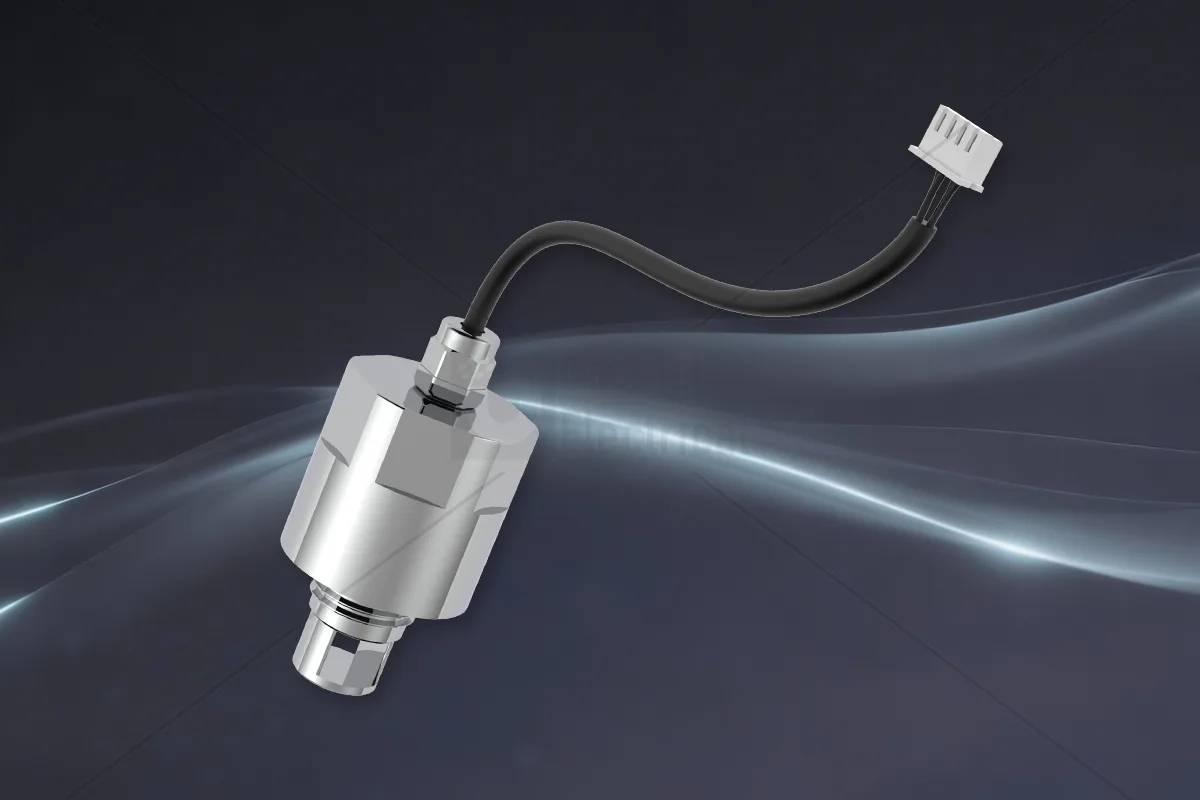
The compact form factor first impacts the mechanical layout. The database documentation for the NSDD-Lite3 does not provide specific length, width, and height; this must be brought to the design team's attention: all dimensions, tolerances, and weights should be based on the manufacturer's official mechanical drawings. What can be confirmed is that the sensor uses a 316L stainless steel body with a G1/2 thread process connection, providing a standardized mechanical boundary for OEM integration.
When designing mounting brackets, flow cells, or equipment panel cutouts, it is recommended to follow this sequence:
- Request the latest 3D model and interface definition files from the manufacturer;
- Confirm whether the sensor length affects flow path dead volume or removal space;
- Perform interference checks on the prototype, reserving removable maintenance space on at least one side;
- For vibrating or mobile equipment, assess whether additional support or vibration-damping pads are needed.
From an overall machine perspective, a compact sensor helps reduce internal space reservations, allowing the water circuit board, pumps, valves, and electrical control system to be arranged more tightly. However, compactness does not mean heat dissipation and electromagnetic compatibility can be ignored. Optical sensors typically contain a light source and signal processing circuitry, which generate a small amount of heat during prolonged operation; avoid placing the sensor close to high-temperature actuators or variable frequency drives during layout.
Piping connection and process adaptation
The G1/2 thread connection is a common interface specification in industrial water systems, facilitating compatibility with standard pipe fittings, valve groups, and flow cells. The database documentation for the NSDD-Lite3 confirms its long-term pressure resistance, up to 1.5 MPa, suitable for pipelines, tanks, and equipment integration scenarios.
The most common mistake in OEM design is installing the sensor directly in the center of the main pipeline. For spectroscopic sensors, bubbles, particle settling, or flow rate changes in the water can affect optical measurement stability. The recommended approach is to design a bypass flow cell or dedicated measurement chamber to maintain stable laminar flow at the sensor's optical window. Additionally, install appropriate filtration or degassing devices upstream of the sensor, especially when dealing with media containing suspended solids or gases prone to precipitation.
Regarding sealing, the G1/2 thread requires suitable gaskets or thread seal tape, but ensure sealing materials do not enter the flow path and contaminate the optical window. For high-purity water systems, also evaluate whether the sealing material is compatible with the system to avoid introducing organic leachates that could affect TOC/COD background levels.
Power supply and electrical interface
The database does not provide specific parameters for the NSDD-Lite3's supply voltage, power consumption, or inrush current. During the OEM design phase, you must obtain official electrical specifications from the manufacturer; do not infer from the appearance. Generally, confirm the following:
- Supply voltage range and ripple requirements;
- Inrush current at power-on and steady-state power consumption;
- Whether an isolated power supply or separate grounding is needed;
- The impact of cable length on voltage drop and signal integrity.
The NSDD-Lite3 provides isolated digital communication, which helps suppress ground loop interference in industrial environments. However, in system design, it is still recommended to shield the sensor's power and communication cables and ground the shield at one end only. Do not route variable frequency drive output cables or high-power switching power supply lines near the sensor to avoid common-mode noise coupling through the cables.
Digital interface and system integration
According to the database documentation, the NSDD-Lite3 supports UART or RS485 communication options. For embedded OEM equipment, UART is suitable for direct connection to microcontrollers, reducing conversion chips; for distributed systems, RS485 supports longer-distance bus connections, facilitating networking of multiple sensors.
Note that the database does not specify the exact communication protocol frame format, register mapping, or compatibility with Modbus RTU. During the selection phase, require the manufacturer to provide complete protocol documentation and example code. During integration, it is recommended to:
- First verify sensor communication on a PC using a USB-to-serial tool;
- Implement data parsing and checksums according to the protocol documentation;
- Design timeout and retransmission mechanisms to avoid bus congestion;
- Synchronize sensor data with the device master clock, recording timestamps.
The NSDD-Lite3 includes temperature compensation, but the position and response time of the temperature probe can affect measurement results. For processes with rapid temperature changes, it is recommended to add temperature change rate monitoring at the system level and apply secondary compensation if necessary.
Maintenance strategy
The NSDD-Lite3 uses non-contact spectroscopic measurement with no chemical reagent consumption, significantly reducing routine maintenance frequency and operating costs. However, "reagent-free" does not mean "maintenance-free." If biofilms, oil, or scaling cover the optical window, measurement values will drift.
It is recommended that OEM users develop maintenance plans based on field conditions for their customers:
- Initially check optical window cleanliness weekly, adjusting the interval based on the contamination rate;
- Use a soft cloth and mild detergent to wipe the window, avoiding scratches;
- Periodically collect water samples for comparison using laboratory methods to verify sensor drift;
- For specific water bodies, calibration or compensation using actual samples from that water body may be necessary.
It must be emphasized that the NSDD-Lite3 is intended for field trend monitoring and process screening and cannot replace laboratory COD analysis required for regulatory compliance. Scenarios such as discharge compliance and regulatory reporting must use standard laboratory methods, with sensor data serving only as supplementary judgment and early warning.
Industrial design language
The 316L stainless steel hygienic structure is not only corrosion-resistant and easy to clean functionally, but also provides a more consistent and professional appearance for OEM equipment. For equipment targeting high-end commercial or smart home applications, exposed sensor components often become an important touchpoint for users' perception of product quality.
In product appearance design, consider embedding the sensor inside the equipment, leaving only necessary piping and cables exposed; alternatively, make the sensor a visible "technology window," displaying real-time water quality data alongside the equipment panel. Regardless of the approach, maintain ease of removal for maintenance and do not sacrifice serviceability for aesthetics.
Selection and verification methods
When introducing the NSDD-Lite3 into an OEM project, the following engineering verification steps are recommended:
- Clarify measurement goals and water body: Confirm whether the parameter to monitor is TOC, COD, UV254, or a combination, and understand the water body's optical characteristics (such as color, turbidity, and types of dissolved organic matter).
- Laboratory correlation testing: Take actual water samples and compare with standard laboratory methods to establish the relationship between sensor readings and laboratory values.
- Bench running tests: Operate continuously under simulated actual flow, pressure, and temperature conditions to observe stability and zero drift.
- Field small-scale validation: Install prototype units at real process points to verify environmental interference, electromagnetic compatibility, and long-term drift.
- Develop maintenance and calibration schedule: Based on validation data, provide end users with recommendations for cleaning, comparison, and compensation.
It should be noted that the organic composition of different water bodies varies greatly, and the same sensor may respond differently in different scenarios. A "universal calibration curve" without field validation should not be used directly for compliance judgments.
FAQ
Q: Can the NSDD-Lite3 replace laboratory COD testing? A: No. The NSDD-Lite3 is an online sensor for field trend monitoring and process screening; it cannot replace laboratory compliance analysis. For discharge compliance or legal reporting, collect water samples and analyze using standard methods.
Q: What communication methods does the NSDD-Lite3 support? A: According to the database documentation, it supports UART or RS485 communication options. Specific protocols and frame formats are subject to the manufacturer's official documentation.
Q: Does the sensor consume chemical reagents? A: No. The NSDD-Lite3 uses non-contact optical measurement with no chemical reagent consumption.
Q: What is the process connection specification for the NSDD-Lite3? A: G1/2 thread connection, made of 316L stainless steel.
Q: What is the pressure resistance of the NSDD-Lite3? A: The database confirms its long-term pressure resistance, up to 1.5 MPa. Refer to the manufacturer's mechanical drawings for specific installation and sealing requirements.
Q: Can it be used in high-purity water systems? A: The database describes support for online measurement of TOC, COD, UV254, and temperature in commercial and high-purity water systems, but high-purity water applications have additional requirements for piping and sealing materials; confirm compatibility with the manufacturer.
Discuss your application
Tell us your target parameters, water matrix, interface and annual volume. Our engineering team will recommend a practical configuration.
Request a Quote