
Why Online Water Quality Monitoring Is Needed in Commercial Drinking Water Systems
Commercial drinking water systems cover scenarios such as office buildings, schools, hospitals, and airports, typically including a purification main unit, storage tanks, circulating pipes, and multiple dispensing points. When water stagnates in the pipe network, temperature fluctuates, or equipment maintenance is improper, the organic load can rise quietly. Traditional laboratory sampling has long cycles and delayed feedback, making it impossible to capture transient anomalies. On-site online monitoring is becoming a manageable operation and maintenance method.
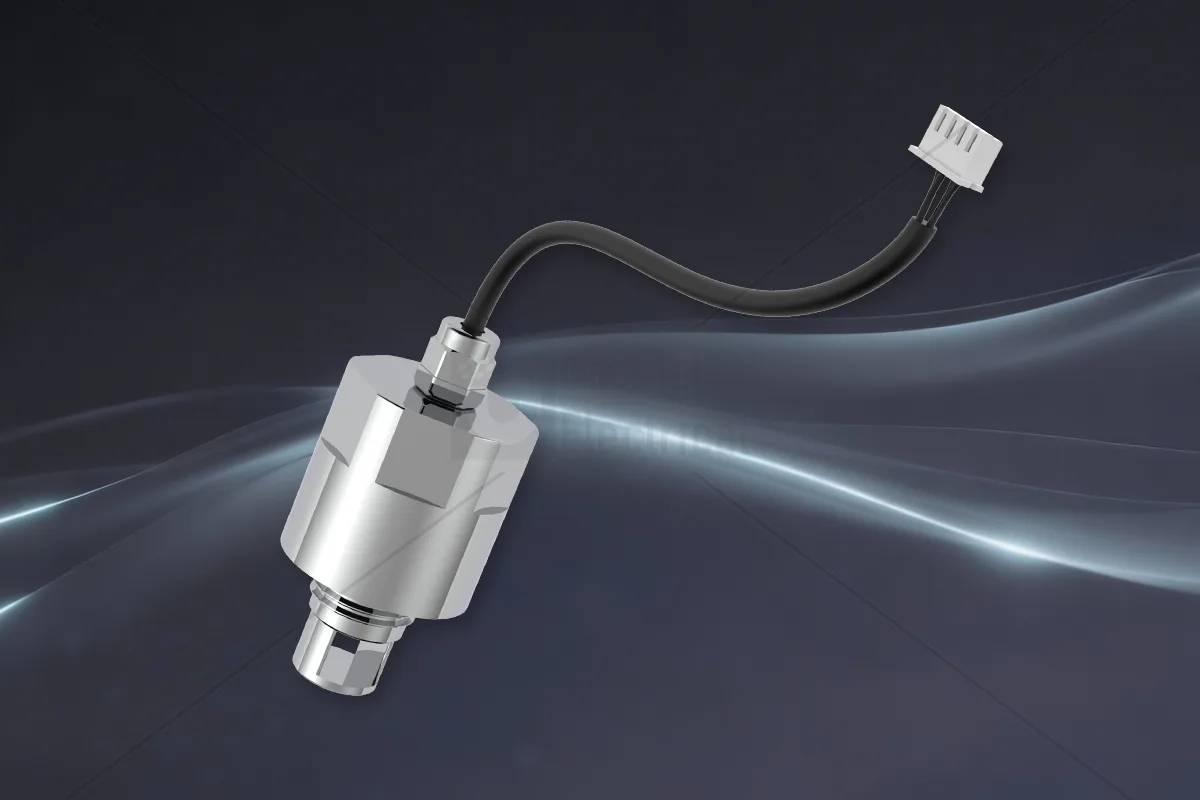
NSDD-Lite3 is a compact multispectral water quality sensor that measures TOC, COD, UV254, and temperature online without any chemical reagents. It is suitable for commercial drinking water systems and various high-purity water systems. For engineers concerned with multi-parameter trends, it can serve as a "trend indicator" for daily operations, not a replacement for compliance testing.
Monitoring Design for Multi-Point Water Usage Scenarios
In building pipe networks, water quality varies significantly at different points. Points near the purification main unit often perform better than remote stagnant areas. A sensible approach is to deploy sensors at key nodes:
- Purification Main Unit Outlet: Verify the performance of the core treatment unit.
- Storage Tank Outlet: Monitor the impact of residence time on water quality.
- Circulating Return End: Assess dead ends in the pipe network and secondary contamination risks.
- Important Dispensing Points (such as kitchens, pantries): Capture water quality changes at the user end.
NSDD-Lite3 features a G1/2 process connection and 316L stainless steel hygienic construction, making it easy to integrate into pipes or equipment. Its UART or RS485 communication options support integration with building automation systems or data loggers.
Deployment Implementation Steps
- Clarify monitoring objectives: Is it for trend warning or assisting filter replacement decisions? Different objectives determine the number of points and alarm thresholds.
- Choose installation points: Prioritize locations with sufficient turbulence and avoid air bubble accumulation and sediment. The sensor should be removable for maintenance.
- Configure communication and data acquisition: Use RS485 or UART to connect to PLC, gateway, or data logger. Set a reasonable sampling interval (e.g., 5 minutes).
- Baseline data collection: Run continuously for at least 2-4 weeks, recording the fluctuation range of each parameter under normal conditions.
- Set alarm logic: Set trend thresholds based on baseline data rather than a single absolute limit. Multi-parameter combined judgment can be used.
Trend Comparison and Alarm Verification
Values from a single point at a single moment can easily cause false alarms. A more reliable strategy combines multi-parameter trends, temporal patterns, and inter-point comparisons.
| Monitoring Parameter | Sensible Use | Considerations |
|---|---|---|
| COD / TOC | Observe the trend of organic load changes; compare differences between points | Not for direct determination of compliance |
| UV254 | Aid in identifying natural organic matter (NOM) changes; cross-verify with COD/TOC trends | May be affected by high turbidity |
| Temperature | Assess pipe network residence time and microbial risk | Related to seasons and water usage patterns |
Recommended alarm verification process:
- If a single parameter rises briefly, first check whether the sensor window is fouled or has air bubbles attached.
- If multiple parameters are simultaneously abnormal, prioritize checking for upstream purification equipment failure or raw water changes.
- If there is a deviation from trends at neighboring points, check the local pipe or valve condition at that point.
Service Records and Maintenance Loop
Online sensors are not install-and-forget devices. Keeping service records is key to ensuring data reliability:
- Regular calibration verification: Use standard solutions or lab comparison methods to confirm sensor drift.
- Optical window cleaning: Develop a cleaning schedule based on water quality, and record data jumps before and after cleaning.
- Firmware and communication checks: Regularly confirm data upload continuity and handle interruptions promptly.
- Digitize maintenance records: Link maintenance events with sensor data for future analysis.
NSDD-Lite3's non-contact optical design requires no reagent consumption, reducing long-term maintenance costs, but it still needs regular cleaning and comparison.
Applicability Boundaries and Limitations
NSDD-Lite3 is an online sensor for commercial and high-purity water systems, but the following boundaries must be clearly recognized:
- Not a replacement for compliance testing: Tests required by sanitary supervision or regulations must still be performed by certified laboratories.
- Not suitable for high turbidity or high particulate water: Its optical measurement principle performs best in clear water.
- Pressure limit: Long-term pressure resistance up to 1.5 MPa; beyond this, pressure reduction or bypass installation is required.
- Range and accuracy: Refer to the official datasheet for specific ranges and accuracy, and validate with on-site water samples.
Frequently Asked Questions (FAQ)
Q: Can NSDD-Lite3 directly provide a COD value that meets national standards?
A: No. It provides indicator values related to organic matter via spectroscopy, which can be used for trend monitoring and internal management, but it cannot replace standard laboratory methods. Specific correlations need to be established based on on-site water samples and regularly validated.
Q: Is this sensor suitable for installation on drinking water distribution pipes?
A: NSDD-Lite3 has a 316L stainless steel hygienic design suitable for clean drinking water or pure water pipes. However, before installation, confirm that system pressure and flow are within the sensor's allowable range.
Q: How often is maintenance required?
A: It is recommended to check the optical window monthly in the initial phase, and adjust based on water quality. If water quality is stable and fouling is minimal, maintenance can be extended to quarterly.
Q: Can it measure multiple parameters simultaneously?
A: Yes. NSDD-Lite3 measures TOC, COD, UV254, and temperature online, making it a multiparameter water quality sensor.
Discuss your application
Tell us your target parameters, water matrix, interface and annual volume. Our engineering team will recommend a practical configuration.
Request a Quote