
1. Pre-Integration Assessment for a COD Sensor: Pressure and Flow Boundaries
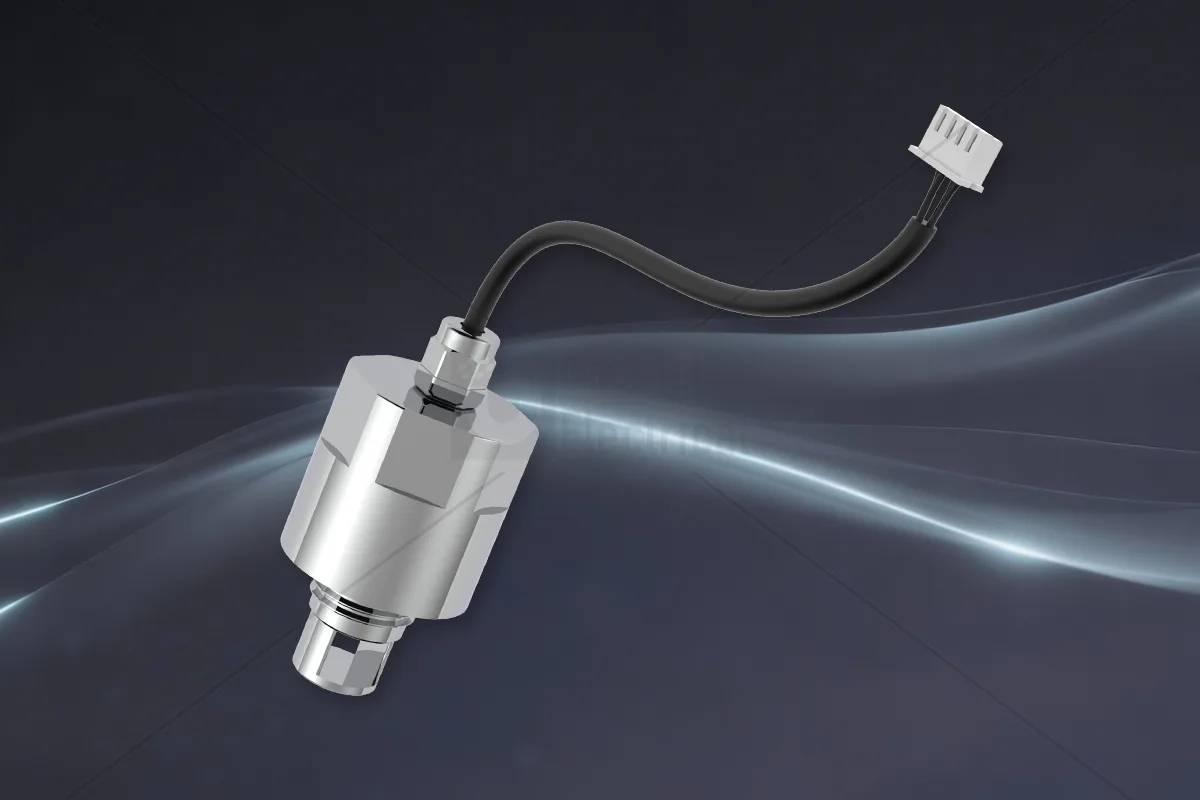
The NSDD-Lite3 is a compact multispectral water quality sensor that integrates TOC, COD, UV254 and temperature measurement in a single 316L stainless steel housing. Its non-contact optical design requires no chemical reagents, making it suitable for online trend monitoring in commercial water purification and high-purity water systems. However, any online COD sensor must be used within clearly defined engineering boundaries: this sensor has a long-term pressure rating of 1.5 MPa, a G1/2 process connection, and a choice of UART or RS485 communication.
When integrating a COD sensor into a pressurized pipeline, the first step is to confirm that the maximum system operating pressure (including water hammer) does not exceed 1.5 MPa. For pipelines where pressure spikes may occur, install a pressure reducing valve or a small accumulator upstream of the sensor. The sensor must not be installed in the strong pulsation zone at a pump outlet or on the suction side where negative pressure may occur; negative pressure causes dissolved gases to come out of solution and form bubbles directly on the optical window, causing abnormal fluctuations in TOC/COD/UV254 readings.
The value of online water quality monitoring lies in trends and alarms, but it cannot replace laboratory analysis. Where compliance reporting is required, samples should be taken periodically for laboratory analysis, with sensor data used as the basis for screening and process control.
2. G1/2 Process Connection and Sealing
The NSDD-Lite3 uses a G1/2 parallel thread, which does not itself provide sealing and must be used with a face sealing gasket or O-ring. A common mistake is to treat G1/2 as a tapered pipe thread and wrap it with PTFE tape; this can cause sealing material debris to enter the flow path and may damage the sensor thread or optical window.
Recommended approach:
- Use a flat gasket/O-ring made of 316L or PTFE to ensure compatibility with water and temperature.
- Machine a G1/2 female thread into the welded tee or dedicated mounting boss, with a flat base surface and sufficient gasket compression.
- Clean the thread and sealing surface before installation, screw in by hand, then tighten to the manufacturer's recommended torque; never use a pipe wrench to force it tighter.
- The sensor optical window should be aligned with the flow direction, avoiding direct impact of the incoming flow on the window to reduce particle adhesion.
3. Flow Regime and Bubble Control
Spectroscopic COD sensors are very sensitive to bubbles, which scatter and absorb light, causing measurement noise or even errors. In pressurized pipelines, bubbles may originate from: leakage on the pump suction side, gas coming out of solution due to a sudden pressure drop, air pockets at high points in the pipeline, or severe turbulence at the installation point.
Engineering control measures:
- Install the sensor in a pipe section that is full and continuously flowing; avoid installation at high points in the pipeline or locations where gas may accumulate.
- Prefer upward flow or insertion into the lower part of a horizontal pipe section so that bubbles naturally move away from the optical window.
- Maintain straight pipe runs of 5–10 times the pipe diameter upstream and downstream of the sensor to reduce vortices and bubble accumulation.
- If the medium itself readily releases gas, install an exhaust valve or bubble separator upstream.
- Avoid installing the sensor downstream of a throttle valve or in the strong turbulence zone at a pump outlet.
4. Maintenance Isolation and Cleaning
Online water quality sensors require regular cleaning and calibration, so isolation valves or a bypass must be designed into the integration so the sensor can be removed without shutting down the system.
- Install ball valves upstream and downstream of the sensor to create an isolatable measurement branch.
- The bypass pipe diameter should not be too large; maintain sufficient flow velocity at the sensor to avoid deposition.
- Provide a sampling valve, positioned as close to the sensor as possible, for on-site comparison sampling.
- When cleaning the optical window, use a soft non-woven cloth and a neutral detergent; hard brushes, metal scrapers and strong acids or alkalis are strictly prohibited.
- If used in a high-purity water system, all wetted parts must be kept clean to avoid grease contamination.
5. Commissioning Verification and Data Comparison
After installation is complete, commission as follows:
- Open the isolation valves, fill slowly and vent air, and confirm there are no leaks.
- Connect UART or RS485, confirm communication is normal, and check that the temperature reading matches ambient conditions.
- Let the system run for at least 30 minutes and observe the stability of the TOC, COD and UV254 readings.
- Take parallel water samples for laboratory analysis and record the deviation between laboratory values and sensor values.
- Set the correction factor or offset according to the deviation; note that this correction relationship will drift as water quality changes and must be reviewed periodically.
- Set alarm thresholds; it is recommended to determine the warning and alarm lines in combination with laboratory data rather than using default values directly.
| Check item | Acceptance criteria | Remarks |
|---|---|---|
| Pressure | Water hammer peak ≤1.5 MPa | Add pressure reducing device if necessary |
| Sealing | No leakage, no particles on sealing surface | PTFE tape prohibited |
| Flow regime | Full pipe, no obvious bubbles | Sensor readings fluctuate only slightly |
| Communication | Stable UART/RS485 data | Baud rate and address match |
| Comparison | Laboratory values consistent with sensor trend | Systematic deviation allowed |
6. Frequently Asked Questions (FAQ)
Q: What is the COD sensor working principle of the NSDD-Lite3? A: The NSDD-Lite3 uses non-contact spectroscopic measurement, estimating TOC, COD and UV254 from the absorption of specific ultraviolet-visible wavelengths by the water sample. This method requires no chemical reagents and responds quickly, making it suitable for online trend monitoring, but its results differ in principle from laboratory chemical oxygen demand analysis and cannot be directly equated with it.
Q: Can the NSDD-Lite3 replace laboratory COD analysis? A: No. The sensor is used for process trends, alarms and screening; it is not a compliance analysis method. Any discharge or drinking water determination must be based on laboratory methods.
Q: Can PTFE tape be used at the G1/2 connection? A: Not recommended. G1/2 is a parallel thread and should use a sealing gasket or O-ring. PTFE tape debris may enter the optical window and affect measurement.
Discuss your application
Tell us your target parameters, water matrix, interface and annual volume. Our engineering team will recommend a practical configuration.
Request a Quote