
Introduction
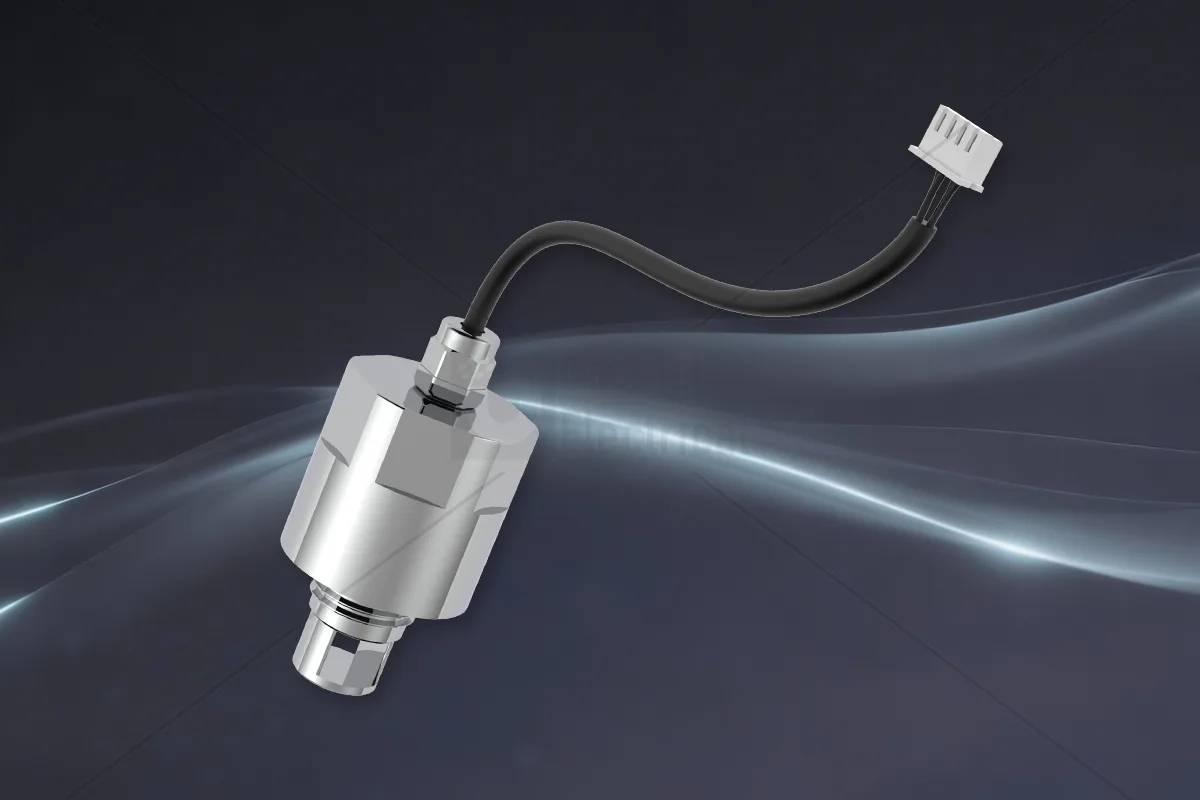
The NSDD-Lite3 is a compact reagent-free online multiparameter water quality sensor that simultaneously outputs TOC, COD, UV254 and temperature signals. Its 316L stainless steel housing, G1/2 process connection and pressure-resistant design suit pipes, tanks and equipment integration. At the system design stage, the choice of communication interface directly affects wiring cost, noise immunity and commissioning efficiency. The NSDD-Lite3 offers UART or RS485 communication options, and this article discusses how to choose based on application scenarios from an engineering practice perspective.
Interface Fundamentals: Differences Between UART and RS485
UART is asynchronous serial communication, typically using TTL levels or converted RS232 levels, and is a point-to-point connection. It suits board-level interconnection and short-distance communication inside devices, with simple wiring and low cost, but the signal is single-ended to ground, so common-mode noise immunity is limited and transmission distance is generally confined to within a few meters, depending on baud rate, cable quality and the electromagnetic environment.
RS485, by contrast, uses differential signal transmission, forming balanced transmission over two wires A/B, with strong common-mode noise suppression and support for a multipoint bus topology, with typical bus lengths reaching hundreds of meters or more. RS485 is usually used with protocols such as Modbus RTU, but RS485 itself is only the physical layer, and the protocol must be confirmed against the sensor firmware.
Selection Decision: Four Key Dimensions
Distance and Wiring
If the NSDD-Lite3 is installed directly next to the main control board in the same control cabinet, or integrated as an embedded module into compact equipment, UART is usually simpler. If the sensor needs to be installed at a remote point on a pipe, on top of a tank or in a field instrument box, more than a few meters from the control cabinet, RS485 is more suitable, reducing the risk of repeaters and signal attenuation.
Node Count
UART is a point-to-point interface, so one master controller can connect to only one NSDD-Lite3. RS485 supports a multipoint bus, allowing multiple sensors on a single bus, suitable for multiparameter water quality monitoring or multi-point deployment in the same area.
Noise Immunity and Industrial Environments
Industrial sites contain interference sources such as variable-frequency drives, motors and solenoid valves. UART single-ended signals are prone to bit errors in such environments, while RS485 differential signals effectively suppress common-mode interference. If the sensor is near pumps, relays or high-frequency switching equipment, give priority to RS485.
Gateway and Commissioning Workflow
An RS485 bus is easy to connect to PLCs, DTUs, industrial gateways or SCADA systems, and many gateways natively support Modbus RTU to Ethernet/4G, making it convenient to build an online water quality monitoring network. UART is often connected to a PC via a USB-to-TTL module for rapid evaluation, requiring no additional transceiver during commissioning, but mass-production integration may require added level shifting or isolation circuitry.
Typical Application Scenarios and Recommendations
| Application Scenario | Recommended Interface | Reason |
|---|---|---|
| Integration inside compact equipment, control board-level communication | UART | Short-distance point-to-point, minimal wiring, low cost |
| Online water quality monitoring, multi-sensor networking | RS485 | Supports multipoint bus, long-distance noise immunity |
| Remote transmission for industrial process water pipes/tanks | RS485 | Differential transmission, suitable for electromagnetically complex environments |
| Rapid bench evaluation in the laboratory | UART | Simple commissioning, convenient PC connection |
Implementation Steps and Verification
- Confirm configuration and protocol: Confirm with the manufacturer the specific pin definitions, baud rate and data format for UART and RS485 under the current NSDD-Lite3 firmware version, and whether Modbus RTU is supported. Configuration differences may exist between batches.
- Electrical connection: For UART, note TX/RX crossover and common ground to avoid level mismatch; for RS485, confirm A/B polarity, and for long distances or high baud rates add 120Ω termination resistors at both ends of the bus, with bias resistors if necessary.
- Communication test: Use a serial debugging assistant or Modbus debugging tool to send read commands and verify whether the returned TOC, COD, UV254 and temperature data format is correct and whether the update rate meets requirements.
- Data integrity verification: Run continuously for more than 24 hours and record the bit error rate, timeout count and abnormal resets. Retest under the actual electromagnetic environment on site to confirm stable communication.
- Long-term monitoring calibration: The NSDD-Lite3 provides trend-based online measurement, and should be periodically compared and calibrated using laboratory methods or standard solutions; on-site readings must not be equated directly with laboratory COD analysis values.
Limitations and Precautions
- The TOC, COD and UV254 online measurements of the NSDD-Lite3 are process trend monitoring and on-site screening, and their results are affected by water turbidity, bubbles, temperature changes and contamination of the optical window. Important decisions or compliance reports must be supported by standard laboratory analysis methods.
- The UART interface may experience unstable communication when unshielded cable runs exceed a few meters, under strong electromagnetic interference or with poor grounding, and is not recommended for long-distance industrial sites.
- Although RS485 has strong noise immunity, it requires additional transceiver chips, bus management and protocol parsing, placing higher demands on firmware and gateway configuration.
- This article does not cover numerical commitments such as specific transmission distances or bit error rates; actual performance must be based on the manufacturer's specifications and on-site testing.
Frequently Asked Questions (FAQ)
Q: Can the NSDD-Lite3 use UART and RS485 at the same time? A: According to available product information, the NSDD-Lite3 offers UART or RS485 communication options, usually an either/or configuration. Whether a specific model supports simultaneous output on both interfaces must be confirmed with the manufacturer.
Q: Does choosing RS485 automatically mean Modbus RTU is supported? A: RS485 is a physical layer standard and does not define a protocol. The NSDD-Lite3 may support Modbus RTU or a proprietary protocol, and the protocol documentation must be confirmed before integration.
Q: Can the UART interface be used for online water quality monitoring? A: Yes, but it is recommended only for short-distance connections inside a control cabinet or equipment. If the sensor is far from the data acquisition end or located in an industrial site, RS485 with shielded twisted-pair cable is recommended.
Q: Can on-site screening data replace laboratory COD analysis? A: No. The online measurement of the NSDD-Lite3 is used for continuous trend monitoring and abnormal alarm warning, and laboratory COD analysis remains the standard method for compliance and accurate evaluation.
Discuss your application
Tell us your target parameters, water matrix, interface and annual volume. Our engineering team will recommend a practical configuration.
Request a Quote