
1. Effective Signal Boundary of Low-Range COD Sensors
Online spectral sensors estimate organic load by detecting the absorption of a water sample in the ultraviolet band. The UV254 signal of the NSDD-Lite3 directly reflects absorbance at 254 nm, while TOC and COD are trend quantities based on spectral models, not substitute results for laboratory digestion methods. The background TOC/COD of commercial water purification and high-purity water systems is usually very low, so the sensor signal may approach the lower limit of its effective resolution. The main risk is not a sensor fault, but system background noise, temperature drift, tubing leachables, or window contamination being misread as changes in organic matter.
Therefore, in high-purity water applications, the NSDD-Lite3 is better suited to answering "whether abnormal contamination has occurred" and "whether the trend is stable" rather than "what exactly the TOC is in ppb." Engineering teams should confirm the signal baseline through high-purity water blank tests during commissioning, and then decide whether to use the COD sensor for quantitative alarms.
| Measurement Parameter | Online Signal Meaning | Applicable Scenario | Main Limitation |
|---|---|---|---|
| TOC | Total organic carbon trend | Pure water, commercial water purification | Low range is affected by background interference; baseline confirmation required |
| COD | Chemical oxygen demand trend (spectral estimation) | Industrial process water | Correlation with laboratory methods requires on-site verification |
| UV254 | 254 nm absorbance | Changes in organic load | Does not distinguish pollutant types |
| Temperature | Process temperature and signal compensation | All installation points | No independent water quality meaning |
2. Process Water Background: The Premise for Signal Interpretation
The conversion relationship between UV254 and COD/TOC differs across water bodies. In drinking water and reverse osmosis permeate, organic matter is mostly low-molecular-weight humic substances or disinfection by-products; industrial process water may contain alcohols, surfactants, polymers, or oils and greases, whose ultraviolet absorption characteristics vary greatly. If a generic conversion factor is applied directly, the online COD value will show significant deviation from actual laboratory results.
The correct approach is to use the NSDD-Lite3 as a trend sensor within an online water quality monitoring system: first collect a sufficient number of laboratory samples at the same sampling point (it is recommended to cover normal fluctuations and abnormal conditions), and then establish a scatter relationship between the sensor signal and laboratory results. Only when this relationship is stable can the online value be used for process warnings or as an auxiliary basis for filter replacement decisions.
3. Installation Cleanliness: The First Gate for Low-Range Stability
High-purity and commercial water purification systems are very sensitive to organic matter, and trace contamination introduced during installation may be far higher than the signal to be measured. The NSDD-Lite3 uses a non-contact optical window and has no reagent flow path, but the window surface and sampling chamber may still retain sealant, cutting fluid, or welding slag. The following steps can reduce interference:
- Before installation, flush the piping thoroughly with clean water to avoid residual welding slag, metal chips, and sealing materials.
- Choose a location with a full pipe, stable flow rate, and no bubble accumulation; avoid installing the sensor at the top of the pipe or in dead water zones.
- Perform a blank test immediately after installation: introduce high-purity water with known low TOC and observe whether the signal returns to the expected low value.
- If the blank signal remains high, first check the installation materials, O-rings, and window cleanliness; do not directly adjust the sensor coefficients.
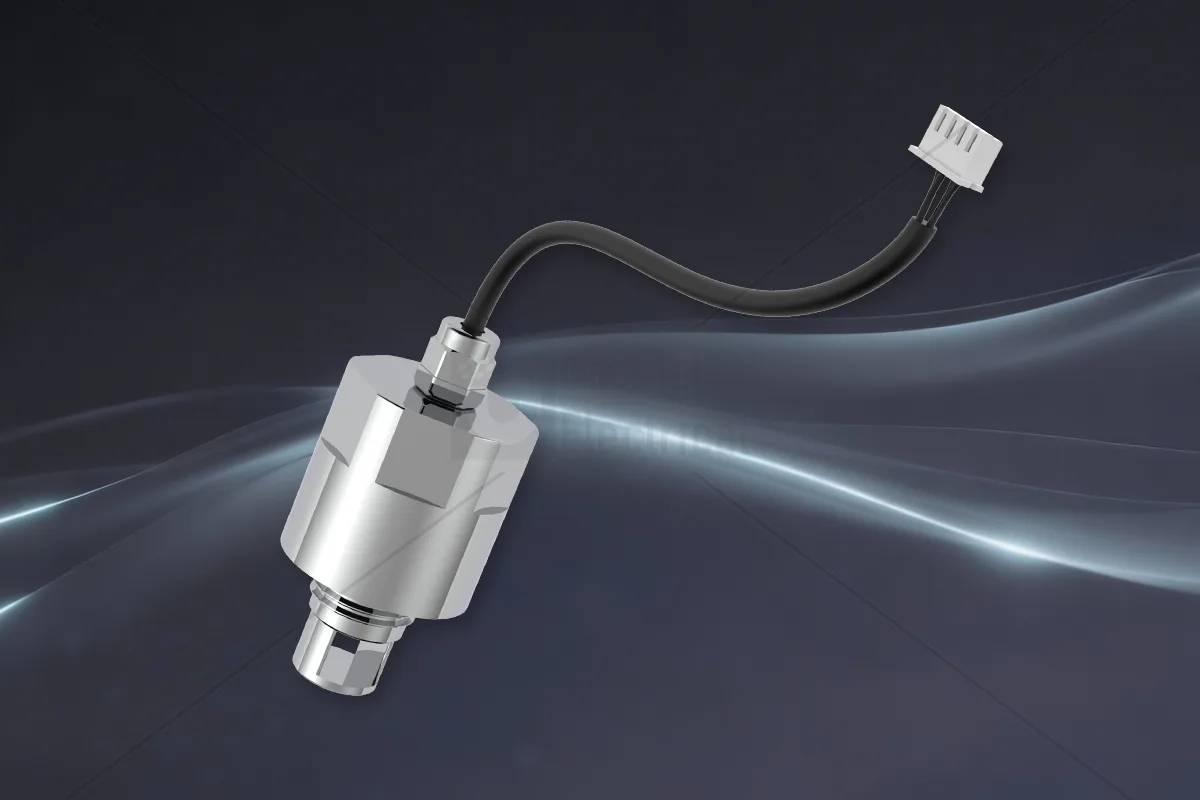
Because the NSDD-Lite3 body is made of 316L stainless steel and has a G1/2 process connection, it is suitable for integration into pipes, tanks, and equipment panels, but integrators still need to ensure that all parts in contact with water meet cleanliness requirements. The value of online water quality monitoring depends heavily on installation quality.
4. Reference Method Confirmation: From Process Signal to Management Decision
The COD/TOC output of the NSDD-Lite3 is a spectrally estimated result and cannot be used for discharge compliance or statutory reporting. To convert online data into manageable process information, the following verification process is recommended:
- Determine the reference method: Analyze grab samples using laboratory standard methods (such as certified methods for the corresponding COD or TOC).
- Collect paired data: Collect at least 10–20 sets of sensor signals and laboratory results at different operating periods, covering low, medium, and high concentration ranges.
- Establish correlation: Plot a scatter diagram and evaluate linear or nonlinear models; if the correlation is poor, recheck sampling consistency and installation conditions.
- Set alarm thresholds: Set warning values based on trends rather than absolute concentrations, and allow a reasonable lag interval to avoid frequent false alarms.
- Review regularly: Perform on-site blank and laboratory sample reviews monthly or quarterly, and reconfirm the baseline after cleaning the window.
Only after completing the above confirmation can the COD sensor signal of the NSDD-Lite3 be used for management decisions such as filter life assessment, backwash triggering, or abnormal contamination warnings. Any compliance use must adopt statutory analytical methods.
5. Applicable and Non-Applicable Boundaries
Based on the product characteristics of the NSDD-Lite3, its reasonable application boundaries are as follows:
Suitable Scenarios
- Trend monitoring of organic matter in the effluent of commercial water purification systems
- Early warning of organic load fluctuations in industrial process water
- Auxiliary judgment for replacing filter elements or membrane modules (needs to be combined with differential pressure, flow, etc.)
- Real-time screening of contamination events in high-purity water systems
Unsuitable Scenarios
- Discharge outlet compliance monitoring or statutory reporting
- Accurate quantification of trace TOC (below the effective resolution of the sensor)
- COD measurement of complex industrial wastewater without on-site correlation confirmation
- Water bodies containing large amounts of suspended solids, strong color, or oil film interference and without pretreatment
6. Implementation Roadmap
For engineers or system integrators wishing to deploy the NSDD-Lite3, it is recommended to proceed according to the following steps:
- Clarify the monitoring objective: trend warning, process optimization, or equipment protection.
- Obtain background data: understand the typical TOC/COD range of the process water and make a preliminary judgment of sensor applicability.
- Review the installation location: confirm compatibility of pressure, temperature, flow rate, and piping material.
- Perform clean installation and blank testing, and record the initial baseline.
- Carry out paired sampling and reference method confirmation to establish a site-specific correlation.
- Configure trend alarms and deadbands in the control system to avoid using a single instantaneous value as the basis for control.
- Develop a maintenance plan, including regular window cleaning, communication checks, and baseline re-verification.
7. Frequently Asked Questions (FAQ)
Q: Can the COD sensor output of the NSDD-Lite3 be used directly as proof of water quality compliance? A: No. Online spectral sensors provide trend monitoring and screening signals; discharge compliance or statutory drinking water testing must use laboratory standard methods. The COD output of the NSDD-Lite3 can only be used for process management and abnormal warnings.
Q: Why do online COD sensor readings and laboratory COD results differ? A: The measurement principles are different. Laboratory COD is determined by chemical digestion, while online sensors estimate based on ultraviolet spectra, which are affected by organic matter type, turbidity, temperature, and color. Correlation must be established through on-site paired samples; absolute values cannot be compared directly.
Q: TOC is very low in high-purity water; is there still any point in using the NSDD-Lite3? A: Yes, but expectations must be adjusted. It can be used for contamination event warnings, system stability, and trend change monitoring, not for trace concentration reporting. If the purpose is to accurately measure ppb-level TOC, a dedicated instrument with higher resolution should be selected.
Q: What needs the most attention during installation? A: Cleanliness. Residual piping, window contamination, bubbles, and dead water zones can all cause significant interference at low ranges. A blank test must be performed after installation, and trend monitoring should begin only after the baseline is confirmed stable.
Discuss your application
Tell us your target parameters, water matrix, interface and annual volume. Our engineering team will recommend a practical configuration.
Request a Quote