
# How the 316L and POM Construction of NSDD6 Affects Deployment Considerations
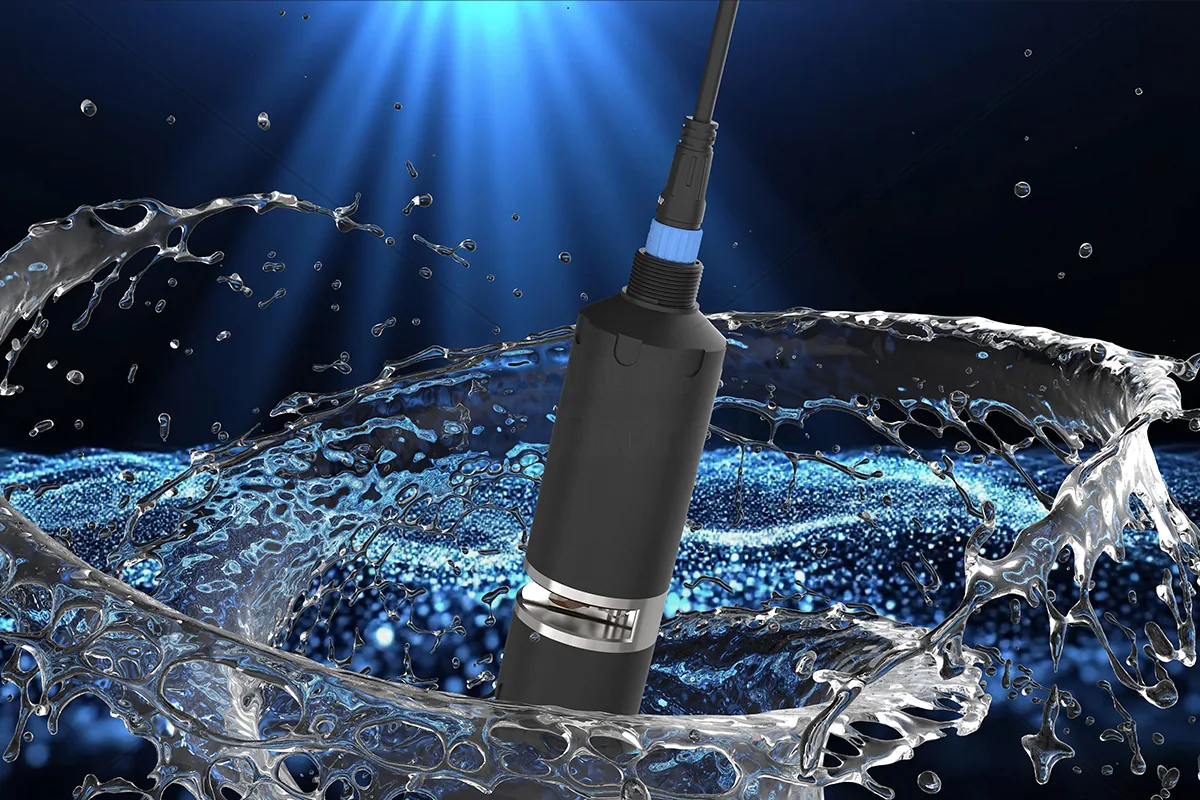
In continuous water quality monitoring projects, the long-term stability of online optical instruments such as COD sensors depends not only on spectral compensation algorithms but also directly on how well the wetted materials match the on-site water quality. The NSDD6 industrial multiparameter water quality sensor uses a combined 316L stainless steel and POM (polyoxymethylene) construction and is designed for surface water, industrial and domestic wastewater, treatment plant effluent and discharge monitoring. As a reagent-free, non-contact spectral measurement device, it uses automatic physical cleaning to control contamination, but environmental conditions still need to be confirmed before deployment. This article discusses, from five aspects—structural materials, on-site media, installation protection, cleaning accessibility and long-term service—the issues that engineers and system integrators need to verify during selection and installation, without making durability commitments beyond published product information.
1. Material Roles: What 316L and POM Each Contribute
The industrial construction of NSDD6 consists of 316L stainless steel and POM. 316L is an austenitic stainless steel typically used to provide mechanical strength and good resistance to uniform corrosion; POM is an engineering plastic with low water absorption and good dimensional stability in most neutral waters and some weakly acidic and alkaline media, and is often used for optical windows, insulating parts or lightweight housings.
1.1 Engineering Significance of 316L
Compared with 304 stainless steel, 316L has improved resistance to pitting and crevice corrosion due to the addition of molybdenum, but localized corrosion can still occur in high-chloride, low-pH or high-temperature environments. In addition, 316L has good thermal and electrical conductivity, making it suitable for sensor housings and process connections.
1.2 Engineering Significance of POM
POM has high strength, a low friction coefficient and fatigue resistance, making it suitable for manufacturing small moving parts and structural components. It has low water absorption and stable dimensions in water environments, but is sensitive to strong acids, strong oxidizers and some organic solvents. Different grades of POM vary considerably in modification, so general POM data cannot be directly equated with the performance of the material used in NSDD6.
1.3 Material Interfaces and Sealing
The product documentation only states "316L stainless steel and POM industrial construction" and does not disclose the specific part allocation of the two materials in the sensor, wall thickness or wetted area. Before deployment, request installation drawings and a bill of materials from the supplier to confirm which surfaces directly contact the medium and whether auxiliary materials such as sealing rings and cable sheaths are compatible. Avoid inferring long-term corrosion resistance solely from material grade.
2. On-Site Media: Environmental Conditions That Must Be Confirmed for COD Sensor Deployment
Online spectral sensors are sensitive to changes in water quality, but wetted materials define the boundary of chemical compatibility. The table below lists the media factors that should be verified before deployment, their potential impacts and recommended actions. The content is general engineering judgment and does not constitute a specific durability guarantee for NSDD6.
| Media Factor | Potential Impact on 316L | Potential Impact on POM | Pre-Deployment Action |
|---|---|---|---|
| Low pH or strong acids | Uniform corrosion or pitting may occur | Some strong acids may degrade POM | Obtain full water quality analysis and consult the supplier's material compatibility table |
| High chloride/salinity | Increased risk of pitting and crevice corrosion | Usually minor impact, but salt crystallization may increase wear | Confirm chloride concentration and material application limits |
| Organic solvents/aromatic hydrocarbons | Usually minor impact | POM may swell or crack with certain solvents | Identify solvent components in the medium and use isolated mounting if necessary |
| High temperature | Accelerates corrosion reactions | Prolonged high temperature may reduce POM mechanical properties | Confirm continuous operating temperature range and allow a safety margin |
| High suspended solids/abrasive particles | Erosion corrosion or surface scratching | Abrasive particles may wear optical windows or sealing surfaces | Use pre-filtration or choose a low-flow installation point |
| Biofilm/scaling | Risk of under-deposit corrosion | Surface scaling affects optical measurement | Enable automatic physical cleaning and schedule manual maintenance |
2.1 pH and Acidity/Alkalinity
pH value alone is not the only criterion for corrosiveness, because buffer systems and temperature significantly affect corrosion rates. For 316L, strong acids, especially halogen-containing acids, can destroy the passive film; POM is generally better in alkaline environments, but concentrated alkalis may also cause stress cracking. Before deployment, obtain a pH fluctuation curve over time rather than a single-point value.
2.2 Chloride and Salinity
Chloride is one of the main causes of pitting in 316L. Salinity in wastewater, seawater intrusion or de-icing salts can all raise chloride levels. Even if compliant in the short term, crevices under long-term deposits can become initiation sites for pitting. For POM, the impact of chloride is small, but salt crystallization may wear optical surfaces, so it should be evaluated together with the automatic cleaning frequency.
2.3 Solvents and Organic Matter
Industrial process water may contain alcohols, ketones, aromatic hydrocarbons or chlorinated solvents. Some organic substances are non-corrosive to 316L but may swell POM or cause stress cracking. If unknown organic components are present on site, conduct material immersion testing or use isolated mounting parts.
2.4 Temperature and Flow Rate
Rising temperature accelerates electrochemical reactions and polymer aging. Excessive flow rate may cause erosion corrosion, while too low a flow rate tends to cause deposition. The sensor installation point should be selected in an area where the medium is well mixed and the flow rate is moderate, avoiding dead zones and strong turbulence.
3. Installation Protection: Mechanical Stress, Electrical Isolation and On-Site Protection
NSDD6 supports long-distance isolated RS485 communication and is suitable for connection to existing PLCs or online water quality monitoring systems. However, communication reliability depends not only on the interface but also on the installation method.
3.1 Mechanical Installation
The sensor should not serve as a load-bearing component of the pipe. When installed on open channels or pipes, use an independent bracket to avoid housing fatigue caused by water flow impact or pipe vibration. The 316L construction has good strength, but long-term alternating stress may still affect sealing. For insertion mounting, confirm the insertion depth and seal specifications to prevent leakage.
3.2 Electrical Wiring
Although RS485 is isolated, on-site strong power, variable frequency drives or lightning-induced surges may still couple interference through cables. Recommendations:
- Route signal cables separately from power cables;
- Ground the shield at one end to avoid ground loops;
- Verify termination resistor configuration for long-distance wiring;
- Add surge protectors in lightning-prone areas.
3.3 Protection and Sealing
The sensor electronics compartment and wiring terminals must be protected from water immersion and condensation. If spray, rain or high humidity is present on site, suitable protective enclosures and cable glands should be provided. The specific protection rating must be based on the product manual and must not be inferred. After installation, perform an airtightness check to prevent moisture from entering the electronics compartment.
4. Cleaning Accessibility: Automatic Cleaning Is Not Maintenance-Free
The automatic physical cleaning of NSDD6 is used to suppress biofilm and suspended solids deposition and extend the manual maintenance interval. In actual deployment, however, the effectiveness of automatic cleaning is affected by the type of medium, installation orientation and cleaning frequency. Engineers should note:
4.1 Cleaning Coverage
The mechanical action of automatic cleaning may not cover all optical window edges or gaps in the mounting bracket. It is necessary to evaluate whether the sensor installation angle allows the cleaning component to fully contact key surfaces. If deposits are found on window edges, adjust the installation angle or increase the frequency of manual cleaning.
4.2 Treatment of Stubborn Scale
For calcium carbonate, iron-manganese oxides or oily deposits, physical cleaning alone may not be sufficient, and manual chemical cleaning is required. Cleaning agents must be compatible with both 316L and POM; avoid strong oxidizing acids or chlorine-containing solvents. It is recommended to test first on non-critical areas that do not affect measurement, and to clean comprehensively only after confirming no corrosion.
4.3 Maintenance Accessibility Design
If the installation location is deep in a tank or below a manhole, manual maintenance is difficult. A liftable mounting bracket or quick-release connector should be provided so that maintenance personnel can remove and inspect the sensor without draining the tank. At the same time, sufficient cable length should be reserved for lifting to avoid damage from repeated bending.
4.4 Verification of Cleaning Effectiveness
After each manual cleaning, record the signal change before and after cleaning to determine whether automatic cleaning is still effective. If the signal recovery after cleaning is very small, the cleaning cycle may need to be adjusted or the installation location changed. Long-term observation of changes in the cleaning cycle can provide early warning of scaling trends.
5. Long-Term Service: Calibration, Drift and Laboratory Comparison
NSDD6 provides reagent-free spectral measurement of up to six parameters, including TOC, COD, turbidity, color, UV254 and temperature, and is an online trend monitoring device. Its output values are indirect indicator values converted through spectral models and are not a direct substitute for standard laboratory methods.
5.1 Boundary Between On-Site Screening and Regulatory Monitoring
Discharge compliance determination must use accredited laboratory methods (such as the potassium dichromate method for COD). Online spectral sensors are suitable for process warnings, influent shock identification and optimized control. Confusing the two may lead to incorrect decisions.
5.2 Initial Correlation Modeling
Before formal grid connection, at least 15–20 on-site water samples covering different operating conditions should be collected simultaneously, sent to the laboratory for measurement, and then used to establish linear or polynomial regression with the sensor signal. The specific number of samples should be determined according to the magnitude of water quality fluctuations. The regression model should be verified periodically, especially during seasonal changes or when the influent source changes.
5.3 Drift Verification
Perform a blank check (pure water or zero standard solution) weekly or biweekly to confirm there is no zero-point shift caused by contamination. If the sensor supports verification with standard substances, follow the procedure. When drift exceeds the allowable range, inspect the optical window and cleaning mechanism.
5.4 Periodic comparison
Perform on-site sampling and laboratory method comparison at least once a month, and record the deviation. If the deviation exceeds the process-allowable range, re-model or check the optical window for contamination. Store the comparison data in the maintenance log as the basis for equipment performance trends.
5.5 Fault diagnosis and data credibility
When online data shows abnormal fluctuations, do not immediately assume the sensor has failed. First check:
- Whether automatic cleaning is being executed normally;
- Whether bubbles or particles are obstructing the optical window;
- Whether power and communication are stable;
- Whether laboratory comparison results also deviate from expectations.
This approach of ruling out external factors first can reduce unnecessary repair downtime.
6. Pre-deployment decision checklist
Before purchasing and installing the NSDD6, it is recommended to complete the following confirmations:
6.1 Medium-side confirmation
- Complete water quality full analysis report (pH, temperature, chloride ions, conductivity, suspended solids, grease, solvents, etc.);
- Supplier written confirmation of material compatibility, covering the suitability of 316L and POM in the expected medium;
- Assessment of flow velocity, bubbles, stray light and sediment at the installation point.
6.2 Installation-side confirmation
- Verification of the automatic cleaning mechanism's reachability in the target installation orientation;
- Design of the mechanical bracket and lifting device;
- Design of RS485 communication distance, termination resistors and grounding method;
- Cable protection and lightning protection measures.
6.3 Operations-side confirmation
- Preparation of manual maintenance access and tools;
- Initial modeling and subsequent laboratory comparison plan;
- Calibration and filtering logic for sensor output values in the data acquisition platform;
- Compatibility list for consumables such as cleaning agents and calibration solutions.
| Decision stage | Key question | Confirmation output |
|---|---|---|
| Material compatibility | Are 316L/POM suitable for the current water quality? | Supplier written confirmation |
| Installation method | Is it easy to maintain and clean? | Installation drawings |
| Communication access | Can RS485 transmit stably? | On-site commissioning records |
| Data credibility | Is the deviation between online values and laboratory methods acceptable? | Comparison report |
FAQ
Q: Are the 316L and POM of the NSDD6 suitable for all wastewater? A: This cannot be generalized. 316L may suffer pitting corrosion in environments with high chloride ion content or strong acidity; POM is sensitive to some solvents. A complete water sample report must be provided before deployment, and the supplier must confirm material compatibility.
Q: Can an online COD sensor replace laboratory COD testing? A: It cannot replace statutory laboratory methods. Online spectroscopic sensors are used for continuous trend monitoring and process control; compliance discharge determination still needs to be based on standard laboratory methods.
Q: Can automatic physical cleaning completely eliminate manual cleaning? A: No. Automatic cleaning can reduce maintenance frequency, but stubborn scale layers, optical window edges and mounting brackets may still require manual handling. A regular manual maintenance plan should be established.
Q: What is the most easily overlooked issue when deploying the NSDD6? A: The most easily overlooked issues are cleaning reachability and initial modeling. Many projects focus only on the sensor itself but do not reserve a lifting mounting bracket, resulting in difficult later maintenance; at the same time, no on-site comparison modeling is done, so online data cannot be correlated with laboratory methods.
Q: How can the accuracy of NSDD6 online data be verified? A: Through regular on-site sampling and comparison with standard laboratory methods, monitor the deviation trend; also check zero drift and cleaning effectiveness. If the deviation continuously exceeds the process-allowable range, re-model or check the sensor status.
Discuss your application
Tell us your target parameters, water matrix, interface and annual volume. Our engineering team will recommend a practical configuration.
Request a Quote