
As surface water environmental quality monitoring evolves toward full-coverage, real-time, high-density grid-based systems, comprehensive organic indicators (COD, TOC), turbidity, color, and specific organics (UV254) in rivers, lakes, and reservoirs have become core parameters for assessing pollution loads and trends. Traditional online monitoring solutions typically require multiple independent sensors or analyzers, resulting in high hardware costs, complex installation and maintenance, and significant system integration challenges. The Oromë Electrical NSDD6 industrial multispectral water quality sensor employs non-contact spectral measurement technology to simultaneously measure six parameters—TOC, COD, turbidity, color, UV254, and temperature—in a single device, reducing the number of sensors needed and offering an intensive, low-maintenance solution for surface water monitoring. This article objectively elaborates on technical principles, total lifecycle costs, engineering implementation methods, and limitations for reference by industry users.
Cost Structure of Traditional Multi-Parameter Monitoring Solutions
In surface water automatic monitoring stations or buoy systems, the traditional approach to obtaining key data such as COD, turbidity, and color involves configuring the following separate instruments:
- COD Online Analyzer: Typically uses the potassium dichromate digestion-spectrophotometric method, requiring regular replenishment of concentrated sulfuric acid, potassium dichromate, and other chemical reagents, and generating chromium-containing waste liquid. The analysis cycle is generally no less than 30 minutes, with high unit purchase cost and heavy maintenance workload.
- TOC Analyzer: Often employs the combustion oxidation-non-dispersive infrared method or the ultraviolet-persulfate oxidation method, also consuming reagents and carrier gas, with a complex structure and demanding requirements for sample pretreatment.
- Turbidity Sensor: Based on the 90° scattered light principle, requires regular cleaning of the optical window to prevent biofilm or silt attachment, has a limited measurement range, and outputs only turbidity values.
- Color Sensor: Based on the platinum-cobalt colorimetric method, requires specific wavelength light sources and detectors. Some products integrate color and turbidity but still as an independent probe.
- UV254 Sensor: Requires a separate ultraviolet absorption probe, with some equipped with automatic cleaning devices.
The main cost factors of this approach include:
- Hardware Purchase Cost: The four types of sensors/analyzers and associated transmitters, flow cells, mounting brackets, anti-biofouling devices, piping, valves, etc., result in a total procurement cost significantly higher than a single multi-parameter sensor solution.
- Installation and Space Requirements: Multiple devices occupy considerable installation space, leading to marked conflicts between installation complexity and maintenance space on buoy platforms or small shore-based stations.
- Operation and Maintenance Costs: Chemical-based instruments require periodic replacement of consumables such as reagents, pump tubes, and valve blocks; optical probes need manual cleaning; multiple devices mean higher maintenance frequency and labor input, particularly at remote sites.
- System Integration Difficulty: Instruments from different brands with different communication protocols must be integrated into a data acquisition system, involving issues of communication compatibility, time synchronization, and data processing, thereby increasing engineering complexity.
- Spare Parts Inventory: Different types of sensors require stocking different consumables and spare parts, raising management costs.
NSDD6: Multi-Parameter Intensive Measurement Principle
The Oromë NSDD6 multispectral water quality sensor is based on ultraviolet-visible absorption spectroscopy technology, continuously measuring the absorption or scattering characteristics of the water sample at multiple wavelengths without contacting the sample or adding chemical reagents. Through built-in algorithms and multivariate calibration models, it simultaneously outputs the following parameters:
- TOC (Total Organic Carbon): Based on the correlation between ultraviolet absorption in specific wavelength bands and organic matter concentration.
- COD (Chemical Oxygen Demand): Utilizing a quantitative model between UV254 absorbance and COD, with compensation corrections based on turbidity and color.
- Turbidity: Measured via visible or near-infrared scattering signals.
- Color: Calculated from the absorption spectrum according to the platinum-cobalt scale.
- UV254: Directly outputs absorbance at 254 nm, indicating aromatic organic compounds and disinfection by-product precursors.
- Temperature: Integrated thermistor for temperature compensation of parameters.
These six parameters cover the primary monitoring requirements for organic pollution, particulate matter, and sensory indicators in surface water. From a hardware configuration standpoint, a single NSDD6 can replace the four independent devices in the traditional approach—TOC analyzer, COD analyzer, turbidity sensor, and color sensor—thereby reducing the number of sensors.
The sensor is engineered with long-term field deployment in mind:
- Non-Contact Measurement: The optical path is located within a sealed detection window; the water sample flows through an open or closed channel (configurable), so precision optical components do not directly contact the water sample, reducing the risk of optical window fouling.
- Automatic Physical Cleaning: An integrated mechanical brush or compressed air/water cleaning interface can automatically remove deposits on the outer wall of the measurement cavity at set intervals, helping maintain data stability.
- Industrial-Grade Body: 316L stainless steel and POM housing, corrosion-resistant, suitable for continuous immersion or flow-through installation.
- Long-Distance Communication: Isolated RS485 interface supporting Modbus RTU protocol, with a maximum transmission distance of up to 1200 meters, allowing direct connection to RTU/PLC/data acquisition units.
Total Lifecycle Cost Comparison
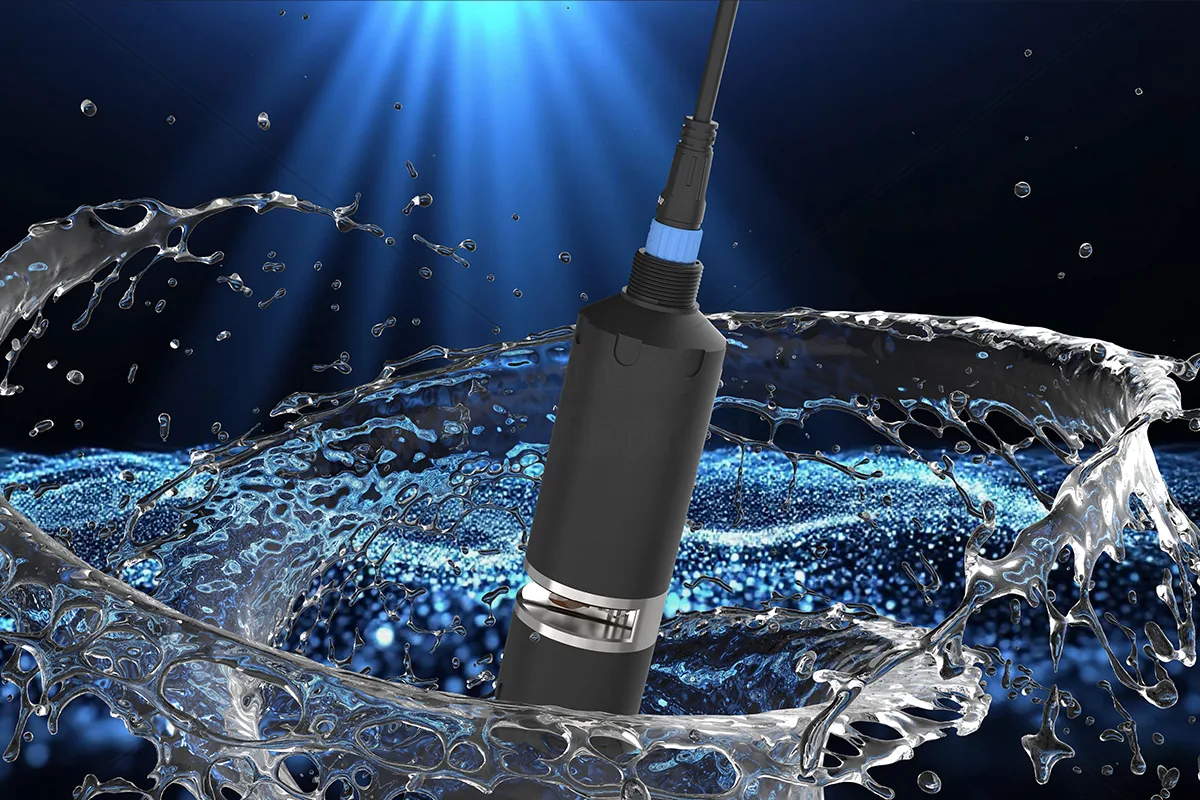
From a total cost of ownership (TCO) perspective, the NSDD6 solution offers cost advantages in the following areas:
| Cost Item | Traditional Four-Sensor Solution | NSDD6 Multispectral Solution |
|---|---|---|
| Hardware Purchase | Requires purchasing a TOC analyzer, COD analyzer, turbidity probe, color probe, and corresponding transmitters and accessories, resulting in a high total procurement cost | Requires only one sensor and basic installation accessories, resulting in a lower hardware purchase cost |
| Installation Work | Multiple devices require brackets, piping, waterproof junction boxes, etc., leading to high construction complexity | Single-probe installation with simple wiring, enabling rapid integration onto a buoy or pole |
| Reagents and Consumables | COD and TOC analyzers require periodic consumption of chemical reagents and waste liquid disposal; turbidity/color probes require replacement of seals, cleaning cloths, etc. | No chemical reagent consumption; the automatic brush is a low-cost consumable with a replacement cycle of over one year |
| Maintenance Labor | Requires regular reagent refilling, probe cleaning, and calibration at a high frequency, especially before and after flood seasons | Self-cleaning function reduces manual cleaning; no reagent replacement, leading to longer maintenance intervals |
| System Integration | Four instruments may have different communication interfaces, requiring additional gateways or industrial computers for protocol conversion | A single sensor outputs all parameters via Modbus at once, directly connectable to a data acquisition unit |
| Spare Parts Inventory | Four types of equipment require stocking different spare parts, resulting in high inventory pressure | Fewer spare part types, making management easier |
Taking a standard surface water section buoy station as an example (qualitative estimate), to achieve online monitoring of four parameters—COD, turbidity, color, and UV254—the traditional solution's hardware procurement cost is approximately tens of thousands of RMB. Using the NSDD6 can reduce direct sensor procurement cost by over 60%. Considering reagent, labor, and spare part expenditures over five years, the total cost of ownership (TCO) is expected to decrease by 40% to 60%.
Measurement Accuracy and Reliability
The measurement principle of the NSDD6 is based on the characteristic absorption of organic matter in the ultraviolet region: natural water organics (such as humic acid and fulvic acid) have strong absorption near 254 nm, and the absorption intensity correlates with TOC and COD concentrations. By measuring the absorption spectrum at multiple wavelengths, combined with turbidity scattering correction, color compensation, and temperature compensation, a mathematical model is established for concentration inversion. Oromë performs multivariate calibration using surface water samples before shipment to meet the accuracy requirements of field continuous monitoring.
It is important to clearly state that the NSDD6 is positioned for trend monitoring and early warning, not as a replacement for standard laboratory methods (e.g., GB/T 11914 dichromate method for COD, HJ 501 for TOC, GB/T 13200 for turbidity). The deviation between its measurements and laboratory method results can be controlled within an acceptable range through regular comparison and linear correction (slope/offset adjustment). This correlation is relatively reliable when the surface water composition is stable; should the water body be impacted by abnormal industrial pollution, the spectral characteristics may change significantly, necessitating more frequent sampling verification.
Surface Water Field Implementation Guide
1. Selection Assessment
During project design, monitoring requirements must be confirmed: if high-frequency continuous monitoring of organics, turbidity, and color is required (e.g., at drinking water sources, important trans-provincial sections, eco-compensation assessment sections), the NSDD6 can be considered as an alternative. If only a single parameter (e.g., turbidity) is needed, a corresponding sensor can be selected based on budget. The typical detection range of the NSDD6 (COD 0~100 mg/L, turbidity 0~1000 NTU) must match the background concentration of the water body to be monitored to avoid out-of-range use.
2. Installation Design
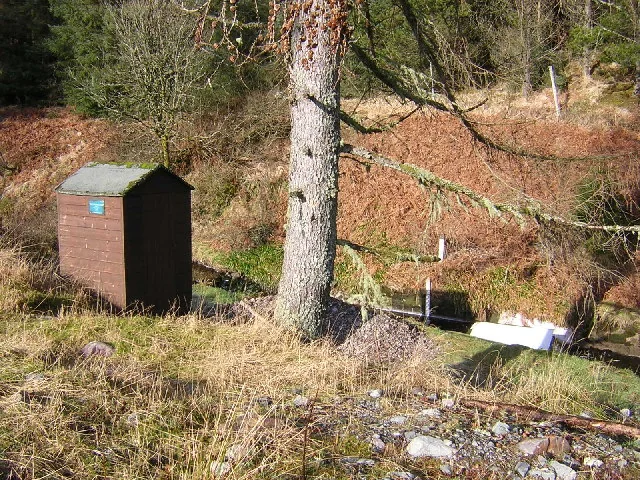
- Installation Method: For buoy installation, the sensor can be immersed 0.5–1.5 meters below the water surface via a vertical conduit to avoid surface floating debris and bottom disturbance. For shore-based stations, a flow cell can be used to pump water samples at a stable flow rate (e.g., 0.5–2 L/min) to prevent bubble accumulation. The cleaning cycle of the self-cleaning brush can be set to 4–12 hours based on fouling conditions.
- Power and Communication: Provide 12–24 V DC power; it is recommended to use solar panels with batteries. RS485 communication should employ shielded twisted-pair cable, connected to a data acquisition unit/RTU, using the Modbus RTU protocol to read register values. The default sensor address and baud rate can be found in the manual and modified online.
- Lightning and Grounding: Field installations should include lightning protection for power and signal lines; the sensor's metal housing must be reliably grounded.
3. Initial Calibration Verification
Although the sensor is calibrated with standard substances before shipment, due to transportation, water temperature, and local water quality characteristics, the following on-site verification is recommended:
- Zero Check: Read turbidity and UV254 values in ultrapure water; they should be close to zero. If significantly deviated, clean the window and retest.
- Laboratory Comparison: Collect water samples at the same location, immediately send them to the laboratory for standard method analysis of COD, TOC, turbidity, and color, and simultaneously record the sensor readings. Collect 5–7 sets of data to establish a linear regression model. If the coefficient of determination R² ≥ 0.85, the correction coefficients (slope and offset) can be written into the sensor to align its output with laboratory results.
- Regular Review: Monthly comparison sampling is recommended; if the river exhibits significant seasonal changes, calibration curves can be established for wet and dry seasons separately.
4. Data Quality Control
- Anomaly Identification: When turbidity suddenly exceeds historical maximum values or frequent spikes occur, this may be caused by heavy sediment scouring or sensor obstruction by debris, which can be assessed in conjunction with rainfall and water level data.
- Maintenance Management: Despite the self-cleaning function, it is recommended to inspect brush wear on-site every 1–3 months and replace if necessary (plug-in design for easy replacement). In areas with freezing winters, the sensor should be immersed at a safe depth to prevent freezing, or removed from the water.
- Data Platform Integration: Sensor data is uploaded to the data platform via RTU. It is recommended to also upload diagnostic information (such as cleaning status and internal temperature) to enable remote assessment of sensor condition.
Limitations and Applicable Conditions
The applicability of the NSDD6 is subject to the following constraints and limitations:
- Data Use: Output results are not intended for legal enforcement; periodic comparison with national standard methods is required. In the event of pollution incidents for accountability purposes, water samples must be collected for laboratory analysis.
- Impact of Water Quality Change: After heavy rainfall, large volumes of stormwater and sewage mix in, potentially introducing industrial pollutants not modeled by the sensor, leading to increased deviation. Enhanced comparison sampling is recommended after extreme events.
- Color and Turbidity Cross-Interference: High color levels may interfere with turbidity measurement, and high turbidity can also affect color and COD measurements. The NSDD6 has built-in compensation algorithms, but local adjustment should be performed in cases of extremely high color (e.g., swamp water).
- Large Particles and Bubbles: Large particles (leaves, fibers, etc.) in the water may block the measurement gap or cause abnormal scattering; it is recommended to install a coarse screen at the water inlet. Bubbles can be mitigated through appropriate flow rates and de-bubbling devices.
- Biofouling: In severely eutrophic waters, the automatic brush may not completely remove stubborn biofilm; if necessary, an ultrasonic cleaning accessory can be added, or periodic manual wiping performed.
Frequently Asked Questions (FAQ)
Q1: Can the NSDD6 replace laboratory COD/TOC analysis? No. The NSDD6 provides high-frequency continuous data for trend warning and process monitoring. Regular (e.g., monthly) comparison with laboratory data is a necessary procedure to ensure data reliability.
Q2: What is the lifespan of the self-cleaning brush? The brush lifespan depends on usage frequency and water quality. In typical surface water environments, annual replacement is recommended; replacement can be performed on-site.
Q3: What changes are needed to integrate into an existing data acquisition system? The sensor uses the standard Modbus RTU protocol; simply configure the corresponding slave address and register table in the RTU/PLC to read all parameters, with no need for an additional protocol converter.
Q4: How to operate in freezing waters during winter? Install the sensor probe at a sufficient depth below the ice layer to prevent freezing damage; if this cannot be ensured, remove and store the sensor during the freezing period.
Q5: How much does turbidity affect COD measurement? Traditional UV COD measurement is susceptible to turbidity interference. The NSDD6 employs a multi-wavelength compensation algorithm to reduce this impact, but the compensation effect relies on model calibration. In rivers with high sediment loads, it is recommended to confirm compensation coefficients through filtered/unfiltered sample comparison.
Conclusion
Intensive, low-maintenance water quality monitoring solutions are suited to current grid-based surface water monitoring needs. The Oromë NSDD6 multispectral sensor achieves simultaneous measurement of six parameters—TOC, COD, turbidity, color, UV254, and temperature—in a single device, reducing the number of deployed sensors and lowering system hardware, installation, and maintenance costs. This helps increase monitoring point density within limited budgets, providing data support for pollution source tracing and water environment management. In practical applications, it is essential to fully understand its measurement principles and limitations and establish a regular comparison and verification mechanism to ensure the continuity and reliability of monitoring data.
Discuss your application
Tell us your target parameters, water matrix, interface and annual volume. Our engineering team will recommend a practical configuration.
Request a Quote