
# Key Points for Installing and Maintaining the NSDD6 in Equalization Tank Monitoring (COD Sensor Application)
Equalization tanks receive fluctuating influent and are a key unit for hydraulic and water quality buffering in wastewater treatment. More and more projects are deploying online water quality monitoring in equalization tanks, hoping to continuously observe organic load changes with a COD sensor, TOC sensor, or UV254 sensor. As an industrial-grade multiparameter water quality sensor, the NSDD6 uses non-contact spectral measurement, requires no chemical reagents, and features automatic physical cleaning, making it suitable for long-term operation in surface water, industrial and domestic wastewater, wastewater treatment plant effluent, and discharge monitoring scenarios. However, equalization tanks contain large amounts of suspended solids, dense bubbles, and uneven mixing. If the sensor is simply "installed and left," the data often fluctuates, drifts, or even triggers false alarms. This article provides an executable long-term operation plan covering installation position, bubble and sedimentation prevention, automatic cleaning and manual maintenance, sampling comparison, and safe work practices.
1. Typical Problems Faced by COD Sensors in Equalization Tanks
The first difficulty in equalization tank monitoring is uneven mixing. Influent and retained water in the tank may stratify or short-circuit, so a COD sensor installed at a single point can only represent the local water quality near the measurement point. Especially in large tanks, when mixer capacity is insufficient, or during intermittent operation, sensor readings may not reflect the average load of the entire tank.
The second difficulty is suspended solids. Wastewater often contains sediment, fibers, grease, and biological flocs, which adhere to the optical window and gradually reduce light transmittance, causing baseline drift. The NSDD6's automatic physical cleaning can slow this process, but under high-suspended-solids conditions, regular manual inspection is still required.
The third difficulty is bubbles. Bubbles generated by aeration, mixing, or pump suction can scatter and refract the optical path, causing instantaneous spikes or periodic noise in the spectral signal. Bubble problems usually appear as sharp short-term data fluctuations that do not improve after cleaning, so they need to be avoided through installation position and sampling method.
2. Installation Position and Fixing Method
Before installation, it is recommended to first use a portable multiparameter water quality sensor to conduct a short survey at different locations in the equalization tank and observe the distribution of COD, turbidity, and temperature. This assessment can help identify dead zones and short-circuit zones and avoid installing the sensor at poorly representative points. At the same time, record the liquid level variation range of the equalization tank, the mixer operating cycle, and the peak influent flow rate to provide a basis for sensor installation height and protective measures.
The installation point in the equalization tank should preferably be selected in an area with sufficient mixing, stable flow velocity, and fewer bubbles, such as the equalization tank effluent channel or upstream of the lift pump suction well, rather than directly above an aerator or near mixer blades. If installation inside the tank is necessary, it is recommended to use a rigid bracket to fix the sensor at a certain distance from the tank wall and away from the bottom sediment layer to avoid sludge burial and vortex scouring.
| Installation Position | Advantages | Precautions |
|---|---|---|
| Equalization tank effluent channel | Uniform water flow, close to subsequent treatment load | Prevent sensor exposure when liquid level is too low |
| Upstream of lift pump suction well | Represents water quality entering subsequent processes | Avoid strong vortices and bubbles at the pump inlet |
| Middle of the tank near the effluent side | Relatively stable | Need to assess mixing intensity and sedimentation risk |
| Tank corner or dead zone | Convenient installation | Not recommended; poor representativeness and prone to sedimentation |
Installation should also consider maintenance access. The sensor needs to be lifted regularly for inspection, so the bracket should be easy to disassemble or equipped with lifting devices such as hinges or chains. Cable fixation should leave sufficient slack to avoid pulling on connectors when the sensor moves up and down. For multiparameter water quality sensors, ensure the optical window faces the water flow direction so the automatic cleaning device can act effectively.
3. Automatic Cleaning and Manual Maintenance Plan
The NSDD6 has an automatic physical cleaning function and uses non-contact spectral measurement to reduce reagent consumption and manual intervention, but this does not mean "zero maintenance." It is recommended to establish an on-site plan according to the following rhythm:
- Initial commissioning period (weeks 1–2): Record data daily and observe the window contamination rate to determine the baseline cleaning interval.
- Stable period: Perform a manual visual inspection every 1–2 weeks, focusing on whether the optical window has an oil film, biofilm, or inorganic scaling.
- High suspended solids or high grease conditions: Inspect at least once a week, and adjust the automatic cleaning frequency if necessary (if the device supports parameter settings).
- After long-term shutdown or maintenance: Before recommissioning, first rinse with clean water and perform zero point/standard solution verification (according to the manufacturer's operation manual).
During manual cleaning, use a soft damp cloth or dedicated optical wiping material. Avoid hard brushes, steel wool, or cleaners containing organic solvents, as these may scratch the window or damage the seal. Before cleaning, the power must be disconnected and the sensor safely removed from the water to prevent electric shock and mechanical damage.
4. Sampling Comparison and Data Verification
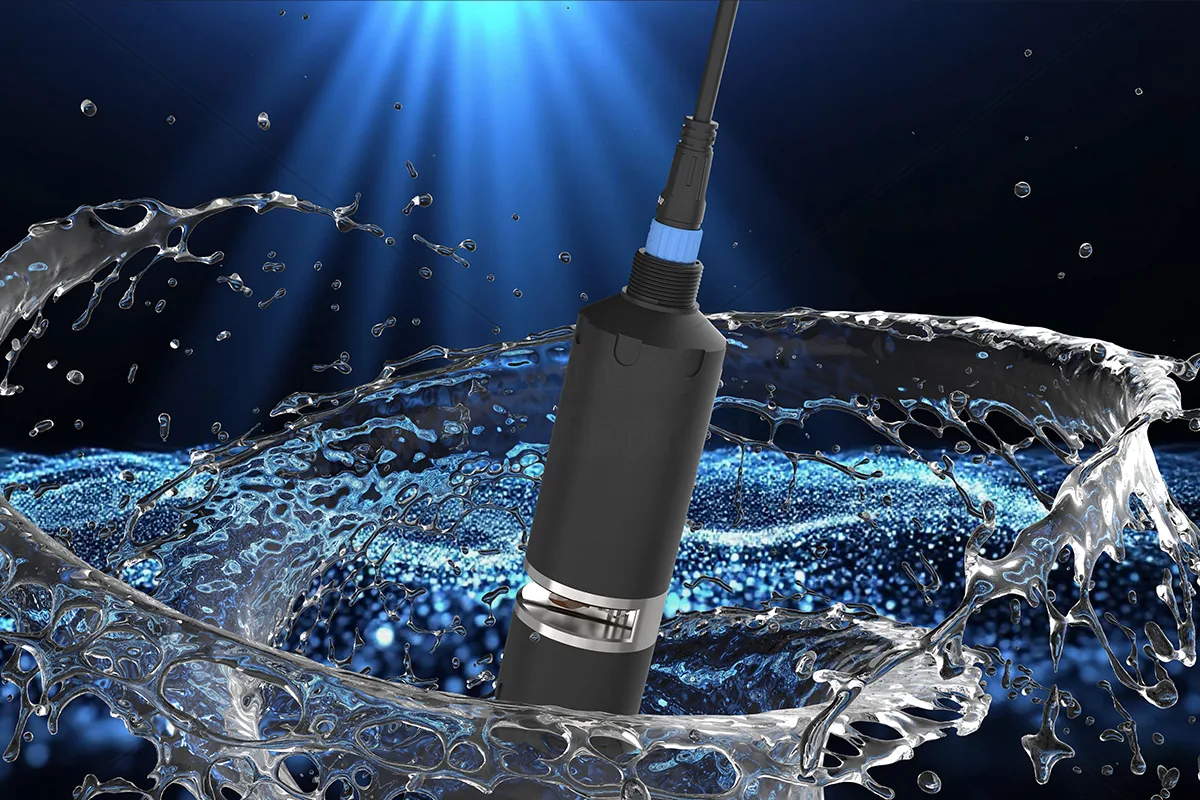
It must be clearly understood that the NSDD6 and similar optical COD sensors are on-site screening and trend monitoring devices. Their COD and TOC outputs are converted values based on spectral models and cannot directly replace compliance testing by laboratory dichromate method or high-temperature combustion method. Equalization tank projects should establish a regular sampling comparison system:
- At the same time as sensor measurement, collect a grab water sample at the same location (as close as possible to the sensor probe).
- Measure target parameters such as COD and TOC from the water sample according to laboratory standard methods.
- Record sensor readings and laboratory values to establish or correct local correlation coefficients.
- Repeat the comparison when water quality characteristics change significantly (such as adjustments in the proportion of industrial wastewater or seasonal changes).
- Archive comparison results and correction records as the basis for data interpretation and equipment health management.
Through continuous comparison, it is possible to determine whether the sensor has deviated and promptly arrange cleaning, calibration, or repair. For equalization tanks, it is recommended to conduct a laboratory comparison at least once a month, and more frequently, up to weekly, during initial operation or when working conditions fluctuate greatly.
5. Maintenance Safety and Electrical Precautions
Equalization tanks are usually confined spaces or waterfront work areas, and on-site safety procedures must be followed during maintenance. When lifting, cleaning, or replacing sensors, the following should be done:
- Obtain the relevant work permit before operations and test for toxic and harmful gases and oxygen concentration.
- Disconnect the sensor power and signal connections and implement lockout/tagout (LOTO) procedures.
- Use appropriate lifting tools and fall protection equipment to avoid personnel entering the tank directly.
- Properly collect cleaning liquid and wastewater splashes to prevent pollution of the surrounding environment.
- After reinstalling, first check cable insulation and whether RS485 communication is normal before restoring power.
Although the NSDD6 uses 316L stainless steel and a POM industrial structure and supports long-distance isolated RS485 communication, on-site electrical connections still need to be grounded and protected by certified personnel in accordance with electrical codes. Do not perform live maintenance during thunderstorms.
6. Common Troubleshooting Table
| Phenomenon | Possible cause | Recommended Action |
|---|---|---|
| Data continuously high or low | Window contamination, local model offset | Clean the window and perform laboratory comparison correction |
| Random spikes in data | Instantaneous interference from bubbles or particles | Adjust installation position; add bubble shielding or a still-water device |
| Slow data drift | Gradual accumulation of biofilm or inorganic scale | Increase manual cleaning frequency and check automatic cleaning effectiveness |
| Communication interruption | Loose wiring, abnormal power supply, RS485 address conflict | Check cables and power supply, verify communication parameters |
| No improvement after cleaning | Optical component damage or light source aging | Contact the manufacturer and handle according to the repair process |
FAQ
Q: Can a COD sensor in an equalization tank replace laboratory COD testing for discharge compliance? A: No. On-site optical COD sensors are used for trend monitoring, process control, and anomaly warning. Their data can serve as an internal operation reference, but compliance determination for discharge must use laboratory standard methods. The two should maintain traceability through regular comparison.
Q: What should be done if there are many bubbles and large fluctuations? A: First move the sensor to the effluent side or a still-water area away from strong disturbance zones of aerators and mixers. If on-site conditions are limited, guide plates, bubble isolation covers, or stilling wells can be added (designed according to on-site hydraulic conditions), while observing the frequency and amplitude of data fluctuations and comparing with laboratory data to confirm whether it is bubble interference.
Q: Can the NSDD6's automatic cleaning completely replace manual maintenance? A: No. Automatic physical cleaning can reduce the adhesion rate, but it cannot remove stubborn scaling, oil films, or internal optical contamination. In wastewater with high suspended solids, high hardness, or high grease, regular manual inspection of the window and manual cleaning as needed are still required.
Q: How often should laboratory comparison be performed? A: At least once a month is recommended; during initial commissioning, when influent water quality changes greatly, or when suspicious deviations appear in the data, increase frequency to weekly or even daily. Comparison frequency should be included in on-site operating procedures, and records should be kept.
Conclusion
An equalization tank is not an ideal monitoring location, but it is where many projects need to quickly understand influent load. By reasonably selecting the installation point, avoiding bubbles and sedimentation, combining automatic cleaning with manual maintenance, and regularly comparing laboratory samples, multiparameter water quality sensors such as the NSDD6 can stably output trend data for TOC, COD, UV254, turbidity, and other parameters, supporting process adjustment and anomaly warning. The key is to treat it as an "on-site screening tool" rather than a "compliance monitoring instrument," use it within its boundaries, and continuously verify it to establish a truly executable and traceable long-term operation plan.
Discuss your application
Tell us your target parameters, water matrix, interface and annual volume. Our engineering team will recommend a practical configuration.
Request a Quote