
Introduction
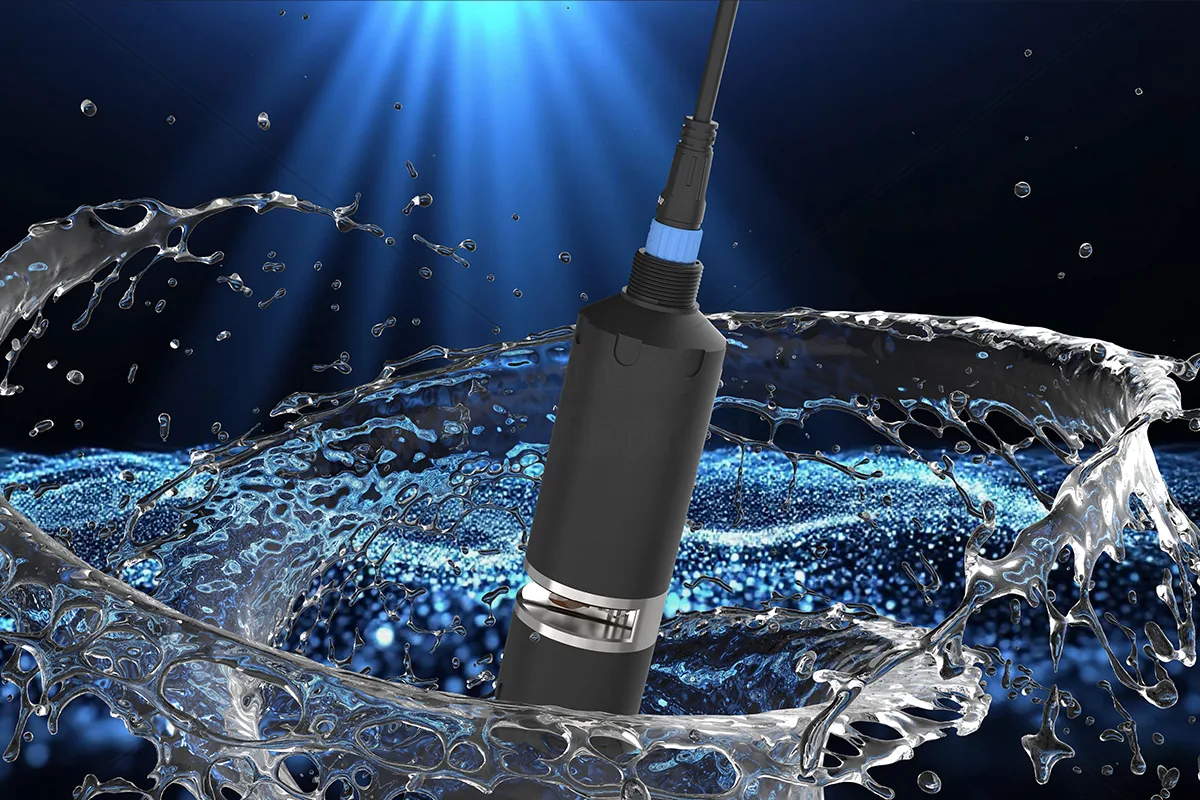
The NSDD6 is a multi-spectral water quality sensor for wastewater treatment and surface water monitoring that continuously measures six parameters: TOC, COD, turbidity, color, UV254, and temperature. Unlike laboratory dichromate or combustion oxidation methods, the NSDD6 uses non-contact spectral measurement and automatic physical cleaning, providing data for field screening and trend monitoring. Therefore, the goal of the maintenance plan is not to replace compliance laboratory analysis, but to ensure the sensor maintains acceptable data quality and operational stability between calibrations or comparisons.
Core Objectives and Applicability of the Maintenance Plan
The maintenance plan is built around five modules: fouling symptom identification, automatic cleaning status verification, manual inspection, reference sample comparison, and communication health checks. The scope includes:
- Applicable to continuous monitoring scenarios such as surface water, industrial and domestic wastewater, treatment plant effluent, and discharge outlets;
- Output data is used for trend alerts and process assistance, and cannot be directly used as legal discharge reporting basis;
- Differences in organic matter composition across water bodies can affect the spectral model; local comparison should be established on-site.
Fouling Symptom Identification: When to Intervene
Fouling typically comes from biofilm, grease, suspended solids, or scaling. Early symptoms include:
- Reading drift or jumps under the same operating conditions;
- Data recovers slowly or not at all after automatic cleaning;
- Systematic deviation from laboratory spot-check values;
- Visible stains, bubbles, or spots on the optical window.
Once these symptoms appear, first check the sensor installation location and cleaning execution, rather than immediately adjusting calibration coefficients.
Automatic Cleaning Status Verification
The NSDD6 features automatic physical cleaning to control fouling accumulation. Maintenance personnel should verify during each inspection:
- Whether the cleaning mechanism operates at the set interval;
- Whether data returns to baseline within a reasonable time after cleaning;
- Whether cleaning consumables or mechanical parts show wear, sticking, or abnormal noise.
Note: Automatic cleaning can only delay fouling, not eliminate all types of scaling. Manual cleaning of the optical window is still required for hard scale or oily deposits.
Manual Inspection and Reference Sample Comparison
Recommended manual inspection includes:
- Check sensor housing, cables, and seals for integrity;
- Wipe the optical window with a soft cloth or specified cleaner to avoid scratching;
- Check for loose mounting brackets or entanglement by debris.
Reference sample comparison is used to verify sensor drift. Standard solutions of known concentration or on-site collected water samples can be used, sent to the laboratory for analysis, and compared with sensor readings. Comparison frequency should be determined based on water quality fluctuations and regulatory requirements, at least once per month. Record deviations in comparison results; if deviations exceed the allowable range, on-site calibration or factory maintenance is required.
Communication Health Check
The NSDD6 uses long-distance isolated RS485 communication. The maintenance plan should include:
- Check wiring terminals, shield grounding, and termination resistors for correctness;
- Observe whether the data acquisition platform has timeouts, packet loss, or checksum errors;
- Periodically poll multiple slave stations to confirm address and baud rate settings are consistent.
Communication anomalies are often misdiagnosed as sensor faults, so eliminate line and protocol issues first.
Trend Review and Data Quality
Trend review is the most overlooked but highest-value part of the maintenance plan. It is recommended to export historical data monthly and calculate:
- Minimum, maximum, mean, and standard deviation of each parameter;
- Data recovery time before and after automatic cleaning events;
- Deviation trends compared with laboratory comparison data;
- Baseline shifts caused by seasonal or process changes.
Trend review can help identify gradual fouling, sensor aging, or model mismatch, and provide evidence for cleaning and calibration intervals.
Implementation Steps for the Water Quality Sensor Maintenance Plan
- Establish a ledger: record sensor serial number, installation location, cleaning cycle, and last calibration date.
- Daily inspection: check real-time data, cleaning status, and communication quality; handle any anomalies the same day.
- Weekly maintenance: manually inspect the optical window and cleaning mechanism, and clean if necessary.
- Monthly comparison: collect parallel water samples and send to the laboratory, comparing laboratory COD or TOC with sensor readings.
- Quarterly review: summarize trend data to assess whether cleaning frequency needs adjustment or if re-modeling is required.
- Annual maintenance: check seals, cables, and internal desiccant; consider factory calibration or deep cleaning.
FAQ
Q: Does the NSDD6 water quality sensor require chemical reagents?
A: No. The NSDD6 uses non-contact spectral measurement, requiring no chemical reagents and no waste liquid discharge. This is one of the key reasons it is suitable for long-term online monitoring.
Q: Can automatic cleaning fully replace manual maintenance?
A: No. Automatic physical cleaning can significantly delay fouling accumulation, but cannot remove hard scale or oily deposits; the optical window still requires regular manual inspection and cleaning.
Q: Can sensor readings be directly used as discharge compliance data?
A: No. The NSDD6 outputs data for field screening and trend monitoring, which can be used for alerts and process optimization. Compliance reporting should be based on national or industry standard methods conducted in a laboratory.
Conclusion
Establishing an NSDD6 maintenance plan centered on fouling symptoms, automatic cleaning status, manual inspection, reference samples, communication health, and trend review can significantly reduce drift and downtime risks, extend sensor service life, and provide more reliable data support for wastewater treatment and surface water monitoring. Maintenance records are also an important basis for data quality traceability.
Discuss your application
Tell us your target parameters, water matrix, interface and annual volume. Our engineering team will recommend a practical configuration.
Request a Quote