
Why record "background data" first after switching water sources
When a nursery switches irrigation water sources—for example, from well water to surface water or reclaimed water—the biggest risk is not a one-off exceedance but slow, cumulative change that goes unnoticed. Yellowing moss and weakening roots often appear only weeks later, by which time salts have already entered the substrate. Continuously recording the water source and electrical conductivity (EC) trends, together with soil, crop and specialized analyses, turns "something feels off" into a traceable judgment.
The recording described here is not compliance monitoring. A portable water quality tester is suitable for on-site screening and trend comparison, but it cannot replace laboratory quantitative analysis of specific contaminants. Its value lies in leaving a comparable time series at fixed sampling points, using the same pen and the same operating procedure.
Which categories of data should be recorded
1. Basic water source information
Record for each sampling:
- Water source type (well water, river water, storage tank, reclaimed water, etc.)
- Sampling date, time and weather (rainfall dilutes surface water)
- Sampling point location (e.g., tap, drip irrigation head, poolside)
- Whether fertilization, disinfection, acidification or similar operations were carried out recently
2. On-site rapid parameters
Measure with the portable water quality tester pen as soon as possible after sampling, and record:
- EC (electrical conductivity): reflects the total amount of dissolved salts in the water and is the most critical screening indicator for irrigation water.
- TDS (total dissolved solids): usually converted from EC; conversion factors may differ between devices, so record the device model and factor.
- Temperature: affects EC readings and also affects crop root uptake, so record it at the same time point.
- Turbidity: especially important for surface water and reclaimed water; a sudden rise in turbidity may indicate a change in particulate or microbial load.
- pH (if the device supports it): pH affects nutrient availability and the risk of equipment clogging.
3. Soil and crop observations
Water source data must be compared against soil and crop performance:
- EC of the substrate or soil (soil samples can be sent for testing periodically, or an in-situ soil EC meter used)
- Leaf color, growth rate, root tip condition
- Dripper clogging and pipe scaling
- Whether salt efflorescence is present (white patches on the substrate surface)
How to set up your own record sheet
A spreadsheet or notebook with one row per sampling is recommended. Key fields include:
| Field | Example value | Notes |
|---|---|---|
| Date and time | 2026-07-15 07:30 | Keep the time of day as consistent as possible |
| Water source type | Reclaimed water (storage tank) | Avoid writing just "water" |
| Sampling point | Greenhouse 2 drip irrigation head | Fixed location |
| EC (µS/cm) | 1250 | Record the instrument reading |
| Temperature (°C) | 22.4 | Same measurement |
| TDS (ppm) | 800 | State the conversion factor |
| Turbidity (NTU) | 3.5 | If the device supports it |
| Recent operations | Water-soluble fertilizer applied yesterday | Remarks |
Record at least 2–3 times per week; after 4–8 consecutive weeks, the background drift caused by the water source switch becomes visible. Don't look only at single readings—look at the trend line.
When other tools or laboratory analysis are needed
Parameters such as EC, TDS and turbidity from a portable water quality tester are suitable for screening, but in the following cases, send samples to a laboratory or use more specialized equipment:
- Suspected specific contaminants (heavy metals, pesticides, pathogens)
- A regulatory-compliant irrigation water report is required
- Complex salt composition (sodium adsorption ratio SAR, chloride, etc.)
- Calibration verification is needed or test results are disputed
Laboratory reports give specific ion concentrations and method detection limits, which a portable pen cannot provide.
On "hardness" and "salinity": some portable devices estimate hardness or salinity from EC, but the actual relationship is strongly affected by the ionic composition of the water. For irrigation water, judging total salt content directly from EC is more reliable.
Brief FAQ
Q: Can a portable water quality tester pen predict crop salt tolerance? A: No. Crop salt tolerance depends on crop species, growth stage, irrigation method and substrate, and reference must be made to the salt tolerance classifications of agricultural authorities. The tester pen only provides water source EC trends.
Q: How often should I record? A: At least 2–3 times per week in the early period after switching water sources, then once per week once stable. Increase frequency after rain, fertilization or a change of water source.
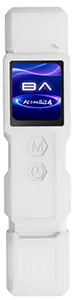
Q: What is the role of Water Detective 4 here? A: It is a portable multi-parameter tester pen that can quickly measure EC, TDS, turbidity, temperature and more, making it suitable for establishing continuous records on site. However, its readings are screening values, not laboratory-certified results.
Actionable checklist
- [ ] Identify 2–3 fixed sampling points (water source outlet, irrigation head, farthest point)
- [ ] Prepare a record sheet with fields including date, water source, EC, temperature, TDS, turbidity and remarks
- [ ] Calibrate or check the tester pen (follow the instructions)
- [ ] Record continuously for at least 4 weeks and plot an EC trend chart
- [ ] Judge whether adjustment is needed based on soil EC and crop performance
- [ ] Send samples to a laboratory if abnormal fluctuations occur or specific contaminants are suspected
References
[1] USGS Water Science School. Conductivity (Electrical Conductance) and Water. https://www.usgs.gov/water-science-school/science/conductivity-electrical-conductance-and-water (accessed: 2026-10-29)
[2] USGS. National Field Manual for the Collection of Water-Quality Data. https://www.usgs.gov/mission-areas/water-resources/science/national-field-manual-collection-water-quality-data-nfm (accessed: 2026-10-29)
Discuss your application
Tell us your target parameters, water matrix, interface and annual volume. Our engineering team will recommend a practical configuration.
Request a Quote