
Does Rising Pool TDS Mean It's Time to Change the Water? Management Decisions Need More Than One Number
Many residential pool owners see the TDS reading rise and immediately think, "The water is old and needs to be replaced." But TDS (total dissolved solids) is only an aggregate indicator. Making a drain decision on that alone often wastes water and may mask real water quality problems.
Why Does TDS Rise? It Doesn't Necessarily Mean the Water Is "Dirty"
Total dissolved solids include dissolved ions such as calcium, magnesium, sodium, chloride and sulfate. A conductivity sensor estimates TDS by measuring the water's ability to conduct electricity, but different ions contribute differently to conductivity, and the reading is affected by water temperature [2]. During pool operation, TDS rises through three main pathways:
- Evaporative concentration: water evaporates while dissolved salts remain in the pool, so TDS naturally rises.
- Carry-in from top-up water: tap water and well water themselves contain some TDS, so the more top-up water added, the more dissolved solids are introduced.
- Chemical accumulation: chlorine products, pH adjusters, flocculants and similar chemicals all contribute dissolved solids.
So a TDS rise may be a normal concentration process or a signal of improper chemical use—it cannot be equated directly with "contamination."
What Information Does a Management Decision Require?
The CDC recommends regularly testing key water quality parameters, including free chlorine and pH [1]. Testing only TDS misses risks such as insufficient disinfection, pH imbalance, and abnormal alkalinity or calcium hardness. A practical water-change assessment matrix should include at least:
- Free chlorine/total chlorine: disinfection effectiveness
- pH: affects chlorine activity and comfort
- Total alkalinity: pH buffering capacity
- Calcium hardness: prevents corrosion or scaling
- Cyanuric acid (if used): the cost of stabilizing chlorine
- TDS/conductivity: dissolved solids accumulation trend
- Water appearance, odors and swimmer feedback
Different regions may have specific regulations on water-change frequency or water quality limits for public pools; residential pools usually have no mandatory standard, so refer to equipment manufacturer instructions and local health department recommendations.
The Role of a Portable Water Quality Tester in On-Site Screening
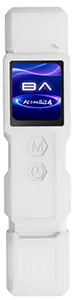
For residential pool owners and operators, a portable water quality tester (such as Water Detective 4) can quickly read parameters including TDS, EC, hardness and salinity, making it easy to build trend records for the same water source. For example, if TDS and EC are recorded weekly and both rise together while other parameters are normal, the effects of evaporative concentration or top-up water can be considered first; if TDS rises but pH fluctuates widely or residual chlorine is insufficient, the water treatment plan needs adjustment.
But it must be clear: these portable devices are designed for personal screening and trend comparison, not laboratory analysis. Hardness and salinity estimates are limited by matrix and calibration, and different waters have different ion compositions—readings are only for comparison within the same water source and cannot serve as an absolute standard or regulatory basis. In particular, portable TDS readings must not be interpreted directly as "safe" or "unsafe."
From a Single Number to a Decision Matrix: Concrete Steps
- Establish a baseline: record TDS, EC, pH and residual chlorine for new or changed water, and record the TDS of the water source.
- Keep recording trends: test at a fixed time each week, use the same instrument and maintain calibration, and record the data.
- Analyze the cause of change: if TDS rises but other parameters are normal, calculate the relationship between top-up water volume and TDS increase to judge whether it is evaporative concentration.
- Combine local regulations and operating conditions: public pools should be sampled and tested as required by the local health department; residential pools should refer to manufacturer guidelines and not set drain thresholds on their own.
- Trigger professional analysis: when turbidity, odors, skin irritation, or abnormally high and unexplained TDS appear, send samples to a laboratory to test for specific contaminants or microorganisms.
Water Quality Testers and Laboratory Analysis: Boundaries and Coordination
A portable water quality tester is suitable for rapid on-site screening and long-term trend recording, but it cannot replace precise laboratory analysis. For example, laboratories can distinguish specific ion species and test for microorganisms and disinfection by-products, which portable devices cannot do. Portable device data should therefore serve as early warning and support, and final decisions should combine laboratory results and regulatory requirements.
Common Misconception: The Higher the TDS, the More Dangerous?
Not so. A TDS rise is not directly harmful to health in itself, but it may affect comfort, equipment life and water treatment efficiency. For example, high TDS may aggravate corrosion or scaling, or reduce chlorine activity. The key is to identify the cause of the TDS rise and check whether other parameters are out of balance.
FAQ
Q: Can the TDS value measured by a portable water quality tester be used as a water-change standard? A: Not recommended. TDS is an aggregate indicator; different water sources and chemicals mean the same TDS can correspond to different ion compositions and risks. Judge in combination with pH, residual chlorine, alkalinity and other parameters and local regulations.
Q: Does rising TDS mean there are more bacteria in the water? A: No. TDS reflects dissolved solids, not microbial contamination directly. Bacteria and other microorganisms require specialized test methods.
Q: How often is it reasonable to test pool water quality? A: For residential pools, testing pH and free chlorine at least once a week is recommended, with increased frequency during the rainy season or periods of frequent use. TDS/conductivity can be recorded monthly as a trend reference. Specific frequency should follow equipment instructions and local guidelines.
Actionable checklist
- [ ] Record the TDS/EC baseline of the water source (tap water/well water)
- [ ] Test pH and free chlorine at a fixed time each week, and record TDS/EC monthly
- [ ] Use the same portable water quality tester and maintain calibration (if available)
- [ ] If the TDS trend is abnormal, first check evaporation and top-up water, then review chemical addition records
- [ ] Combine water appearance, odors and swimmer feedback; do not rely on numbers alone
- [ ] Public pools should undergo laboratory testing per local health regulations
- [ ] When specific contaminant assessment is needed, send samples to a qualified laboratory
References
[1] U.S. Centers for Disease Control and Prevention (CDC). Home Pool and Hot Tub Water Treatment and Testing. https://www.cdc.gov/healthy-swimming/about/home-pool-and-hot-tub-water-treatment-and-testing.html (accessed October 29, 2026) [2] U.S. Geological Survey (USGS). Conductivity (Electrical Conductance) and Water. https://www.usgs.gov/water-science-school/science/conductivity-electrical-conductance-and-water (accessed October 29, 2026)
Discuss your application
Tell us your target parameters, water matrix, interface and annual volume. Our engineering team will recommend a practical configuration.
Request a Quote