
Why separate "visibility, filtration, and disinfection"?
Pool cloudiness is a common operational signal, but it can come from suspended particles, colloids, microorganisms, algae, air bubbles, dosing precipitates, and more. Treating it as a single "filter problem" easily overlooks free chlorine failure or hydraulic issues. Conversely, adjusting only disinfection may mask insufficient filter capture. Therefore, keep these three aspects separate:
- Visibility: Is the water sufficiently transparent, and are main drain/lane lines clearly visible?
- Filtration operation: Are circulation flow, filter differential pressure, backwashing, and filter media condition normal?
- Disinfection control: Are free chlorine and pH within operating ranges, and is contact time maintained?
After noticing cloudiness, in what order should you act?
Do not backwash immediately, and do not shock with chlorine right away. Follow the order: safety first, then diagnosis, then intervention.
- Suspend use. Cloudiness may mean the disinfection barrier has weakened, and poor visibility increases the risk of drowning or collisions.
- Test free chlorine and pH. CDC[1] emphasizes that home pools/hot tubs should be tested regularly for free chlorine and pH; when cloudy, test more frequently. Follow the reagent instructions for the test method.
- Record circulation pump run time and filter pressure.
- Observe: If free chlorine and pH are out of range, adjust and continue circulating, then check the turbidity trend again after 4–24 hours.
- If free chlorine is normal but the water is still cloudy, focus on checking the filter/circulation.
How do you judge a filter problem?
- Filter pressure 20%–30% above the normal start-up value usually indicates backwashing is needed, but this varies by filter type—follow the equipment manual.
- If pressure recovers after backwashing but rises quickly again, the filter media may be compacted or incoming particle load may be excessive.
- Insufficient circulation: check the pump strainer, hair/lint pot, and valve opening.
- If the water is cloudy but filter pressure has not changed noticeably, there may be flow bypass, filter media channeling, or the pump may not be achieving design flow—a dedicated inspection is needed.
Why can't disinfection risk be judged by "clear water" alone?
Clear water may still carry microbial risk; cloudy water may further consume free chlorine, block UV (if present), and reduce oxidation efficiency. CDC[2] notes that selection of home water treatment devices is based on contaminant type; for pools, the key remains maintaining free chlorine and pH. Microbial risk requires testing for indicators and cannot be replaced by visual inspection or an ordinary water quality tester.
For which tasks is Water Detective 4 suitable?
If free chlorine/pH have been confirmed to be within range and the water is still turbid, and you want to record turbidity trends or compare before and after backwashing, Water Detective 4 can serve as a portable screening tool. It integrates multiple indicators such as TOC, COD, UV254, TDS, EC, turbidity, hardness, salinity, and temperature, making it suitable for rapid on-site recording and before/after comparison. But note:
- It has no free chlorine/pH electrode and cannot replace disinfection control testing.
- Turbidity readings may be affected by sampling method, bubbles, and optical path; a single reading is less reliable than multiple trend readings.
- Hardness and salinity are estimated values and are limited by matrix and calibration; they cannot be used as a compliance basis.
- It cannot independently determine "whether it is safe to enter the water." Before entering, local visibility requirements must be met and free chlorine/pH must remain in range.
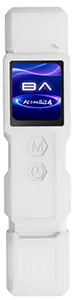
Portable turbidity observation vs. standard methods
Non-contact/portable measurement can quickly reflect changes, but standard turbidity methods (such as ISO 7027 or EPA 180.1, depending on local regulation) specify light source, scattering angle, and calibration. If home pool owners/operators need compliance records or complaint handling, they should use calibrated compliant equipment.
Common misconception: treating portable trends as "compliance testing"
Some people use a TDS or conductivity pen instead of free chlorine testing—this is incorrect. TDS/EC reflects total dissolved solids and does not directly represent disinfection capacity; turbidity reflects particle scattering and does not represent microorganisms; hardness/salinity estimates are also unrelated to hygiene. A water quality tester should be positioned as an on-site screening and trend tool, not a compliance report. If operators have doubts about results, they should send samples to a laboratory or retest using the prescribed method.
FAQ
Q: The pool water is slightly cloudy but free chlorine is normal—can swimming continue? A: Not recommended. Slight cloudiness may indicate insufficient filtration or circulation and may reduce visibility. Suspend use and address it first until the water is clear and free chlorine/pH are within range.
Q: Can Water Detective 4 detect bacteria? A: No. This product has no microbial parameters and cannot replace microbiological testing of pool water.
Q: Does low filter pressure mean the filter is fine? A: Not necessarily. Pressure is only an indirect indicator; flow, filter media, and bypass conditions also need to be checked.
Actionable checklist
- [ ] Cloudiness seen: suspend use immediately and post signage.
- [ ] Test free chlorine and pH, and note the time.
- [ ] Check pump and filter pressure, and record the backwash cycle.
- [ ] If using Water Detective 4, record initial turbidity as a baseline, then measure again after 4–24 hours for trend comparison.
- [ ] Based on the results, choose: adjust disinfection, backwash, inspect filter media, or increase circulation time.
- [ ] Before resuming use, confirm visibility and free chlorine/pH all meet requirements, and keep records.
References
[1] CDC. Home Pool and Hot Tub Water Treatment and Testing. https://www.cdc.gov/healthy-swimming/about/home-pool-and-hot-tub-water-treatment-and-testing.html (accessed: 2026-10-29)
[2] CDC. About Choosing Home Water Filters. https://www.cdc.gov/drinking-water/prevention/about-choosing-home-water-filters.html (accessed: 2026-10-29)
Discuss your application
Tell us your target parameters, water matrix, interface and annual volume. Our engineering team will recommend a practical configuration.
Request a Quote