
Using rainwater in a home vegetable garden: how should drinking-water standards and irrigation concerns be kept separate?
Many gardeners see clear, low-TDS water in a rain barrel and intuitively assume it is "very clean"—perhaps even safe to drink or to wash raw vegetables with. That assumption needs correcting first: low TDS only means fewer dissolved salts; it does not mean the absence of pathogens, parasites, heavy metals, microplastics, or organic pollutants washed off the roof. Drinking-water standards and irrigation requirements are two entirely different risk-assessment frameworks.
This article does not discuss how to treat rainwater to drinking-water quality. Instead, it helps home vegetable gardeners distinguish, in practice, between "irrigation water" and "water that contacts edible parts."
1. First, understand the two types of rainwater risk
According to public guidance from the U.S. CDC on rainwater collection [1], rainwater collected from roofs may be contaminated by bird droppings, dust, leaves, insects, and substances leached from roofing materials. Untreated rainwater is not recommended for direct drinking or for brushing teeth, washing dishes, making ice, or cleaning wounds. For irrigation, risk depends on whether the water contacts edible parts, the crop type, and the time from harvest to consumption.
The U.S. EPA's explanation of potential contaminants in private wells also notes that surface runoff and shallow groundwater may carry microorganisms, nitrates, heavy metals, and organic chemicals [2]. Rain barrels left standing for long periods may also breed mosquitoes and algae. Therefore, even if the water in a rain barrel looks clear, its microbiological safety cannot be inferred.
Core differences between irrigation and drinking water:
- Drinking water: must meet sanitary standards for drinking water, requiring testing of microbiological, toxicological, sensory, and general chemical indicators, and must be carried out by a qualified laboratory. Portable devices cannot substitute for this.
- Irrigation water: the focus is on preventing pathogens from adhering to edible parts, or high salinity and high hardness from affecting soil and plants over time. Different crops vary in sensitivity to water quality; leafy greens and crops eaten raw carry higher risk.
2. Three practical principles for using rainwater in a home vegetable garden
- Grade by use; do not mix uses
Prioritize rainwater for non-edible landscape plants, root-zone irrigation of fruit trees (avoid spraying onto fruit), or soil watering. If it is used on leafy greens, herbs, or other crops whose edible parts are directly contacted, choose drip irrigation or water at the roots, and avoid spraying leaves and tender shoots.
- Prevent secondary contamination during collection and storage
Use rain barrels with screens, and regularly remove fallen leaves and sediment; cover the barrel opening to keep out mosquitoes; avoid placing rain barrels near fertilized areas or pet activity areas. Rainwater stored for more than a week is not recommended for edible parts.
- Before contact with edible parts, perform a simple check
If rainwater must be used to wash or spray edible crops, a portable test pen can first be used to quickly compare TDS, conductivity, turbidity, hardness, and other indicators between rainwater and tap water, to judge whether the rainwater is abnormally high or turbid. But this is only on-site screening and trend recording; it cannot prove microbiological safety.
3. What a portable water quality tester can and cannot do in rainwater monitoring
Take the Water Detective 4 personal/household portable water quality test pen sold on this site as an example. In one quick testing workflow, it can measure TOC, COD, UV254, TDS, EC, turbidity, hardness, salinity, and temperature. These parameters have some reference value in irrigation water comparison:
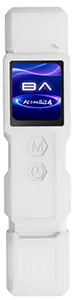
- Quickly compare different water sources: for example, compare TDS and EC of rain barrel water, tap water, and well water; abnormally high readings suggest that further treatment may be needed or that use should stop.
- Record trends: continuously record changes in turbidity and conductivity in the same rain barrel to help judge whether cleaning or water replacement is needed.
- Support teaching demonstrations: teachers and science communicators can use it to visually show differences in conductivity, hardness, and turbidity among different water samples.
Clear cases where it does not apply:
- Cannot detect pathogens: microorganisms such as E. coli, Cryptosporidium, and Giardia are outside the device's measurement range.
- Cannot detect pesticide residues, heavy metals, or microplastics: the device covers only certain combined inorganic and organic indicators and cannot serve as a basis for qualitative or quantitative contaminant determination.
- Cannot replace laboratory testing required by regulations: any judgment related to drinking or food safety must be supported by a report from a qualified laboratory.
- Hardness and salinity estimates are limited by matrix and calibration: rainwater usually has very low ionic strength, but the device's accuracy on low-TDS water samples may be affected by calibration, so it can only be used for relative comparison.
4. When water samples need to be sent to a laboratory
In the following situations, suspend use of rainwater on edible parts and contact a laboratory recommended by local agricultural or public health authorities:
- The rainwater has an odor, abnormal color, or an oil film/foam on the surface;
- There is spraying, asphalt, or animal waste near the collection area;
- You plan to use rainwater long-term to irrigate raw-eaten vegetables, or to use it in public settings such as schools or community gardens;
- You need to verify E. coli, Salmonella, heavy metals, or pesticide residues in the water sample.
Laboratories usually require sterile sampling bottles, and samples should be submitted within 24 hours. For test items, refer to irrigation water guidelines issued by local agricultural departments.
5. Brief FAQ
Q: Rainwater has very low TDS—can it be drunk directly? A: No. Low TDS only means fewer dissolved salts; it does not mean the absence of pathogens or organic pollutants. Drinking safety must be judged by a laboratory according to drinking-water standards; a portable water quality tester cannot provide such conclusions.
Q: Is there a simple way to reduce risk when using rain barrel water on leafy greens? A: Use drip irrigation at the roots and avoid spraying the leaves; rinse after harvest with clean water; and wash thoroughly again before cooking. If you are unsure about the water source, send a sample to a laboratory for microbiological testing.
Q: Can Water Detective 4 measure E. coli? A: No. It measures TOC, COD, UV254, TDS, EC, turbidity, hardness, salinity, and temperature; it does not include microbiological testing.
6. Actionable checklist
- [ ] Confirm whether the roofing material in the rainwater collection area may leach harmful substances
- [ ] Install rain barrels with screens and mosquito-proof covers, and clean them regularly
- [ ] Set use tiers: non-edible plants → root irrigation → cautious use on leafy greens
- [ ] If used on edible parts, avoid spraying and switch to drip irrigation or root watering
- [ ] Use a portable water quality tester to record trends in TDS, EC, and turbidity for the same water source
- [ ] If abnormalities are found or use is planned for a public/school garden, contact a laboratory for testing
- [ ] Keep calibration records for the test pen and use it for screening purposes only
- [ ] Do not use any rainwater not tested by a laboratory for drinking, brushing teeth, or washing raw food
References
[1] Centers for Disease Control and Prevention. Collecting Rainwater and Your Health: An Overview. https://www.cdc.gov/drinking-water/about/collecting-rainwater-and-your-health-an-overview.html (accessed: 2026-04-10)
[2] U.S. Environmental Protection Agency. Potential Well Water Contaminants and Their Impacts. https://www.epa.gov/privatewells/potential-well-water-contaminants-and-their-impacts (accessed: 2026-04-10)
Discuss your application
Tell us your target parameters, water matrix, interface and annual volume. Our engineering team will recommend a practical configuration.
Request a Quote