
First, the answer: the household RO "desalination rate" measures the apparent proportional decrease in TDS
In a household setting without a laboratory, the most practical approach is to use the same portable water quality tester to measure RO feed water and product water simultaneously, then calculate:
R_app (%) = (TDS_in - TDS_out) / TDS_in × 100%
Here, TDS_in and TDS_out must use the same unit (mg/L or ppm) and should be measured at the same temperature if possible. The "desalination rate" here is only an apparent value; it reflects the relative reduction in conductivity/total dissolved ions and does not equal the removal rate of specific contaminants [1].
Why temperature, units, and simultaneous sampling are so critical
Conductivity increases as temperature rises, and different ions have different temperature coefficients. USGS points out that conductivity measurements must account for temperature effects; many instruments provide 25°C reference values or automatic temperature compensation, but the compensation algorithm also has a limited applicable range [2]. In a household comparison, if one sample (feed or product) has just been poured from the tap while the other has been sitting in a cup, the temperature difference may introduce a deviation of a few percent. Therefore, water samples should be brought close to room temperature, or sampled simultaneously with temperature recorded.
Prerequisites for a household RO comparison
To compare different RO systems or track the performance of the same system, at least the following conditions should be fixed:
| Condition | Why it must be fixed | Suggested practice |
|---|---|---|
| Same water quality tester | Different instruments have different calibration, algorithms, and resolution | Always use the same pen or instrument; avoid mixing devices |
| Same water source, same time period | Municipal or well water quality fluctuates | Sample within the same hour if possible |
| Same temperature | Conductivity is sensitive to temperature | Record water temperature; let samples return to room temperature |
| Same unit | TDS and EC cannot be directly mixed in calculations | Use mg/L or μS/cm throughout |
| Same flush state | TDS inside the membrane housing rises when the system is off | Flush for 3-5 minutes as recommended by the manufacturer first |
| Membrane age and pre-filters | Old membranes and clogged filters affect product water | Record usage time and compare with the maintenance cycle |
Only when these prerequisites are fixed does a cross-comparison of "apparent desalination rate" become meaningful.
The role of Water Detective 4 in household RO screening
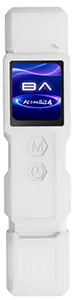
Water Detective 4 is a portable water quality tester pen that can measure TDS, EC, hardness, salinity, temperature, and other indicators following a rapid on-site procedure. It is suitable for household users to perform paired screening and trend recording before and after membrane replacement or installation [3]. It does not replace laboratory testing required by regulations, nor can it detect lead, PFAS, or microorganisms. Hardness and salinity estimates are limited by the water sample matrix and calibration status and can only serve as screening references.
Specific operating steps
- Prepare two clean sampling cups, label them "feed water" and "product water" respectively, and avoid cross-contamination.
- Let the RO system run normally and sample after product water stabilizes; record the date, water temperature, and whether the instrument has been calibrated.
- Use the same water quality tester to measure feed water, then product water; repeat 2-3 times for each sample and read the stable value.
- Calculate the apparent TDS decrease proportion and record the raw TDS/EC values, not just the percentage.
- Repeat once a week or month to observe trends. If the apparent desalination rate suddenly drops, this suggests membrane damage, O-ring leakage, or pre-filter failure, and further investigation is needed.
What this proportion cannot be used to derive
- Cannot derive lead removal rate: lead removal is affected by pH, residual chlorine, contact time, and membrane integrity, and requires dedicated sampling and testing.
- Cannot derive PFAS removal rate: PFAS are trace organic contaminants and require laboratory analysis such as LC-MS/MS.
- Cannot derive microbial removal rate: bacteria, viruses, and cysts require microbiological culture or molecular biology methods.
- Cannot derive hardness removal rate: although RO reduces hardness, the TDS decrease proportion does not equal the calcium and magnesium hardness decrease proportion, especially when non-hardness ions make up a high proportion of the raw water.
When Other Tools Are Needed
In the following situations, the apparent TDS decrease proportion alone is insufficient:
- You need to determine whether drinking water meets standards;
- You suspect specific contaminants such as lead, copper, arsenic, or fluoride;
- You need to verify PFAS or volatile organic compounds;
- You need to confirm microbiological safety.
In these cases, entrust a qualified laboratory to test according to local regulations and standard methods.
Frequently asked questions
Q: If the TDS decrease proportion is high, is the water necessarily safe? No. An apparent TDS decrease only indicates that the total dissolved ions have decreased; it does not prove that harmful substances or microorganisms have been removed. Drinking water safety requires comprehensive assessment and, when necessary, laboratory testing.
Q: Can EC and TDS be converted directly? A factor of 0.5–0.7 is commonly used, but the actual conversion factor varies with water chemistry. For household comparisons, it is recommended to consistently use the same indicator (TDS or EC) and not mix them.
Action checklist
- Same device, same source, same time, same temperature, same unit.
- Sample after flushing.
- Repeat readings and average them.
- Record raw data, not just percentages.
- Make clear that this is on-site screening and does not replace laboratory testing.
References
[1] US EPA WaterSense. Point-of-Use Reverse Osmosis Systems. https://www.epa.gov/watersense/point-use-reverse-osmosis-systems (cites general principles only; no specific statistics or regulatory assertions are cited)
[2] USGS Water Science School. Conductivity (Electrical Conductance) and Water. https://www.usgs.gov/water-science-school/science/conductivity-electrical-conductance-and-water (cites only the general concept of temperature effects on conductivity)
[3] Orome Electrical. Water Detective 4 product page. https://www.orome-store.com/products/water-detective-4/ (current product facts only; no fabricated specifications)
Discuss your application
Tell us your target parameters, water matrix, interface and annual volume. Our engineering team will recommend a practical configuration.
Request a Quote