
# Can You Use a Household Water Quality Tester to Measure Salinity in a Saltwater Pool? Don't Ignore the Range
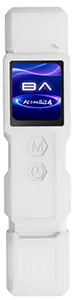
Direct answer: You cannot assume a household water quality tester is suitable for a saltwater pool just because it has a salinity parameter. Most water quality testers are screening tools designed for fresh water or low-salinity water bodies, and the salt concentration in a saltwater pool is often above their linear range or outside their intended media. Take the Water Detective 4 as an example: it integrates nine parameters — TOC, COD, UV254, TDS, EC, turbidity, hardness, salinity and temperature — but its official application instructions cover tap water, purified water, bottled water, travel water and aquarium water, and do not state saltwater pool compatibility. Therefore, until the manufacturer confirms the measurement range and media compatibility, do not use it on a saltwater pool, and do not use its readings to infer the chlorine output of a salt chlorine generator.
Why Salinity Measurement in a Saltwater Pool Can't Rely Solely on a Water Quality Tester "Having a Salinity Function"
Salinity measurement is usually based on conductivity: dissolved salts in water increase ion concentration, and a conductivity sensor measures the conductance, which is then converted to a salinity value using temperature compensation and an ion model. The USGS explanation of conductivity notes that conductivity reflects the overall ability of dissolved ions in water to carry current, and that salinity estimates are affected by ion composition and water temperature [2]. This means the same instrument does not use the same conversion relationship in fresh water, seawater and saltwater pools.
Household water quality testers are mostly designed for screening drinking water, aquariums or lightly polluted water, and their range may cover only very low salinity levels. Saltwater pools, which operate with a salt chlorine generator, typically have a salt concentration significantly higher than fresh water, which may exceed the instrument's effective range, causing saturated readings, increased error or no reliable result. The CDC, in its guidance on home pool and hot tub water treatment and testing, emphasizes that testing must match the disinfection method [1]. Managing a salt chlorine generator pool therefore requires a testing tool that covers the corresponding salinity range, not a general-purpose water quality tester.
Three Checks: Range, Media, Management Goal
Before using any portable water quality tester on a saltwater pool, check the following three dimensions.
| Check Item | Why It Matters | How to Confirm |
|---|---|---|
| Range | Saltwater pool salinity may exceed the instrument's linear range, making readings unreliable | Check the manual or contact the manufacturer to confirm the salinity parameter's measurement range, unit (mg/L, ppt or %) and accuracy |
| Media | Instrument calibration is usually based on a specific water body, such as fresh water or drinking water | Confirm whether the product documentation explicitly supports saltwater, pool water or high-conductivity samples |
| Management Goal | Trend screening and salt chlorine generator control have different accuracy requirements | Clarify whether you are doing daily trend recording or making salt-addition decisions for a salt chlorine generator; the latter requires dedicated calibrated equipment |
In the official description of the Water Detective 4, the applicable media are tap water, purified water, bottled water, travel water and aquarium water; "saltwater pool" or "high-salinity water" does not appear. Therefore, even though it has a salinity parameter, it cannot be assumed suitable for this scenario.
The Value of the Water Detective 4 in Genuinely Matching Tasks
For the water samples it explicitly lists — tap water, purified water, bottled water, aquarium water and so on — the Water Detective 4 can serve as a portable multi-parameter screening tool to quickly obtain relative changes in indicators such as TDS, EC, hardness and salinity. Its value lies in:
- Individual or household users can compare daily trends and spot abnormal fluctuations in water quality;
- Service personnel can carry it to multiple sites for preliminary screening without large laboratory equipment;
- Measuring multiple parameters at once helps identify water samples that need further laboratory analysis.
But you must distinguish on-site screening/trend monitoring from compliance laboratory analysis. Readings from portable devices are affected by temperature, matrix and calibration status, and cannot serve as proof of drinking-water safety or compliance with specific contaminant limits. Likewise, it cannot replace the dedicated salinity testing or laboratory methods that accompany a salt chlorine generator.
If You Already Bought the Water Detective 4, What Should You Do About a Saltwater Pool?
- Check the manual or consult the manufacturer first: confirm the measurement range, applicable media and calibration conditions of this model's salinity parameter. If the manual does not mention saltwater, seawater or high-salinity water, do not use it directly.
- Check your salt chlorine generator's requirements: consult your salt chlorine generator manual to identify its recommended salt concentration control range. Compare the instrument's range with that range — if the range cannot cover it, the instrument is not suitable.
- Do not measure before confirmation: until you have written confirmation from the manufacturer, do not insert the Water Detective 4 into a saltwater pool, and do not use its readings to adjust the salt chlorine generator or decide how much salt to add.
- If used only for trends in low-salinity mixed water: for example, after dilution by rain, or in a pool just filled with fresh water, it can be used as a trend-recording tool. But fix the sampling point, record water temperature and multiple parameters, and use it only for screening — not as a basis for compliance or equipment control.
- Use dedicated tools for key decisions: when you need to adjust a salt chlorine generator, decide whether to add salt or troubleshoot abnormal salinity, use a dedicated salinity meter, salinity test strips, a refractometer or laboratory testing that is calibrated and has a range covering saltwater pools.
When Must Other Tools Be Used?
Do not rely on a household water quality tester in the following situations:
- The salt chlorine generator requires precise salinity control, and the instrument's range cannot cover the recommended range;
- The pool has just had a large water change, salt addition or heavy rain, and an accurate salt addition calculation is needed;
- The salt chlorine generator alarms, chlorine output is insufficient or the equipment is abnormal, and the true salinity must be determined;
- Documented salinity records must be provided to regulators or service providers.
In these scenarios, use salinity testing equipment designed specifically for saltwater pools, or choose laboratory methods, and calibrate regularly according to the device instructions.
FAQ
Q: Can a household water quality tester measure the salinity of a saltwater pool?
A: You cannot assume it is suitable just because the product has a salinity parameter. You must first check the range and media compatibility; the Water Detective 4's application instructions do not include saltwater pools, so it is not recommended for direct use until confirmed, and its readings must not be used to infer the chlorine output of a salt chlorine generator.
References
[1] U.S. Centers for Disease Control and Prevention. Home Pool and Hot Tub Water Treatment and Testing. https://www.cdc.gov/healthy-swimming/about/home-pool-and-hot-tub-water-treatment-and-testing.html (accessed: 2026-10-29)
[2] U.S. Geological Survey. Conductivity (Electrical Conductance) and Water. https://www.usgs.gov/water-science-school/science/conductivity-electrical-conductance-and-water (accessed: 2026-10-29)
Discuss your application
Tell us your target parameters, water matrix, interface and annual volume. Our engineering team will recommend a practical configuration.
Request a Quote