
# Same Cup of Water, Different Results? Check These Six Operational Factors First
You use the same water quality tester on the same cup of water, yet the two readings differ. Is the instrument inaccurate, or did the water "change"? More often, the problem lies in sampling and reading. Based on field scenarios for household users and water-treatment service technicians, this article presents six of the most easily overlooked operational factors, along with a practical troubleshooting sequence and recording method.
First, a clarification: portable water quality testers (such as Water Detective 4) are intended for rapid on-site screening, trend comparison and observation of water-treatment equipment performance; they do not replace laboratory testing required by regulations. Estimated parameters such as hardness and salinity are affected by sample matrix, calibration status and temperature conditions, and cannot be directly equated with "standard values."
Factor 1: Container Residue
If the inner wall of a cup or cuvette carries scale, detergent, salt or residue from a previous sample, it may alter conductivity, TDS or turbidity readings; multispectral measurements may also be affected by residual films on the optical window.
Troubleshooting and procedure:
- Use containers of the same transparent, inert material (such as PP or glass); avoid metal cups.
- Before sampling, rinse the container 3 times with the water sample to be tested, and discard the rinse water.
- If visible water spots or an oil film appear on the inner wall, wash with neutral detergent, then rinse thoroughly with pure water and then with the sample water in sequence.
- During comparison experiments, keep the container handling method consistent for all containers.
Factor 2: Bubbles
When water is poured into a cup or the probe is immersed in the sample, tiny bubbles may adhere to the electrode surface or near the optical window. Bubbles reduce the effective contact area, causing conductivity/TDS readings to run low or fluctuate; they also interfere with optical parameters such as turbidity and UV254.
Troubleshooting and procedure:
- After sampling, let the sample stand for 30–60 seconds so bubbles can rise naturally.
- Gently tap the outside of the container or tilt it slowly to help bubbles detach; do not shake vigorously.
- Inspect the probe or detection window: if visible bubbles are present, remove it, rinse gently with sample water, and re-immerse.
- Before taking a reading on the same cup of water, confirm that no bubbles are attached to the probe surface.
Factor 3: Sample Temperature
Conductivity is markedly affected by temperature. In its material on conductivity and water conductivity, the USGS notes that conductivity varies with temperature, so when comparing water samples from different batches, differing temperatures may make "the same cup of water" appear different [2]. In addition, parameters estimated from conductivity, such as TDS and salinity, also drift with temperature.
Troubleshooting and procedure:
- Record the sample temperature for each measurement; Water Detective 4 can display temperature, so it is recommended to record it as well.
- Compare at similar temperatures where possible, for example by letting samples stand until they reach room temperature before measuring.
- For continuous observation of a water-treatment system, measure at a fixed time and within a fixed water-temperature range each day to reduce the temperature variable.
- Do not directly compare readings from freshly drawn cold water with those from warm water that has stood for several hours, unless the temperature change is also known.
Factor 4: Sample Representativeness
If "the same cup of water" comes from different sampling locations or different draw-off periods, it is not actually the same representative sample. The USGS "National Field Manual for the Collection of Water-Quality Data" emphasizes that sampling must account for representativeness; otherwise, no matter how precise the laboratory, results may deviate from the true condition of the water body [1].
Household and field troubleshooting:
- Tap water: run the tap for 1–2 minutes first to flush stagnant water from the pipes before sampling.
- Water purifier output: flush according to the equipment instructions and wait until the output is stable before measuring; do not use the first cup after the unit has been idle.
- Bottled/barreled water: measure as soon as possible after opening to avoid slow conductivity changes caused by absorption of carbon dioxide from the air.
- Aquarium water: sample from the middle layer, away from the filter outlet, to avoid interference from surface oil film or bottom sediment.
Factor 5: Contamination of the Measurement Area
The probe of a tester pen, the optical window or the cuvette is the entry point for readings; if contaminated by the previous sample, it directly affects results. Cross-contamination often occurs when measuring different water samples in succession.
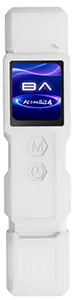
Troubleshooting and procedure:
- Between samples, rinse the probe/window with pure or deionized water, then rinse with the next sample water.
- Blot gently with a clean, lint-free cloth; do not wipe the optical window forcefully, to avoid scratches.
- Do not reuse the same cloth repeatedly for wiping, to avoid carrying residue into the next cup.
- If the window appears whitish or scaled, use an appropriate cleaning method per the instructions; if unsure, consult after-sales service first.
Factor 6: Operational Consistency
For the same sample, different people or different operating sequences may also produce different readings. Stirring or not stirring, immersion depth, waiting time before reading, and whether the probe is moved all create differences.
Recommendations for consistent operation:
- Fix the insertion depth of the probe/tester pen, for example ensuring the probe is fully immersed for pen-type testers.
- Fix whether to stir or not; if stirring, keep stirring time and speed consistent each time.
- Fix the reading time: wait the same number of seconds after immersion, and record only after the reading stabilizes.
- Do not measure under strong electromagnetic interference, direct sunlight or vibration.
- Calibrate or self-check periodically according to the instructions; if calibration conditions are unavailable, at least perform a quality-control comparison using the same stable water sample.
How to Record Repeated Measurements
Repeated measurements can reveal fluctuations, but "identical readings" do not prove accuracy. Accuracy must be confirmed by comparison with reference materials or accredited laboratory results; on-site repetition only reflects operational stability and instrument drift.
Suggested table:
| No. | Sample ID | Time | Temperature (°C) | Main reading (e.g., TDS/EC/turbidity) | Remarks/unusual observations |
|---|---|---|---|---|---|
| 1 | 20261029-01 | 09:32 | 24.5 | TDS 108 mg/L | Container rinsed, no bubbles |
| 2 | 20261029-01 | 09:35 | 24.6 | TDS 110 mg/L | Slight bubbles, stable after gentle tapping |
| 3 | 20261029-01 | 09:38 | 24.5 | TDS 109 mg/L | Reading stable |
Note: The table above is only a recording-format example; the values do not represent the actual performance of Water Detective 4. The temperature, container, rinsing method and operator for each measurement should be recorded for traceability.
When Other Tools Are Needed
In the following situations, a portable water quality tester is insufficient to reach a conclusion, and the sample should be sent to a qualified laboratory or tested using a legally recognized method:
- Drinking-water safety determination or testing for specific contaminants (heavy metals, microorganisms, pesticide residues, etc.) is required;
- Hardness, salinity and similar parameters require a statutory report or serve as a basis for equipment selection;
- Readings remain persistently abnormal and cannot be explained by the six factors above;
- Internal quality control, procurement acceptance or dispute evidence is required.
In such cases, Water Detective 4 can serve as an on-site screening and trend-recording tool, but it cannot replace a laboratory report.
Brief FAQ
Q: For the same cup of water, how large a difference between two readings is normal? A: Portable water quality testers are mainly used for trends and comparisons, and the acceptable fluctuation range differs by brand and parameter. First control container residue, bubbles, temperature, representativeness, contamination and operational consistency, then observe the deviation. Do not substitute repeatability for accuracy; accuracy must be confirmed by comparison with reference materials or an accredited laboratory.
Q: If a tester pen shows low TDS, does that mean the water is safe to drink directly? A: No. TDS or conductivity only reflects the total amount of ions in the water and cannot indicate whether microorganisms, heavy metals or other organic substances are safe. Whether drinking water meets standards must be based on regulatory standards and laboratory testing; portable water quality testers are only for rapid screening.
Q: Can water purification service technicians use this kind of device to produce a report during an on-site visit? A: Not recommended. On-site rapid screening is suitable for showing customers the difference before and after a water purifier, and the trend of change before and after replacing a filter cartridge, but the report should state "on-site screening, not laboratory testing." If the customer needs official water quality certification, a qualified laboratory should be commissioned.
References
[1] U.S. Geological Survey. National Field Manual for the Collection of Water-Quality Data. https://www.usgs.gov/mission-areas/water-resources/science/national-field-manual-collection-water-quality-data-nfm (accessed: 2026-10-29) [2] U.S. Geological Survey. Water Science School: Conductivity (Electrical Conductance) and Water. https://www.usgs.gov/water-science-school/science/conductivity-electrical-conductance-and-water (accessed: 2026-10-29)
Discuss your application
Tell us your target parameters, water matrix, interface and annual volume. Our engineering team will recommend a practical configuration.
Request a Quote