
The conclusion first: normal TDS doesn't mean lead is within limits
Many households see a portable water quality tester showing a TDS of just a few dozen or one or two hundred and conclude "the water is very clean." But TDS and lead are completely different measures. TDS stands for total dissolved solids and mainly reflects the total of ions such as calcium, magnesium, sodium, sulfate and bicarbonate; a conductivity sensor inside a water quality tester estimates TDS from the water's ability to conduct ions. Lead may be present in water at trace levels, far below the normal fluctuation of TDS readings, and TDS cannot distinguish it. So even if the TDS reading is very low, lead contamination may still be present; conversely, high TDS doesn't necessarily mean high lead[1].
Why ordinary water quality testers can't see lead
Portable multispectral water quality testing products, such as the Water Detective 4 featured on this site, combine nine measures — TOC, COD, UV254, TDS, EC, turbidity, hardness, salinity and temperature — in one rapid testing platform. Its value is rapid screening and comparison: TDS/EC changes in the same purifier's output at different filter stages, hardness trends across different water sources, sensory measures in aquarium water, and so on. But lead is not among these measures, so it cannot give a lead concentration and cannot serve as the basis for judging whether lead in drinking water is safe. Hardness and salinity estimates are also limited by sample matrix and calibration conditions, making them better suited to on-site trend observation than regulatory determination.
The right way for households to spend money
Step 1: Check the pipes and water source first, not buy equipment first
The US EPA's basic information on lead in drinking water states that lead can come from lead-containing pipes, solder, fittings or service lines, and that boiling does not remove lead[1]. If the home is older, has used lead-containing solder or pipes of unknown material, or the water utility has flagged lead service lines, the risk of lead exposure is higher. Users can contact the water utility or property manager to ask about the service line material; visible indoor pipework can be identified with the help of a professional plumber, but this is only an empirical clue and cannot serve as a testing conclusion.
Step 2: If lead is suspected, use proper sampling and laboratory testing
Don't use TDS, conductivity or turbidity to "substitute" for lead testing. Contact a qualified laboratory, request dedicated sampling bottles and follow the instructions on standing time and sampling; generally an initial standing water sample must be collected, and a post-flush sample may also be needed for comparison. When the report arrives, focus on whether the lead concentration is below the local drinking water standard, not merely on whether TDS looks "normal." No portable device reading can replace or overturn a laboratory result.
Step 3: If treatment is truly needed, trust only certified filtration data
If the laboratory confirms a lead risk, don't just buy any "activated carbon filter" or "mineral water purifier" and call it done. NSF's water filter FAQs advise consumers to confirm that a filter is certified and to check whether the certification data explicitly lists lead reduction[2]. Third-party certified products state the certification category and the list of contaminants they can reduce; without such data, you cannot assume an ordinary filter removes lead. Boiling also does not remove lead and may even raise the concentration of some contaminants through evaporation.
What water quality testers are good for: trend logging and comparison
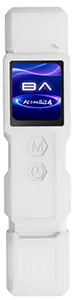
As a portable water quality monitoring device, a water quality tester / water quality tester for drinking water is better suited to day-to-day trend management than to judging a specific contaminant. You can treat the Water Detective 4 as a "change recorder": regularly log the TDS, EC, turbidity and temperature at the same tap and watch for sudden increases in reverse-osmosis or purifier output; compare the approximate salinity of bottled water, tap water and travel water; and help judge hardness changes before and after aquarium water changes. As long as users understand that it does not test lead or microorganisms and does not issue compliance reports, such devices can turn invisible changes into a comparable continuous record.
Comparison of the question, the testing method and the action path
| Suspected issue | Can routine portable testing (TDS/EC) determine it? | Correct action path |
|---|---|---|
| Total dissolved salts / filter failure trends | Can provide trend comparison, but not an absolute judgment | Log TDS/EC continuously; if the difference jumps, replace the filter or send a sample to a lab |
| Lead | No; lead can be present even with normal TDS | Check pipe materials; sample properly and send to a certified laboratory; choose a certified lead-reduction filter |
| Microorganisms / bacteria | No | Laboratory microbiological testing, without relying on portable devices |
| Hardness / scale trends | Can estimate, subject to matrix and calibration limits | Use as a daily trend reference; send to a laboratory when accurate results are needed |
Brief FAQ
Q: Does normal TDS mean there is no lead? No. TDS is the total of dissolved solids, while lead is a specific metal contaminant; even with very low TDS, a health risk may still exist.
Q: Can a water quality tester / water quality tester pen measure lead? Most portable multiparameter devices do not include a lead sensor. Taking the Water Detective 4 as an example, its measure list is TOC, COD, UV254, TDS, EC, turbidity, hardness, salinity and temperature, with no lead; it cannot be used to rule out lead contamination.
Q: If I suspect lead in my home's water, what is the first thing to do? First check the service line and indoor pipe materials, then contact a laboratory for proper sampling instructions; don't start by "comforting yourself" with a TDS reading.
Q: Can boiling or an ordinary water filter pitcher remove lead? No. Boiling does not remove lead, and an ordinary filter should not be assumed effective unless third-party certification explicitly states it reduces lead[1][2].
Actionable checklist
- Record the current TDS/EC as a household baseline, but note that it "does not mean lead safety."
- Ask the water utility or property manager whether the service line contains lead and whether lead sampling has been done recently.
- If lead is suspected, stop using TDS to judge and contact a certified laboratory, following the standing-sample requirements.
- If lead reduction is needed, check whether the filter's certification data lists "lead" rather than just looking for "activated carbon" or "multi-stage filtration."
- Use portable testing for trend comparison, keep the data, and if necessary have a professional interpret it together with the laboratory report.
References
[1] US EPA. Basic Information about Lead in Drinking Water. https://www.epa.gov/ground-water-and-drinking-water/basic-information-about-lead-drinking-water (accessed: 2026-10-29) [2] NSF. Water Filters FAQs. https://www.nsf.org/about-nsf/faqs/water-filters-faqs (accessed: 2026-10-29)
Discuss your application
Tell us your target parameters, water matrix, interface and annual volume. Our engineering team will recommend a practical configuration.
Request a Quote