
Before Buying a Water Quality Tester, Write Down Your Three Questions—It Matters More Than Comparing Specs
Write down your questions first, not the specs
When buying a water quality tester, many people start by listing parameters: TDS, conductivity, turbidity, TOC, COD, UV254… But more parameters only tell you which numbers the device can display—not whether those numbers mean anything for your water source problem. A more reliable approach is to write down three questions first: What water am I testing? What change do I want to verify? What can I do with the numbers? These three questions determine whether you need a portable screening tool, a continuous monitoring component, or should send samples directly to a qualified laboratory. A portable water quality tester is for on-site screening, trend comparison and record-keeping—not a replacement for regulatory testing.
In its guide to home drinking water testing, the US EPA emphasizes choosing tests based on specific concerns rather than blindly running a "full panel" [1]. The CDC also recommends understanding local water quality reports and known issues before choosing a water filter [2]. Both point to the same purchasing logic: define the problem first, then choose the tool.
Three questions determine the tool format
Question 1: What water am I testing?
Different water sources carry different risk profiles. Tap water raises concerns about disinfection byproducts and materials introduced by distribution pipes; filter effluent about filter media degradation and membrane integrity; bottled water about product consistency and changes after opening; aquarium water about hardness, salinity, organics and nitrogen-cycle shocks; travel water about comparisons after switching sources. For the same pen, readings cannot be interpreted across different water sources.
Question 2: What change do I want to verify?
Portable testing is better suited to tracking change trends under the same source and the same method with continuous records. For example, after replacing a filter, record TDS and conductivity continuously to judge whether pretreatment is stable; or use UV254 as a field surrogate for organic content and watch fluctuations after switching sources. What matters is not the absolute value of a single reading, but the magnitude of change relative to your own baseline.
Question 3: What can I do with the numbers?
If you glance at the numbers and forget them, the tool has not entered your decision loop. Good records should include date, sampling point, flush time, temperature, calibration status and reading range. Anomalies should trigger retesting; persistent anomalies, or anything involving microorganisms, heavy metals or specific contaminants, should go to a qualified laboratory.
The table below gives a simplified decision framework:
| Use case | What a portable pen can help with | Tasks a portable pen should not take on | Further verification |
|---|---|---|---|
| Filter effluent trends | Continuously record changes in TDS, conductivity, UV254 and turbidity | Proving the filter meets a drinking water hygiene standard | Check the filter manual; lab-test specific indicators if needed |
| Bottled or travel water comparison | Quickly compare EC, TDS, hardness and salinity differences across sources | Determining whether a specific contaminant exceeds limits or whether pathogens are safe | Check official water quality reports; confirm at a lab if abnormal |
| Aquaculture and aquarium water monitoring | Trend monitoring of hardness, salinity and organic-related surrogate indicators | Replacing fish pathology diagnosis or statutory discharge monitoring | Use dedicated test kits for the project or lab analysis |
| On-site screening after an incident | Quickly capture baseline changes to decide whether to send samples | Replacing statutory reports from a qualified laboratory | Send samples to an accredited lab per local regulations |
The boundaries of a portable water quality tester: what Water Detective 4 is for
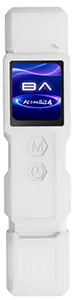
Water Detective 4 is a portable water quality tester pen for personal/home use, integrating nine rapid tests—TOC, COD, UV254, TDS, EC, turbidity, hardness, salinity and temperature—suitable for on-site initial screening, filter maintenance comparisons and preliminary troubleshooting by service personnel. Its value lies in putting multiple trend indicators into one portable workflow for continuous records; that does not mean "the more parameters, the more versatile." Among the nine indicators, EC measured by the conductivity sensor can estimate TDS, but TDS conversion depends on the water's ion composition; hardness and salinity estimates are also limited by the calibration solution and the sample matrix. Users must remember: portable trends are not proof of drinking safety or of specific contaminants.
Principles and limitations
A conductivity sensor gives EC by measuring the ionic conductivity of water, and TDS is usually converted from EC by an empirical factor. Differences in ion composition across water sources mean the same EC can correspond to different TDS, so TDS from a pen device should be treated as a relative trend rather than an absolute concentration. Hardness is contributed by calcium and magnesium ions, but other divalent ions interfere; salinity is affected by temperature and the chloride proportion, so measurement conditions and calibration solution must be stated. UV254, as an organic surrogate, is subject to interference from particles and turbidity, so understand your local sample background before use.
When Water Detective 4 is a good buy
- You need frequent, low-cost trend comparisons of the same water source;
- You move between different water points and need portable screening and records;
- You install, maintain or provide on-site service for water treatment equipment and need a reproducible quick comparison for users;
- You understand all readings are screening signals and will still send samples to a lab as needed.
When it is not a good buy
- You need compliance reports or statutory test results;
- You need to test total coliforms, E. coli, lead, arsenic, nitrate, VOCs or specific pesticides;
- You care about only one parameter and already have a more dedicated single-parameter instrument;
- You expect one number to tell you "this glass of water is safe."
Actionable purchasing checklist
- Write down the three questions and limit the water source type and change target;
- List the regulatory items or specific contaminants that must be done by a lab;
- Before buying, confirm the instrument's measurement principle, calibration requirements and data recording method;
- After unboxing, measure the same sample 3–5 times in a row to get a feel for its repeatability;
- Fix the sampling procedure: flush, temperature stabilization, avoid bubbles;
- Establish a baseline record and afterward compare only trends under the same conditions;
- When something looks abnormal, first rule out operating error, then retest; if still abnormal or safety-related, send to a qualified laboratory.
Frequently Asked Questions (FAQ)
Q: Can a portable water quality tester tell whether water is drinkable? No. A portable pen provides trend information such as conductivity, turbidity and organic surrogates; it cannot prove drinking water meets hygiene standards, nor identify pathogens or specific chemical contaminants. Whether water is drinkable should be based on local regulations and results from a qualified laboratory [1][2].
Q: Does high TDS always mean poor water quality? Not necessarily. TDS represents total dissolved solids, which may come from natural minerals such as calcium and magnesium. A single TDS value is not suitable for directly judging water quality; it is only meaningful in a continuous trend for the same source.
Q: Before buying a water quality tester, should I look at the local water quality report first? It is advisable. The CDC clearly states that understanding local water quality reports helps identify items of concern and then choose a suitable filter or testing tool [2]. This avoids buying an instrument that cannot answer the key questions.
References
[1] US EPA. Home Drinking Water Testing. https://www.epa.gov/ground-water-and-drinking-water/home-drinking-water-testing (accessed 2026-10-29) [2] CDC. About Choosing Home Water Filters. https://www.cdc.gov/drinking-water/prevention/about-choosing-home-water-filters.html (accessed 2026-10-29)
Discuss your application
Tell us your target parameters, water matrix, interface and annual volume. Our engineering team will recommend a practical configuration.
Request a Quote