
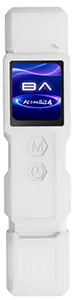
The Water Detective 4 is a portable water quality tester designed for tap water, purified water, bottled water, travel water and aquarium water. It is suitable for personal screening and before/after comparisons, but it does not replace laboratory testing. For pool spot checks, the answer has two layers: it can be used for partial auxiliary trend recording, but it cannot be used for pool clearance or for determining disinfectant/pH status. The reason is that the Water Detective 4's test items include TOC, chemical oxygen demand (COD), UV254, total dissolved solids (TDS), conductivity (EC), turbidity, hardness, salinity and temperature, but do not include the specialized items most critical for routine pool and hot tub spot checks, such as free chlorine/residual chlorine, total chlorine/bromine, pH, total alkalinity and cyanuric acid.
The Reasonable Role of a Water Quality Tester in Pool Spot Checks
The table below lists common pool spot-check items and how the Water Detective 4 covers them. "Covered" only means the device can output a screening value for that parameter; it does not mean the reading has been validated for pool applications or can serve as a compliance basis.
| Key pool spot-check items | Water Detective 4 test coverage | Pool scenario notes |
|---|---|---|
| Free chlorine/total chlorine/bromine | No | Must use a DPD test kit, test strips or an electrochemical method; the Water Detective 4 has no such parameter |
| pH | No | Must use phenol red reagent, pH test strips or an electrode; not among the test items |
| Total alkalinity | No | Requires dedicated titration or reagents; the Water Detective 4 does not provide it |
| Cyanuric acid/stabilizer | No | Requires dedicated test strips or a photometer; not covered by the Water Detective 4 |
| Temperature | Yes | Can be used as a record item, but not as a clearance indicator |
| TDS / conductivity / salinity | Yes (estimated) | Can record trends; readings will change due to dosing, salt chlorine generators and makeup water |
| Hardness (total hardness) | Partially covered | The product provides a hardness estimate, but it is not the calcium hardness commonly used in the pool industry and cannot be used directly for the calcium saturation index |
| Turbidity | Yes (screening) | Can be used for "clear/turbid" trend comparisons; not a compliant turbidity meter |
| TOC / COD / UV254 | Yes (screening) | Auxiliary for organic load trends; cannot serve as a compliance basis for microorganisms or disinfection by-products |
Principle: Why It Can Only Do Trends, Not Clearance
The Water Detective 4 provides screening values through rapid testing methods such as portable spectroscopy and conductivity sensors. Parameters such as TDS, EC and salinity are usually converted or estimated from conductivity, and hardness and salinity are also limited by the water sample matrix, temperature and calibration status. When the same device continuously records at the same sampling point, time and depth, changes in values can indicate that "the water has become dirtier, salinity has risen, or turbidity has increased," but a single absolute value cannot prove that water quality is safe or compliant.
Pool water contains disinfectants, human metabolites, sunscreens, algae and minerals from makeup water, and these components may interfere with conductivity and spectral signals. Therefore, readings from the Water Detective 4 in pool water can only be used for on-site screening and trend monitoring; they cannot be equated with laboratory analysis, nor can they be used to determine whether chlorine, acid or alkalinity adjustment is needed.
If only trend recording is needed, you can operate as follows
- Confirm compatibility: The product information does not list pools or hot tubs as validated applications. If it is to be used with pool water samples, it is advisable to first test a small amount of clear water sample to confirm that the device can read normally and the sensor shows no abnormality; if uncertain, contact the manufacturer for confirmation.
- Fix the sampling method: Sample at the same time, same location and same water depth every day, avoiding floating matter on the surface or areas that have just been dosed.
- Run in parallel with dedicated tests: Use a DPD/pH test kit to measure free chlorine and pH, and use the Water Detective 4 to record TDS, EC, salinity, temperature, turbidity, etc., forming an auxiliary record sheet.
- Look only at trends, not single-point judgments: Data over consecutive days or weeks can reflect the direction of water quality changes; if TDS, turbidity or temperature fluctuates abnormally, then combine it with dedicated test results to determine whether adjustment is needed.
When other tools must be used
Any clearance or dosing decision for a pool or hot tub must use dedicated test methods that comply with local regulations. The U.S. CDC's "Home Pool and Hot Tub Water Treatment and Testing" guidance also emphasizes routine disinfectant and pH testing [1]. The Water Detective 4 does not include items such as free chlorine, total chlorine or pH, so it cannot replace these tests. For public pools, commercial hot tubs, bacteriological indicators or Legionella, samples must be sent to a qualified laboratory, and sampling and reporting must be carried out in accordance with local regulations.
In addition, the U.S. EPA's "Home Drinking Water Testing" page notes that household drinking water testing requires selecting laboratory methods according to the specific contaminants [2]. Pool water and drinking water have different testing purposes, and readings from on-site screening devices cannot replace laboratory reports required by regulations.
Brief FAQ
Q: Can the Water Detective 4 measure residual chlorine? A: No. Its test items do not include free chlorine, total chlorine, bromine or any disinfectant residual.
Q: Is the hardness reading calcium hardness? A: Usually not. The Water Detective 4 provides total hardness or a hardness estimate, while the pool industry commonly uses calcium hardness to calculate water balance; the two cannot be directly equated.
Q: Can it replace pool test strips? A: No. It cannot measure pH or disinfectants and can only supplement trend records such as TDS, salinity, temperature and turbidity.
Q: What is needed for pool clearance? A: At minimum, dedicated items such as pH and free chlorine/total chlorine (or bromine) are needed; commercial or public pools also require testing of total alkalinity, cyanuric acid, microbiological indicators, etc., in accordance with local regulations.
Actionable checklist
- Clarify the purpose: auxiliary trend recording or pool clearance?
- If for clearance: use dedicated pH/residual chlorine testing tools and comply with local pool hygiene regulations.
- If auxiliary: use the Water Detective 4 to record TDS, EC, salinity, temperature, turbidity, etc., only for before/after comparisons.
- Clean the sensor according to the manufacturer's instructions before and after use to avoid cross-contamination.
- Do not confuse on-site screening values with laboratory compliance testing.
References: [1] CDC. Home Pool and Hot Tub Water Treatment and Testing. https://www.cdc.gov/healthy-swimming/about/home-pool-and-hot-tub-water-treatment-and-testing.html (This article does not cite specific values; for background reference only.) [2] US EPA. Home Drinking Water Testing. https://www.epa.gov/ground-water-and-drinking-water/home-drinking-water-testing (This article does not cite specific values; for background reference only.)
Discuss your application
Tell us your target parameters, water matrix, interface and annual volume. Our engineering team will recommend a practical configuration.
Request a Quote