
How should you combine Water Detective 4, an ordinary TDS pen, test kits and lab testing services?
When buying a water quality tester, many users compare tools based on different principles for accuracy while overlooking differences in task. The key to combining them is not "which is more accurate" but "what question needs answering this time: a trend, a specific parameter, or a compliance question." As a water quality tester for household and on-site screening, Water Detective 4 is positioned for rapid multi-parameter screening and recording, and does not replace regulatory laboratory testing[1].
Principles and limits of the four tools
| Tool | Typical task | Main limitation | Suitable output |
|---|---|---|---|
| Water Detective 4 | Multi-parameter on-site screening, filter/water quality trend records | Non-regulatory method; hardness/salinity are estimates; affected by matrix | Trends and comparisons, not compliance conclusions |
| Ordinary TDS pen | Single-point conductivity/TDS rough check, RO membrane status | Only total dissolved solids-related parameters; cannot distinguish contaminants | Quick reference, not a safety judgment |
| Test kits | Colorimetric testing of specific items (e.g., residual chlorine, pH, hardness) | Single use, single item; relies on operation and colorimetric reading | Specific-parameter initial screening; send for lab testing if abnormal |
| Laboratory testing | Regulatory methods, multiple contaminants, formal reports | High cost, long turnaround; not suitable for daily use | Compliance conclusions, dispute resolution |
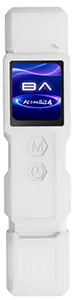
Water Detective 4 integrates TOC, COD, UV254, TDS, EC, turbidity, hardness, salinity and temperature in one rapid testing platform. It suits portable rapid testing workflows for domestic water, on-site screening, water purification services and aquaculture testing, and can be operated without large laboratory equipment. It addresses comparison questions such as "how is today's water different from last week's" and "did anything change before and after installing a water purifier." However, it does not provide regulatory drinking-water compliance determinations, and TDS or conductivity values should not be equated directly with "safe" or "unsafe."
An ordinary TDS pen is essentially a simplified conductivity sensor that only reflects the overall level of conductive ions in water. It is inexpensive and fast, and is often used to judge whether a reverse osmosis membrane has failed or whether purified water has been contaminated, but it cannot tell you whether the ions are calcium and magnesium, chloride or heavy metals, and it certainly cannot detect bacteria or organic matter.
Test kits usually target a single parameter and are read against a color chart. Their advantages are low cost and no power requirement; their disadvantages are human reading error and possible interference from different batches or matrices. Laboratory testing uses standard methods and can provide a traceable formal report, making it suitable for pre-purchase water checks, regulatory disputes or long-term safety assessment, but its turnaround time and cost make it unsuitable for daily use[1][2].
Daily pairing of water quality testers: a three-tier decision
Tier 1: Daily trends and filter management. Use Water Detective 4 as the primary tool, recording multi-parameter changes at the same time and the same sampling point every week or every two weeks. At the same time, keep an ordinary TDS pen for quick single-point cross-checks, for example comparing TDS right after the purifier starts with the reading once output has stabilized. This combination can quickly reveal abnormal fluctuations, but it cannot give conclusions about contaminants.
Tier 2: Suspected specific contamination. For example, a newly renovated community where lead, copper or volatile organic compounds are a concern, or an aquarium showing abnormalities. First use Water Detective 4 for multi-parameter screening; if TOC, COD, turbidity or other parameters clearly deviate from baseline, use the corresponding test kit for specific-parameter initial screening, or send samples directly to a laboratory for confirmation. Never judge that a particular contaminant exceeds limits based solely on the "overall indicators" of a portable water quality tester.
Tier 3: Compliance, legal or health risks. Choose an accredited laboratory directly, and follow standard methods for sampling, submission and reporting. Water Detective 4 and other portable devices can serve as preliminary screening tools, but they cannot serve as a compliance basis and should not be cited in formal reports.
Implementation steps: from baseline to verification
- Establish a baseline: sample at the same time of day for 3–5 consecutive days, recording temperature, TDS/EC, turbidity, TOC/COD, etc., and take the median.
- Set change thresholds: set an "abnormality alert line" based on the baseline fluctuation range rather than copying some absolute pass line.
- Standardize sampling: before each measurement, rinse the container and probe at least three times with the water sample to be tested, avoid air bubbles clinging to the probe, and let the sample come close to room temperature before reading, to reduce fluctuations caused by temperature and handling.
- Tiered response: if daily deviation is ≤ the threshold, keep recording; if it exceeds the threshold, re-check sampling and perform a specific-parameter check; if the abnormality persists, send samples to a laboratory.
- Record and trace: record sampling time, water temperature, standing time and cleaning steps. Portable measurements are affected by temperature, air bubbles and electrode contamination, so consistency of operation matters more than any single reading.
- Periodic comparison with a laboratory: every six months or once a year, send a parallel water sample to a laboratory to calibrate the portable device's trend judgments and verify whether a systematic bias has appeared.
Limitations that must be made clear
The hardness and salinity outputs of Water Detective 4 are estimates based on conductivity or spectroscopy and are affected by water sample matrix and calibration conditions. TDS does not equal the specific distribution of each substance in total dissolved solids; EC does not directly represent health risk either. Parameters such as turbidity and UV254 can be used to track trends in the relative level of organic matter, but natural background levels vary greatly between regions and water sources, so the same value cannot be compared directly. This device does not measure microorganisms, specific heavy metals, pesticide residues, etc.; TOC, COD and UV254 are surrogate indicators for organic matter and cannot be equated with the concentration of specific contaminants. Portable trend monitoring is never proof of drinking-water safety or compliance with limits for specific contaminants[1].
Pairing recommendations for retailers and regional distributors
- Do not claim to customers that a portable water quality tester is "laboratory-grade" or "compliance-grade," to avoid misleading them.
- For household users, recommend Water Detective 4 as a long-term trend recording tool, paired with a TDS pen and commonly used test kits, to form a tiered initial screening solution.
- For water purification service providers, Water Detective 4 can be used for before-and-after installation comparisons and filter replacement reminders, but laboratory reports must be the basis for determining water quality compliance.
- Train sales staff to use the "task—limitation—output" framework in the table above to recommend tools based on the customer's actual question, rather than simply comparing price or the number of parameters.
FAQ
Q: Can a water quality tester replace laboratory testing? A: No. Portable water quality testers, including Water Detective 4, only perform on-site screening and trend management; regulatory conclusions, dispute resolution or health risk assessment must be carried out by an accredited laboratory.
Q: If I already have Water Detective 4, do I still need an ordinary TDS pen? A: If you frequently need one person to quickly re-check reverse osmosis membrane status, a TDS pen is lighter, cheaper and more intuitive. Water Detective 4's multi-parameter recording suits trend management; the two do not conflict.
Q: How do test kits work together with Water Detective 4? A: Test kits are suitable for second confirmation of specific items (such as residual chlorine, pH and hardness). When Water Detective 4 shows an abnormality in a certain parameter, use the corresponding test kit for initial screening, then decide whether to send samples to a laboratory, which can reduce unnecessary testing costs.
Q: How should overseas users choose a laboratory? A: Choose a laboratory recognized under local regulations with the relevant certifications and quality control system, and understand the sampling container, holding time and reporting requirements. Portable devices cannot replace that process.
References
[1] US EPA. Home Drinking Water Testing. https://www.epa.gov/ground-water-and-drinking-water/home-drinking-water-testing (accessed: 2026-10-29) [2] NSF. Water Filters FAQs. https://www.nsf.org/about-nsf/faqs/water-filters-faqs (accessed: 2026-10-29)
Discuss your application
Tell us your target parameters, water matrix, interface and annual volume. Our engineering team will recommend a practical configuration.
Request a Quote