
# Who Is Water Detective 4 Really For? A Practical Water Quality Tester Buying Guide for Home, Travel and Water Treatment Service
The short answer: it is a "trend comparison pen", not a "compliance tester"
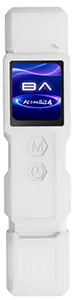
Water Detective 4 is for people who need to quickly compare different water sources, track changes in water filter cartridges, or demonstrate water quality differences to customers on site. It is a portable water quality tester that integrates nine indicators — TOC, COD, UV254, TDS, EC, turbidity, hardness, salinity and temperature — and is suited to trend screening in home, travel and water treatment service scenarios. But if you need to prove that water meets regulations or to quantify specific contaminants (such as lead, bacteria or pesticide residues), it cannot replace laboratory analysis [1].
How it works: how does a multi-parameter water quality tester work?
Water Detective 4 integrates multiple sensors into a single pen-style device. The conductivity sensor (EC) measures ion concentration in water and is used to derive TDS and salinity; the optical channel measures turbidity and UV254 to indicate trends in organic matter and particulates; temperature is used for compensation. These readings are suited to side-by-side comparison or time-series monitoring of the same water source, not to judging absolute safety thresholds. Hardness and salinity are estimated values, affected by water temperature, matrix and calibration status; changes in readings should be combined with multiple measurements under the same conditions.
Who it suits and who it doesn't: a table that makes the tool's boundaries clear
| User type | Is Water Detective 4 suitable? | Recommended Tool |
|---|---|---|
| Home water filter users who want to observe filter cartridge trends | Suitable | Water Detective 4 + record sheet |
| Travellers comparing the taste and minerals of different water sources | Suitable | Water Detective 4 |
| Water treatment service staff demonstrating before-and-after filtration differences on site | Suitable | Water Detective 4 |
| Suspected specific contaminants such as lead, bacteria or pesticides | Not suitable; laboratory required | Accredited laboratory testing |
| Need to issue a compliance test report | Not suitable | Qualified laboratory |
Three real-world use scenarios
1. Home: judging filter cartridge life trends
At the same water point and under the same flushing conditions, record TDS, EC and turbidity weekly. When readings rise noticeably relative to a new cartridge, this may indicate the cartridge is approaching its replacement interval. But this is not proof that the cartridge has failed; the manufacturer's recommendations and laboratory testing should take precedence.
2. Travel: comparing tap water, bottled water and hotel water
Using the same pen at different locations and sampling with a fixed procedure, record TDS, hardness and salinity to quickly understand differences between water sources. Note: low TDS does not equal safe, and high TDS is not necessarily harmful — it only shows that the mineral or dissolved solids content differs.
3. Water treatment service: on-site demonstrations and customer communication
Service staff can bring Water Detective 4 for in-home demonstrations, comparing turbidity, TDS and other indicators before and after filtration so customers can see the changes directly. Demonstration data is used to illustrate the equipment's operating status and must not be used to claim that "water quality meets standards".
Suggested operating steps
- Rinse the sampling container and probe 2-3 times with the water to be tested.
- Take the water sample, avoiding air bubbles clinging to the probe.
- Wait for the reading to stabilise before recording, and also record water temperature and sampling time.
- Within the same scenario, keep the container, water volume and handling technique as consistent as possible.
- Organise the data into a table and observe trends rather than judging from a single point.
How to verify whether readings are trustworthy
- Calibrate or compare using a standard solution of known conductivity or TDS.
- Measure the same sample three times and check the range of fluctuation in the readings.
- Compare the results of the portable test pen with a laboratory test to establish your own baseline.
When should you give up on it and send samples to a laboratory instead?
- Newly installed homes or old pipe networks, where heavy metals such as lead or copper are suspected.
- Well water or surface water, which may contain bacteria, nitrates or pesticides.
- A compliance report needs to be issued.
- Abnormal odour, colour, or gastrointestinal discomfort among family members.
In these cases, contact a qualified laboratory and have sampling and testing carried out in accordance with local regulations [1]. The EPA recommends choosing tests based on specific concerns rather than blindly doing a "full panel" [1]. NSF reminds consumers that filter certification and performance claims must refer to specific standards, and that on-site rapid tests cannot replace certification testing [2].
Limitations: what it cannot measure
Water Detective 4 cannot measure microorganisms (bacteria, viruses), most heavy metals, pesticides, pharmaceutical residues or radioactive substances. Nor can it replace the accurate analysis of an accredited laboratory. Hardness and salinity are estimated values, subject to matrix interference and calibration limits. Temperature changes, probe contamination, air bubbles and handling technique all affect readings.
Brief FAQ
Q: Can Water Detective 4 prove that water is safe to drink? A: No. It provides trend and comparison data; it is not a safety certification and cannot replace laboratory testing.
Q: What should I do if readings fluctuate a lot? A: Check whether the probe is clean, whether there are air bubbles and whether the water temperature is stable, and repeat the measurement under the same conditions.
Q: Are the hardness and salinity readings accurate? A: These are estimated values, affected by matrix interference and calibration; they are suitable for relative comparison, not precise measurement.
Q: Should I buy this water quality tester? A: If you need portable comparison, filter cartridge trends or on-site demonstrations, it is a suitable tool; if you only care about specific contaminants or need compliance proof, prioritise targeted laboratory testing.
Action checklist
- [ ] Clarify your purpose: trend comparison / compliance proof / specific contaminants
- [ ] If it is trend comparison, prepare a fixed container and a record sheet
- [ ] If it is compliance or specific contaminants, contact a local qualified laboratory
- [ ] Read the product instructions before use to understand calibration and maintenance
- [ ] Do not draw safety conclusions from a single reading
References
[1] US EPA. Home Drinking Water Testing. https://www.epa.gov/ground-water-and-drinking-water/home-drinking-water-testing (accessed: 2026-10-29) [2] NSF. Water Filters FAQs. https://www.nsf.org/about-nsf/faqs/water-filters-faqs (accessed: 2026-10-29)
Discuss your application
Tell us your target parameters, water matrix, interface and annual volume. Our engineering team will recommend a practical configuration.
Request a Quote