
Introduction: Water Quality Monitoring Shifts from Chemical Dependence to Optical Independence
Water quality monitoring is a core part of environmental protection, industrial production, and municipal management. For a long time, laboratory chemical analysis and online instruments based on wet chemistry have been the main means to obtain organic pollution indicators such as COD (chemical oxygen demand), TOC (total organic carbon), turbidity, and color. These methods rely on chemical reagents like oxidants, catalysts, and buffers. Although they can provide legally recognized testing results for compliance reports, in actual operation they gradually expose a series of unavoidable engineering contradictions:
- Environmental burden: Reagents themselves are consumable chemicals; their transport, storage, and waste liquid disposal create secondary pollution risks.
- Operation and maintenance costs: Regular replacement of reagents, calibration standards, pump tubes, and other consumables keeps the total cost of ownership (TCO) high.
- Data gaps: Complex reaction processes (such as potassium dichromate digestion) require tens of minutes per measurement, making it difficult to meet the continuous monitoring needs of dynamic process control.
- On-site safety: On-site storage and handling of hazardous materials such as strong acids and heavy metal catalysts pose potential threats to operators and the environment.
Meanwhile, spectral analysis technology has matured rapidly over the past decade. By utilizing the absorption characteristics of organic matter and inorganic suspended solids in water for ultraviolet-visible light, multi-wavelength inversion models can now simultaneously fit multiple organic pollution indicators without any chemical additives. This paradigm shift from "chemical consumption" to "physical optics" is the fundamental driving force behind reagent-free water quality monitoring becoming mainstream.
This article analyzes the engineering advantages of reagent-free optical sensing technology from four dimensions: environmental benefits, operational economics, continuous monitoring capability, and on-site safety management. Using Oromë's multispectral technology route as an example, it discusses application selection and deployment points in fields such as industrial online monitoring, surface water gridded sensing, and portable screening. It must be emphasized that reagent-free optical sensors are designed for continuous trend monitoring and on-site rapid screening, and cannot directly replace reports issued by accredited laboratories based on national standard methods; their value lies in providing decision-makers with high-density, low-latency process water quality profiles, helping to judge when and where laboratory verification should be triggered.
Four Real-World Challenges of Traditional Chemical Reagent Detection
1. Reagent Consumption and Secondary Pollution
A typical online COD analyzer can consume tens to hundreds of liters of digestion solution containing potassium dichromate, silver sulfate, and mercuric sulfate per year, as well as pure water and standard solutions. Waste liquid must be collected and treated as hazardous waste. For remote monitoring stations, river sections, or direct sewage discharge outlets, the waste liquid recovery logistics itself is also an economic and carbon emission burden.
2. Maintenance Manpower Under High-Frequency Replacement
The peristaltic pump tubes, valve seats, digestion cells, etc. of chemical method instruments have service lives, typically requiring preventive replacement every 3–6 months. Reagent depletion or exhaustion often leads to unplanned downtime. In China's water industry, a medium-sized wastewater treatment plant can spend dozens of hours per month on maintenance of chemical online equipment, a heavy burden for small and medium-sized town wastewater treatment plants with limited manpower.
3. Long Measurement Cycles and Low Temporal Resolution
The digestion time for the potassium dichromate method typically takes 15–30 minutes, plus rinsing, cooling, and waiting periods, so the interval between single COD measurements is often greater than 25 minutes. In combined sewer overflow (CSO) events, industrial shock loads, or activated sludge tank dissolved oxygen integrated control, such delayed data cannot support real-time control decisions.
4. On-Site Hazardous Materials Management
Strong acids and heavy metal catalysts increase administrative costs for storage permits, dual-person dual-lock procedures, and leak emergency response. Industries such as aquaculture, drinking water plants, and food and beverage are extremely sensitive to on-site chemicals, making chemical method instruments naturally unpopular.
It is these pain points that prompt end users and integrators to turn to sensor technologies that do not require chemical consumption.
Working Principle and Advantages of Reagent-Free Optical Sensing
Physical Basis of Spectroscopy
Most organic matter in water (such as humic acids, lignosulfonates, aromatic hydrocarbons, and unsaturated conjugated molecules) has strong absorption near 254 nm in the ultraviolet region, while turbidity and suspended solids cause scattering attenuation across the visible-near-infrared region. By measuring absorbance at multiple discrete wavelengths (such as 254 nm, 280 nm, 365 nm, 550 nm, 720 nm, etc.), combined with temperature correction and automatic compensation algorithms, a multiple regression model can be established between the spectral matrix and parameters such as TOC, COD, color, and turbidity. This process requires no chemical digestion and can be completed within seconds.
Four-Dimensional Advantages
| Dimension | Chemical Reagent Detection | Reagent-Free Optical Sensing |
|---|---|---|
| Environmental | Consumables generate hazardous waste liquid | Zero chemical consumption, zero waste liquid discharge |
| Cost | Reagents + pump tubes + maintenance + waste disposal | Main costs are only initial investment and periodic self-cleaning consumables (e.g., wipers) |
| Temporal Resolution | 15–60 minutes per measurement | <1 minute per measurement, supports high-density trend analysis |
| Safety | Requires chemical permits and emergency plans | Inherently safe, no hazardous materials |
These advantages are fully reflected in both online monitoring and portable screening.
Oromë Multispectral Technology Route: From Industrial Grade to Portable
Oromë offers three complementary reagent-free optical product lines for different industry scenarios, all based on UV-visible-temperature multi-sensor fusion and independent of any reagents.
Industrial Online Multispectral Sensor: NSDD6
Design positioning: Fixed installation at wastewater treatment plant influent, aeration tank, secondary clarifier effluent, industrial wastewater discharge outlets, surface water automatic stations, etc., for 7×24 continuous trend monitoring.
Core technical features:
- Non-contact spectral measurement: Optical components do not directly contact the water sample; they only obtain spectral information through a quartz window, greatly reducing contamination and corrosion risks.
- Automatic physical cleaning: Integrated wiper-type mechanical scraping, cleaning the window regularly or on demand, inhibiting biofilm and suspended solids deposition, ensuring long-term signal stability.
- Multi-parameter output: Provides six indicators in a single instrument: TOC, COD, UV254, turbidity, color, and temperature, reducing the number of sensors and installation points.
- Long-distance isolated RS485: Supports reliable digital communication for easy integration into SCADA and remote terminals.
- Industrial materials: 316L stainless steel and POM (polyoxymethylene) structure, resistant to corrosive environments of municipal and industrial wastewater.
Engineering application value: In wastewater treatment plants, NSDD6 can be installed at the end of the biological tank to track organic degradation trends at minute-level frequency, helping process engineers fine-tune aeration rate and return ratio. When an organic load surge is detected, the system can provide early warning to prevent effluent exceedance.
Compact Multispectral Sensor: NSDD-Lite3
Design positioning: For commercial water purification systems, high-purity water processes, pipeline or tank embedded measurement, where space and pressure requirements are higher.
Key differences:
- G1/2 process connection, suitable for standard pipes and equipment integration.
- Pressure resistance of 1.5 MPa, suitable for pressurized pipelines.
- 316L stainless steel sanitary structure, meeting cleanliness requirements in food and beverage, pharmaceutical, and other industries.
- Outputs TOC, COD, UV254, and temperature, with optimized model sensitivity for low organic load water (such as RO permeate, purified water distribution systems).
In electronic factory pure water stations or dialysis water systems, NSDD-Lite3 can continuously monitor trace organics. An abnormal increase in UV254 indicates performance degradation of reverse osmosis membranes or UV oxidation modules, preventing impact on final water quality.
Portable Multispectral Detection Pen: Water Detective Series
Design positioning: Rapid on-site screening for personal/home drinking water, water purifier output, travel water, and aquarium water, not used for regulatory compliance determination.
This series has evolved from the first generation to the fourth, with enriching parameter combinations, for example:
- Water Detective 1: TOC, COD, TDS, color, turbidity.
- Water Detective 3&4: Add UV254, EC (conductivity), hardness, salinity, etc.; some models support Bluetooth app interaction.
They collectively embody Oromë's engineering approach of bringing multispectral technology down from industrial platforms to consumer-level on-site screening—always following the principle of "reagent-free, rapid, portable."
Selection Decision Method: How to Determine if a Reagent-Free Solution Is Right for You?
Reagent-free sensors are not a panacea. When selecting, follow the decision tree below.
Step 1: Clarify Monitoring Purpose
- Continuous trend/process control → Reagent-free optical sensors are preferred.
- Discharge permit compliance, environmental tax accounting → Must adopt national environmental standards methods (such as HJ 828 or HJ/T 399); reagent-free results are for reference only.
- On-site primary screening → Portable reagent-free pens can determine whether samples need to be sent to the laboratory.
Step 2: Evaluate Water Body Characteristics
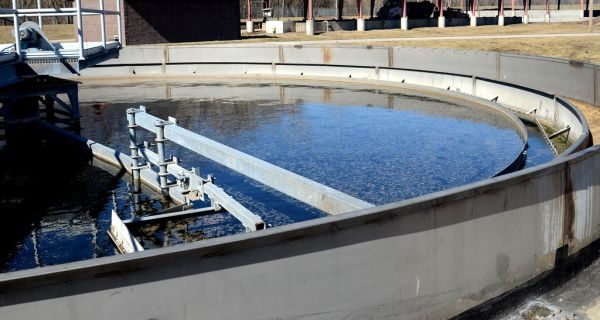
- Organic load range: NSDD6 is suitable for medium-high concentrations (such as municipal wastewater, industrial wastewater), with optical compensation covering a wide dynamic range. NSDD-Lite3 is optimized for low concentrations (such as purified water, pure water).
- Turbidity interference: High turbidity water (such as unsettled muddy water) increases scattering interference, causing larger errors in COD/TOC models. Oromë optical sensors include built-in turbidity compensation algorithms, but extreme turbidity (e.g., >1000 NTU) requires sedimentation pretreatment or selection of a model with mechanical wiper (NSDD6 comes standard with automatic cleaning).
- Special chemical composition: If the main organics in water are insensitive to 254 nm (such as certain alcohols, saturated hydrocarbons), the optical method has low response, requiring specialized factory model calibration, or may even be inapplicable.
Step 3: Installation and Maintenance Conditions
- Immersion installation: The 316L+POM structure of NSDD6 can be submerged long-term, with self-cleaning brush.
- Pipeline bypass installation: NSDD-Lite3's G1/2 thread and pressure-resistant design can be connected in series in a low-flow bypass.
- Portable scenarios: Water Detective series requires no installation, ready to use.
Step 4: Communication and Integration Requirements
- All Oromë online models support RS485 (Modbus RTU, etc.), directly connecting to PLC or RTU.
- Confirm system power supply, electromagnetic compatibility, and lightning protection requirements, especially for field stations.
Key Steps and Considerations for Engineering Implementation
1. Installation Point Selection
- Fluid dynamics conditions: The probe should be placed in a stable flow area where gas accumulation is unlikely, avoiding bubbles attaching to the window.
- Representative sampling point: Positions after thorough mixing and before chemical dosing usually best reflect process status. Influent must be kept away from defoamer injection points to avoid surfactant interference with optics.
- Safe power supply and isolation: RS485 long-distance wiring must meet electrical isolation requirements; Oromë products support long-distance isolated communication.
2. Initial Deployment and Model Setting
- Factory calibration: NSDD and Water Detective series are factory-calibrated with standard solutions for multi-wavelength, ready for use.
- On-site comparison and coefficient adjustment: It is recommended to conduct at least 5–10 parallel comparisons with laboratory national standard methods during the initial period, using linear regression or locally weighted regression to adjust default conversion coefficients. Oromë typically provides configuration tools for local correction.
- Temperature compensation: Built-in NTC, but extreme temperatures (>45°C or <5°C) may affect optical component stability; refer to the operation manual.
3. Automatic Cleaning Strategy
- NSDD6: Set the wiper interval via the internal timer (e.g., every 30 minutes) or trigger it based on a degradation signal. The wiper material typically lasts for years, but the rubber blade should be replaced at the recommended interval.
- NSDD-Lite3 and consumer-grade pens: No mechanical wiper; periodic manual wiping of the window is recommended, or rely on a smooth surface design that resists fouling.
4. Long-term verification and maintenance
- Periodic comparison: Verify with a laboratory method every 1–3 months and update the model bias.
- Optical window inspection: Even with self-cleaning, stubborn mineral scaling may still require periodic treatment with dilute acid or a dedicated cleaning agent.
- Firmware upgrades and diagnostics: Use digital communication to read raw spectral data and self-test codes, enabling early detection of light source decay or detector failure.
Limitations and boundary conditions
Despite the prominent advantages of reagent-free optical methods, their limitations should be honestly acknowledged:
- Substitutive but not equivalent: The "COD" measured by optical methods is essentially "UV-equivalent COD," and its accuracy depends on the stability of the UV absorption characteristics of the organic matter. If the water composition changes dramatically (e.g., a switch in industrial wastewater), the model may drift and require re-comparison.
- Measurement of non-dissolved organics: Spectroscopy primarily reflects dissolved and finely colloidal organics. For coarse dispersed or particulate COD, the linear range of the optical signal is limited. Turbidity compensation can partially correct this, but caution is still needed.
- Interference from inorganic reducing substances: Nitrite, sulfide, etc. in water also absorb UV light, potentially causing overestimation of COD. In special waters (e.g., anaerobic treatment effluent), calibration or combination with electrochemical sensors may be necessary.
- Ambient light interference: In open channels or very shallow optical paths, strong sunlight can interfere; shading should be provided during installation.
- Explosion-proof requirements: Oromë's current industrial sensors do not describe explosion-proof certification. For use in flammable or explosive environments, positive-pressure or flameproof protection should be selected, and the manufacturer consulted.
Economic analysis: reagent-free solutions from a TCO perspective
Take a municipal wastewater treatment plant with a daily capacity of 20,000 tons as an example, assuming online COD monitors are needed at both the influent and effluent.
- Chemical method solution: Two analyzers have an initial investment of approximately 200,000–300,000 RMB (including the sampling system), annual reagent and consumable costs of about 20,000–40,000 RMB, annual waste liquid treatment costs of about 5,000–10,000 RMB, and annual maintenance labor of about 200 hours (equivalent to roughly 40,000–60,000 RMB in labor costs).
- Reagent-free optical solution: Replacing with NSDD6, the initial investment for two units is similar or slightly lower. Consumables are only wipers and O-rings (<2,000 RMB/year), no waste liquid disposal fees, and annual maintenance labor of about 50 hours. TCO savings of more than 40% can be achieved over 3–5 years.
More importantly, the process optimization benefits brought by continuous high-frequency data (aeration energy savings, carbon source savings, effluent stability) far exceed the instrument cost itself.
Industry application scenario examples
Precision aeration and carbon source dosing in wastewater treatment plants
In the AAO process, the NSDD6 is installed at the end of the anoxic tank and the effluent of the aerobic tank. Real-time COD/UV254 trends are used for feedforward-feedback control of aeration. Meanwhile, sudden changes in influent TOC can trigger a carbon source metering pump to avoid denitrification inhibition.
Grid-based surface water monitoring
Deploy NSDD6 at key river sections, using solar power and 4G RTU to upload minute-level water quality time series. Compared to monthly manual sampling and chemical methods, it can clearly capture short-term impacts of illegal discharge events, providing clues for enforcement.
Water purifier filter cartridge lifespan prediction
In household water purifiers, embed the NSDD-Lite3 or TDS+UV254 scheme. Based on the breakthrough curves of organic matter and total dissolved solids, the remaining life of the activated carbon or RO membrane can be estimated in real time, and replacements can be alerted via an app, moving away from the wasteful "time-based replacement" model.
Portable water quality screening
Environmental inspectors use the Water Detective 4 to patrol river outfalls during rainy periods, quickly determining whether stormwater pipes contain domestic sewage cross-connections, significantly improving inspection efficiency.
Frequently Asked Questions (FAQ)
Q1: Can data from reagent-free optical sensors be directly used for reporting to environmental authorities? A: No. In China, environmental protection standards require COD, permanganate index, etc. to be measured by chemical titration or spectrophotometry. Reagent-free sensor data can be used for internal control and early warning, but external reporting must be based on national standard laboratory methods.
Q2: How often do optical sensors need calibration? A: Oromë products are factory-calibrated. It is recommended to compare with a laboratory method after initial installation to set local coefficients, then perform single-point or two-point calibration every 1–3 months by extracting water samples for laboratory analysis. If water quality is stable, the calibration interval can be further optimized.
Q3: Can the automatic cleaning brush really eliminate manual cleaning? A: The automatic brush can significantly extend maintenance intervals, but in high-hardness water with scaling or heavy oil contamination, periodic manual inspection of the window is still recommended, and if necessary, use acid or enzyme cleaning agents as a supplement.
Q4: How accurate are portable detection pens? A: As a screening tool, the Water Detective series TOC/COD readings have some deviation from laboratory methods, but they demonstrate good consistency within the same water body, making them highly suitable for comparing pollution levels across different water sources or monitoring trends in purified water output.
Q5: How to evaluate the applicability of a multispectral sensor to a specific water body? A: Collect water samples at different times and under different conditions, measure them with both the laboratory method and the sensor, plot scatter diagrams, and calculate R². If R² ≥ 0.9 and the deviation is within an acceptable range, applicability is good. Oromë can provide sample testing services before model selection.
Q6: If the chloride ion concentration is high, will it affect optical measurements? A: Chloride ions themselves have no significant absorption in the UV region, but high salinity may affect the shape of the organic matter absorption spectrum. This requires temperature compensation and salinity correction algorithms. Oromë sensors have built-in temperature correction; for extreme salinity, conductivity probes (such as 5-in-1 EC/TDS) can be used for co-compensation.
Q7: Can NSDD-Lite3 be used for seawater monitoring? A: NSDD-Lite3 is made of 316L stainless steel (which may suffer from seawater corrosion) and is not recommended for long-term immersion in seawater. For seawater applications, please consult about material compatibility or choose other protective measures.
Conclusion
Reagent-free water quality monitoring is not simply about discarding chemical reagents; it is about building a high-temporal-density, low-environmental-footprint, intrinsically safe water quality sensing system by integrating modern spectral analysis, automatic cleaning, digital signal processing, and industrial IoT technology. Oromë's industrial-grade multispectral sensors represented by NSDD6 and NSDD-Lite3, along with the Water Detective portable product line, cover the entire chain from process control to off-site screening, demonstrating the feasible path of multispectral reagent-free technology from laboratory to factory and from professional instruments to consumer products.
As ecological environmental regulation transitions from "concentration compliance" to "process control + trend early warning", and as Industry 4.0 continuously demands higher online sensing density, reagent-free spectral sensing is expected to become a core component of the water quality monitoring infrastructure, complementing laboratory standard methods and jointly promoting refined water environment management.
--- Disclaimer: The product features mentioned in this article are based on publicly available technical data from Oromë and do not constitute any commercial commitment. For specific applications, please consider site conditions and legal and regulatory requirements, and consult the manufacturer or professional integrator.
Discuss your application
Tell us your target parameters, water matrix, interface and annual volume. Our engineering team will recommend a practical configuration.
Request a Quote