
First, the answer to the title: a TDS pen measures “salts,” not “everything”
A TDS pen typically measures the conductivity of water and then estimates total dissolved solids (TDS) from conductivity. It is essentially a simplified conductivity sensor, good at quickly comparing the amount of conductive ions in water, for example between tap water and pure water, or the changes in output from different filter cartridges. However, it hardly directly reflects organics, suspended solids, turbidity, or how these indicators change over time. So the problem is not that “a TDS pen is inaccurate,” but that looking at only one facet makes it easy to mistake a trend for a conclusion.
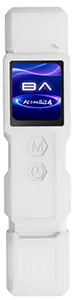
The Water Detective 4 (hereafter WD4) consolidates nine observation indicators into one portable device: TOC, COD, UV254, TDS, EC, turbidity, hardness, salinity, and temperature. It is not nine laboratory instruments crammed into a pocket; rather, it uses ionic, optical, and physical signals to complement each other, forming “water quality observation dimensions” better suited to on-site screening and trend comparison.
How the nine indicators are grouped by information dimension
The following table helps explain:
| Information dimension | Displayed items | Technical principle | Value and boundaries |
|---|---|---|---|
| Ionic/conductivity | TDS, EC, salinity, hardness | A conductivity sensor measures the conductive capacity of mobile ions in water, converted after temperature correction | Suitable for comparing total electrolyte content and changes in water; hardness and salinity are estimated values, affected by water sample matrix and calibration |
| Optical/organics | UV254, TOC, COD | Uses UV absorbance, multi-spectral signals, etc. to estimate changes related to organics | Sensitive to changes in natural organic matter and disinfection by-product precursors, but cannot identify specific pollutants; conversion relationships vary with water source |
| Physical/sensory | Turbidity, temperature | Optical scattering and temperature sensing | Turbidity indicates changes in suspended particles; temperature affects readings of other parameters and must be recorded simultaneously |
(Note: The specific sensor combination and algorithms are subject to the product manual; the table above only provides a general principle classification of the nine indicators and does not replace official technical documentation.)
Ionic dimension: what a conductivity sensor can and cannot do
A conductivity sensor is one of the most mature components in portable water quality testing equipment. It detects the overall conductive capacity of all ions in a water sample, not a specific ion. Therefore, the TDS reading is “equivalent TDS,” not the result of laboratory weighing of evaporated residue; salinity and hardness are also estimated values converted from conductivity. When water contains large amounts of non-conductive organics, colloids, or unconventional ions, such conversions will deviate from laboratory chemical analysis. The greater the difference in ionic composition between water sources, the more obvious the estimation error may be. Thus, the hardness and salinity of the WD4 are mainly used for before-and-after comparison of the same water source or the same water purification process, not for issuing compliance values.
Optical dimension: UV254, turbidity, and organic matter observation
UV254 is the absorbance indicator of certain organic substances in water (such as natural humic substances and some aromatic compounds) at a wavelength of 254 nm. US EPA Method 415.3 uses TOC and UV254 as laboratory methods for monitoring organic matter in source water and drinking water [2]. Optical measurement in portable devices is usually not EPA Method 415.3, but uses similar principles for rapid screening and trend tracking. Turbidity, on the other hand, uses scattered light to determine the amount of suspended particles in water. Combined, the two can help users detect “water suddenly becoming turbid” or “a significant rise in organic absorbance,” but cannot determine what pollutant is present, nor replace laboratory testing for specific organics, microorganisms, or heavy metals.
Physical dimension: temperature is the basis for correction, not an additional safety indicator
Temperature affects conductivity and optical readings, so the WD4 displays temperature mainly for correction and recording of environmental conditions. Temperature alone has no safety significance; however, continuously recording the combined changes in temperature, conductivity, and turbidity can help users determine whether the device is operating under consistent conditions and whether the filter output shows trend drift with seasons or peak water use.
Nine displayed items ≠ nine independent laboratory analyses
The WD4 is a personal/household portable water quality tester pen, suitable for on-site screening and comparison, and does not replace laboratory testing required by regulations. The US EPA notes on its “Home Drinking Water Testing” page that home testing can help identify potential problems but cannot confirm whether water is safe; only certified laboratories analyzing according to standard methods can be used for compliance or health risk assessment [1]. In other words, the nine indicators of the WD4 are like a set of “health band” data: they can indicate changes, but cannot issue a diagnostic report.
Take TOC and COD as examples: laboratory methods require digestion, oxidation, standard curves, and quality control; portable devices usually estimate using surrogate signals, and results are affected by temperature, turbidity, color, and water matrix. If users treat the TOC displayed by the WD4 as the TOC result of EPA Method 415.3, they will misinterpret the data. The correct use is: continuously record changes in the same water sample at different times or after different equipment treatments, and send to a laboratory for confirmation when anomalies are found.
Who should and should not buy
Suitable for
- Household users: comparing TDS and turbidity changes among tap water, filter output, bottled water, and travel water.
- Water purification equipment sales and service personnel: demonstrating water quality differences before and after filter cartridges to customers on site, and establishing trend records.
- Fish tank or small aquaculture users: quickly observing fluctuations in conductivity, turbidity, and temperature to assist daily management.
- Users who wish to establish personal water quality trend records but do not need legal or medical reports.
Not suitable for
- Organizations or individuals requiring compliance testing reports, enforcement evidence, or legal purposes.
- Suspecting water source contamination by specific pathogens, heavy metals, pesticides, or industrial chemicals, requiring laboratory qualitative and quantitative analysis.
- Scientific research or production quality inspection scenarios requiring precise determination of hardness, salinity, or absolute TDS values.
- Consumers expecting a pen-type device to directly determine “whether this glass of water is safe to drink”; safety risks require multiple lines of evidence.
Practical scenario: how to read and record three glasses of water
- Prepare three unlabeled water samples, such as tap water, filter output, and bottled water.
- Using the same WD4, measure and record the nine readings for each at similar water temperatures.
- Repeat each water sample at least twice and take stable values; rinse the probe to avoid cross-contamination.
- Focus on: whether TDS/EC differences come from the desalination effect of the filter; whether turbidity changes are visible to the naked eye; whether UV254/TOC shows an abnormal increase.
- Record the date, water sample source, device serial number (if any), and save the raw values, rather than just noting “good/bad.”
This “three glasses of water comparison” is the most natural use scenario for the WD4: it does not answer which glass is “absolutely safe,” but it can quickly show which glass differs from the others in total ions, suspended solids, or organic signals. If measured over multiple days, the trends of the three glasses are more valuable than single numbers.
When a laboratory or other tools are needed
If any of the following occurs, stop relying on portable screening and contact a qualified laboratory:
- Water has odor, discoloration, oil film, sediment, or obvious turbidity.
- TDS, EC, or turbidity changes suddenly and significantly under normal use conditions.
- Family members experience suspected water-related gastrointestinal discomfort or skin reactions.
- Need to confirm specific pollutants such as lead, arsenic, E. coli, volatile organic compounds, etc.
Laboratories can choose standard methods such as EPA Method 415.3 to determine TOC and UV254, and combine with other indicators for compliance judgment [2]. WD4 data can be used as pre-screening records before submission, but cannot serve as a substitute report.
FAQ
Q: Can a home water quality tester replace laboratory testing?
A: No. Home water quality testers (including WD4) are used for on-site screening and trend monitoring, and results are limited by sensors, water matrix, and calibration. Laboratory testing operates according to standard methods and has quality control, so it can be used for compliance or safety judgment [1][2].
Q: Are the nine indicators of the WD4 nine independent sensors?
A: Not necessarily. The nine displayed items come from different signal channels and conversion algorithms. For example, a conductivity sensor may be used simultaneously for TDS, EC, salinity, and hardness estimation; optical signals may be used for UV254, TOC, COD, and turbidity. The specific implementation is subject to the product manual.
Q: Are the hardness and salinity readings accurate values?
A: No. They are estimated values from conductivity and are affected by the ionic composition of the water. When comparing different water sources or purification processes, absolute values should be interpreted with caution; long-term recording and attention to trends are recommended.
Actionable checklist
- Clarify your purpose: trend comparison or compliance testing? For the latter, go directly to a laboratory.
- Before using the WD4, read the official manual and confirm sensor cleaning, calibration, and operation steps.
- Record each measurement: date, water temperature, water sample source, nine readings, and abnormal sensory descriptions.
- Repeat measurements of the same water sample and exclude obvious outliers.
- Do not draw conclusions from a single TDS or single indicator; combine trends in turbidity, UV254, temperature, etc.
- If continuous monitoring finds abnormal indicators, save the data and send to a laboratory for confirmation.
- When applied to scenarios such as fish tanks or filter maintenance, establish your own baseline rather than relying on others' values online.
References
[1] US EPA. Home Drinking Water Testing. https://www.epa.gov/ground-water-and-drinking-water/home-drinking-water-testing (accessed: 2026-10-29).
[2] US EPA. Method 415.3: Determination of Total Organic Carbon and Specific UV Absorbance at 254 nm in Source Water and Drinking Water, Revision 1.1, February 2005. https://nepis.epa.gov/Exe/ZyPURL.cgi?Dockey=2000D1TP.TXT (accessed: 2026-10-29).
Discuss your application
Tell us your target parameters, water matrix, interface and annual volume. Our engineering team will recommend a practical configuration.
Request a Quote