
Bottom line: Water Detective 4 should not be used by default in marine tanks
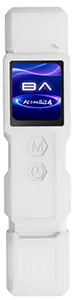
Many freshwater hobbyists upgrading to a marine tank simply keep using their existing water quality tester. But Water Detective 4 is officially positioned as a "personal/household portable water quality tester pen" covering tap water, purified water, bottled water, travel water and aquarium water, and it does not state a seawater range, a seawater salinity algorithm, or compatibility with seawater-resistant materials [3]. Without confirmation by actual measurement, using it on marine tanks or high-salinity samples may produce unreliable salinity, TDS and EC readings and mislead water-change and salt-addition decisions.
Why generic water quality testers are unsuitable for high-salinity samples
Electrical conductivity (EC) is a common indicator of the total dissolved ion concentration in water. USGS notes that conductivity depends on the type, concentration and temperature of the ions in the water [1]. Seawater and freshwater differ greatly in their main ion composition: seawater is dominated by chloride, sodium, sulfate, magnesium, calcium and potassium, and its ionic strength is far higher than that of freshwater. Many portable water quality testers are calibrated with a single standard solution (such as KCl) and convert EC to TDS or salinity using a fixed factor. This conversion is relatively stable in freshwater or low-salinity water, but in a seawater matrix it can produce noticeable deviations due to changes in ion composition and ionic strength. In addition, electrode polarization and changes in the temperature compensation coefficient at high salinity can also affect measurement stability.
EPA also notes that home water quality testing is suitable for screening and trend observation and cannot replace laboratory analysis; results are affected by sampling method, instrument calibration and matrix interference [2]. So for marine tanks, a portable water quality tester can only serve as a supplementary observation, not as a precise control tool.
In freshwater tanks, Water Detective 4 still has record-keeping value
In scenarios clearly defined as freshwater or low salinity (freshwater fish tanks, tap water, purified water, bottled water, travel water), Water Detective 4 can quickly record nine indicators — TOC, COD, UV254, TDS, EC, turbidity, hardness, salinity and temperature — making it easy for household users to track trends over time in the same body of water [3]. For example:
- Measure aquarium water at a fixed time each week and record EC, TDS and temperature;
- Compare readings before and after a water change to help judge whether the water-change frequency should be increased;
- Test bottled water or tap water while traveling as a personal screening reference.
But note: the hardness and salinity estimates of a portable tester pen are limited by matrix and calibration; trend monitoring does not prove that water quality is safe or that specific contaminants meet standards.
The right approach for marine tanks and high-salinity samples
For marine tanks, reef tanks, brackish-water tanks or any high-salinity sample, tools designed specifically for seawater are recommended:
- Optical hydrometer/refractometer: directly measures seawater specific gravity or salinity; many models include automatic temperature compensation.
- Electronic salinity meter: calibrated with a seawater standard solution, with a range covering typical seawater salinity.
- Conductivity meter calibrated with a seawater standard solution: if a laboratory-grade conductivity meter is used, select electrodes and calibration solutions suitable for high conductivity.
Key steps:
- Calibrate before measurement: calibrate the instrument with a standard solution close to the sample's salinity (such as a 35 ppt seawater standard).
- Do not dilute: never dilute seawater before measuring EC/TDS and then multiply by the dilution factor to "back-calculate" the original seawater salinity. Dilution changes ionic strength, the temperature compensation coefficient and matrix effects, and the error is amplified non-linearly, so the result has no reference value.
- Clean the probe: when switching between different water bodies, rinse the probe thoroughly with pure water to avoid cross-contamination.
Brief FAQ
Q: Can Water Detective 4 measure the salinity of a marine fish tank?
A: The official website information does not state seawater compatibility. Before confirming the salinity/EC range and calibration method in the manual, it should not be used in seawater by default. A dedicated seawater salinity meter is recommended.
Q: Can I dilute seawater 10 times, measure EC, and then multiply by 10?
A: No. After dilution, the interactions among different ions differ from those in the original seawater, and the conversion factors of most portable water quality testers are based on freshwater or low-salinity matrices, so they cannot linearly back-calculate the original seawater salinity.
Q: What should I pay attention to when switching between freshwater and seawater?
A: Always read the manual before use and confirm whether the sensor material and range cover seawater. Do not measure different water bodies directly with the same probe without cleaning, to avoid cross-contamination and reading drift.
Actionable checklist
- [ ] Check the Water Detective 4 manual to confirm whether the salinity/EC range covers the seawater range.
- [ ] If the manual does not state seawater compatibility, do not use this instrument in a marine tank.
- [ ] Equip marine tanks with a dedicated optical hydrometer or a calibrated electronic salinity meter.
- [ ] Calibrate with a standard solution close to the sample's salinity before measuring seawater.
- [ ] Do not back-calculate original salinity from readings taken after diluting seawater.
- [ ] Continue using Water Detective 4 in freshwater tanks for trend records, but do not draw conclusions from a single reading.
References
[1] USGS Water Science School. Conductivity (Electrical Conductance) and Water. Accessed: October 29, 2026. https://www.usgs.gov/water-science-school/science/conductivity-electrical-conductance-and-water
[2] US EPA. Home Drinking Water Testing. Accessed: October 29, 2026. https://www.epa.gov/ground-water-and-drinking-water/home-drinking-water-testing
[3] Orome Store. Water Detective 4 product page. Accessed: October 29, 2026. https://www.orome-store.com/products/water-detective-4/
Discuss your application
Tell us your target parameters, water matrix, interface and annual volume. Our engineering team will recommend a practical configuration.
Request a Quote